All Books
Self-Growth
Business & Career
Health & Wellness
Society & Culture
Money & Finance
Relationships
Science & Tech
Fiction
Topics
Blog
Download on the App Store

It's All in How You Fall

15 minSarah Henning

What's it about

What if the one thing you thought defined you was suddenly taken away? For competitive gymnast Caroline, a devastating fall shatters her Olympic dreams and her identity. Discover a story about resilience, finding new passions, and the courage it takes to redefine who you are. This isn't just about losing; it's about what you find afterward. You'll follow Caroline's journey as she navigates a new school, new friendships, and the unexpected world of competitive diving. Learn how embracing a second chance, even one you never wanted, can lead to your greatest comeback yet.

Meet the author

Sarah Henning is a former sports journalist for the Associated Press and Kansas City Star, whose award-winning reporting provides the authentic foundation for her novels. Drawing from years of covering elite athletes and telling their stories of triumph and failure, Henning now crafts inspiring young adult fiction. Her firsthand experience in the high-stakes world of competitive sports allows her to explore the resilience of the human spirit with genuine depth, capturing the intense physical and emotional challenges her characters face on their journey to greatness.
Listen Now

Opens the App Store to download Voxbrief

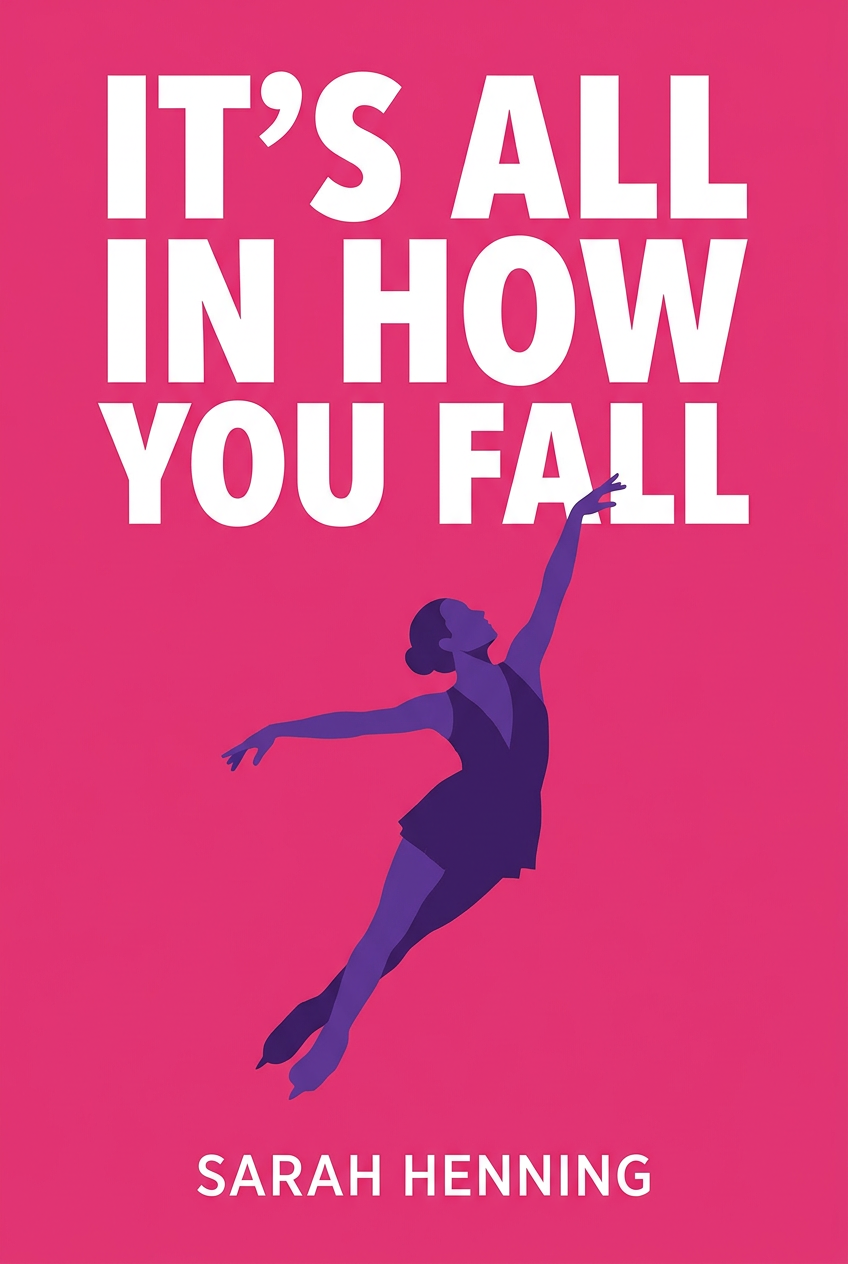
It's All in How You Fall book cover

The Script

Think about the one thing that defines you. For the competitive gymnast, it’s the chalky grip on the uneven bars. For the violinist, it’s the familiar curve of the scroll under their chin. This one thing is a language, a compass, the very architecture of your life. It’s what you do when you’re happy, what you turn to when you’re heartbroken, and what you dream about at night. Now, imagine it’s gone. Violently ripped out of your life in an instant. The gymnast misjudges a release; the violinist’s hand is crushed. The silence that follows is deafening. Who are you when the one thing that made you you is just a memory? The world doesn’t stop. Your friends, your family—they still see you, but you feel like a phantom limb, a painful echo of a person who no longer exists. You’re left standing at a terrifying crossroads, forced to find a new way to be, a new rhythm to live by, all while the ghost of your former self watches over your shoulder, judging every clumsy, uncertain step.

The challenge of rebuilding an identity from the ground up is something author Sarah Henning knows intimately. As a former sports journalist for publications like the Palm Beach Post and the Kansas City Star, she spent years on the sidelines, documenting the soaring highs and devastating lows of elite athletes. She witnessed firsthand how a single moment—a bad landing, a torn ligament—could shatter a lifetime of dedication. Henning saw the public story of injury and recovery, but she was drawn to the private, messier one: the story of the person who has to get up the next day when their dream is dead. She wrote It's All in How You Fall to explore that quiet, unglamorous courage, channeling her observations of athletic resilience into a story about a girl who loses everything and must learn that falling is the beginning of a different kind of flight.

Module 1: The Unraveling of a Singular Identity

The story opens with Caroline Kepler, a level-ten gymnast on the verge of everything. She has a college scholarship in her sights. Nationals are within reach. Gymnastics defines who she is. She describes it as "my life," and she’s not being dramatic. Her entire world—her schedule, her friendships, her future—is built around the gym. This singular focus creates an incredibly powerful, but fragile, identity.

The first major insight here is that tying your entire identity to a single, high-stakes pursuit creates extreme vulnerability. Caroline has managed chronic back pain for years. She considers it a normal part of the sport. A "ritual of prepractice ibuprofen" is just another part of her routine. But during a critical meet, a sharp, undeniable pain signals that something is wrong. A doctor's diagnosis confirms her worst fear. She has spinal stenosis, a degenerative condition caused by overuse. The medical advice is blunt: to heal, she must stop what's causing the pain. She has to quit gymnastics.

This moment is a collision of two worlds. On one side is medical reality. On the other is Caroline’s entire sense of self. Her reaction is raw and immediate: anger, denial, and grief. The doctor’s words echo in her mind: "Gymnastics is a sport with plenty of fifteen-year-old retirees." This statement haunts her. It frames her personal tragedy as a common, almost disposable, feature of her sport.

Here's where it gets interesting. The adults in her life—her father and her coach, Olga—begin making decisions about her future without her. They see the long-term risk. They prioritize her future well-being over her present passion. For them, preventing a lifetime of pain is the only logical choice. But for Caroline, their protective authority feels like a betrayal. She sees them discussing "my future without me." This leads to a defiant, desperate act. To prove them wrong, she attempts a dangerous standing Arabian on the beam. She wants to show them she’s still capable, that her body hasn't failed her. The attempt ends in a painful fall.

This act reveals the second key idea: when a core identity is threatened, we often make risky, irrational decisions to reclaim it. Caroline is fighting for her very definition of self. Her internal monologue is a list of her accomplishments. A Gienger release move. A Tkachev. A Yurchenko vault. These are the building blocks of her worth. Losing them feels like losing everything. The fall solidifies the adults' decision. Her father’s words are final: "But no more gymnastics." The unraveling is complete.

Module 2: The Void and the Failure of Well-Intentioned Support

Now, let's turn to what happens after the fall. Caroline is adrift. The structured, demanding world of gymnastics is gone. In its place is a void. Summer days stretch out, empty and meaningless. Her attempts at being a "normal" teenager—sleeping in, reading, sunbathing—feel hollow. She explains, "The me I am at the gym is the normal me." Without it, she feels like "wallpaper, window dressing, a doormat." She is experiencing a profound identity crisis, and those around her don't quite know how to help.

This brings us to a crucial point. Well-intentioned support often fails because it tries to solve the wrong problem. Her family and friends want to fill her time. Her brother, Nat, suggests she get a job at his country club. Her father persistently offers up other sports: soccer, volleyball, basketball. He’s trying to replace the activity, but he doesn't understand that he can't replace the identity. Caroline dismisses these suggestions. They aren't her passion. She perceives his efforts as him "selling" something she doesn't want. It creates a quiet resentment. She even admits to a "slightly bitter" satisfaction that her father feels guilty for forcing her to quit.

The only connection to her old life is weekly movie nights with her gymnastics teammates, Sunny and Peregrine. But even this is a painful reminder of what she's lost. It's like "dipping a toe into my old life, if only for a millisecond." The support, while loving, misses the mark. It focuses on distraction rather than reconstruction.

A different kind of support emerges from an unexpected source: Alex Zavala, her brother’s best friend. He sees her struggling and offers something different. He proposes a structured, guided exploration. This is where we find a powerful lesson. Effective support in a time of transition provides a framework for exploration, not just a list of solutions. Alex offers to coach her in "the sports of the mortals." One new sport each week for the rest of the summer. He frames it as an "education" for her life "AG"—After Gymnastics. He acknowledges it won't "fill the hole" left by her dream. But it will help her learn to "do something else." His approach is empathetic. It meets her where she is: stuck, grieving, and unsure of how to move forward. For the first time, Caroline feels like she has taken a step.

Read More