All Books
Self-Growth
Business & Career
Health & Wellness
Society & Culture
Money & Finance
Relationships
Science & Tech
Fiction
Topics
Blog
Download on the App Store

Lock Every Door

A Novel

16 minRiley Sager

What's it about

Would you trade your freedom for a chance to start over? Imagine getting paid to live in a luxurious Manhattan apartment. The catch: no visitors, no nights away, and no talking to the other residents. For Jules, it's a dream come true—until another apartment sitter vanishes. Now, Jules is caught in a deadly game inside the building's glamorous but sinister walls. As she uncovers the dark history of the Bartholomew and its wealthy, secretive inhabitants, she realizes her dream job is a gilded cage. She must expose the truth before she becomes the next to disappear forever.

Meet the author

Riley Sager is a New York Times bestselling author whose thrillers have been published in more than thirty countries and lauded as "the female Alfred Hitchcock." A former journalist, editor, and graphic designer, Sager now writes full-time, drawing on his fascination with classic suspense films and iconic settings to craft his intricate, high-concept plots. His work explores the dark secrets that often lie just beneath a glamorous surface, a theme central to the chilling mystery of Bartholomew in Lock Every Door.
Listen Now

Opens the App Store to download Voxbrief

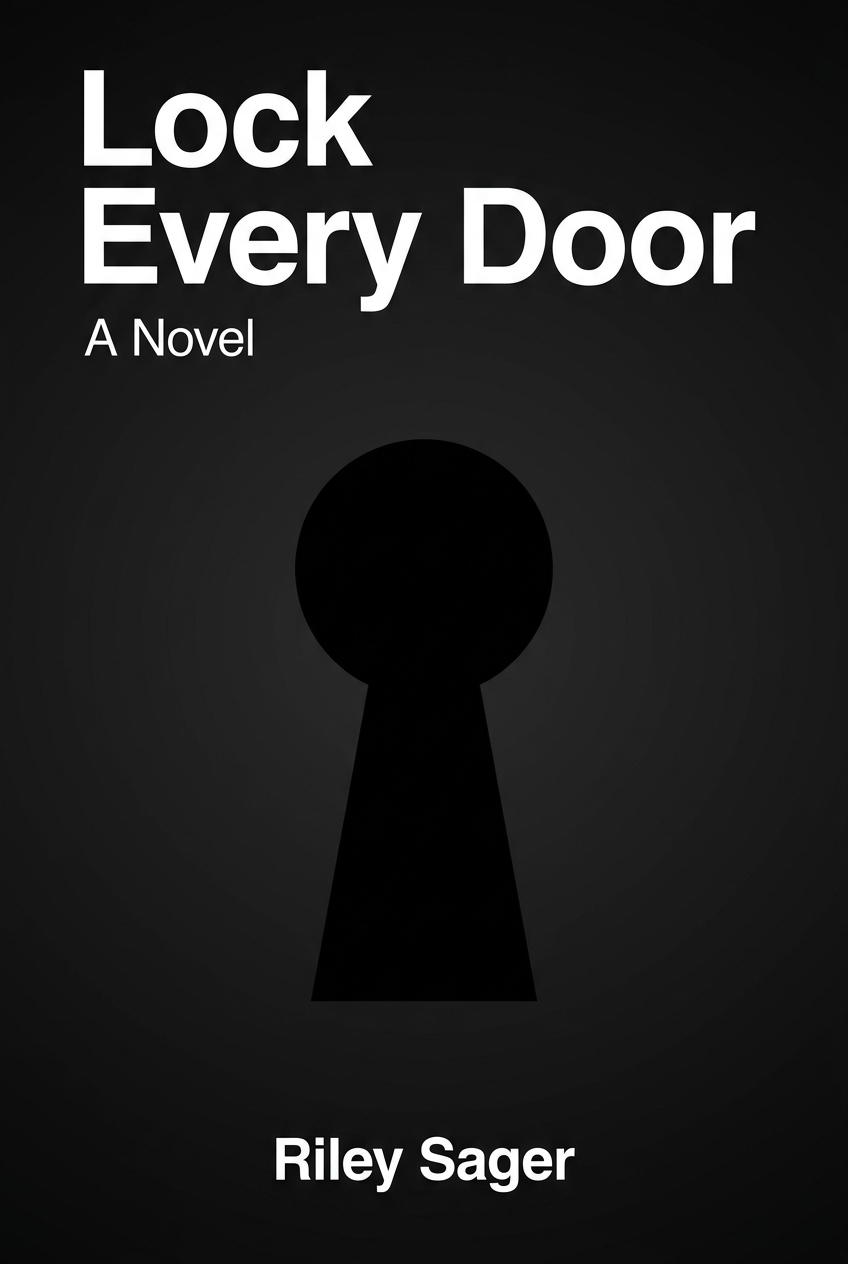
Lock Every Door book cover

The Script

You find a job listing that seems like a dream. It offers a stunning salary, a prestigious address, and asks for almost nothing in return. All you have to do is live there, following a few simple, slightly eccentric rules: no visitors, no nights spent away from the apartment, and no disturbing the other residents. It’s an offer that feels like winning the lottery, a golden ticket out of your current troubles and into a life of unimaginable luxury. The building itself is a landmark, a place whispered about in stories, its ornate facade promising a world of glamour and history. You accept, of course. Who wouldn’t? The initial days are a whirlwind of quiet opulence. But soon, a small, discordant note sounds. A flicker of movement in an empty hallway. A story from another resident that doesn’t quite add up. The rules, once quirky, now feel like the bars of a cage.

The unsettling glamour of a place like the Bartholomew, with its dark history and seductive promises, is a space Riley Sager has made his own. A former journalist, editor, and graphic designer, Sager became a master of the modern thriller by tapping into classic cinematic suspense tropes and giving them a contemporary, psychological twist. He found his stride writing about ordinary women thrust into extraordinary, terrifying circumstances where the greatest threat is the secrets hidden within beautiful, aspirational settings. For "Lock Every Door," he was directly inspired by the ominous atmosphere of films like Rosemary's Baby and the real-life legends surrounding New York's iconic Dakota apartment building, wanting to explore that specific type of fear that arises when a dream opportunity reveals itself to be an intricate, inescapable trap.

Module 1: The Lure of the Perfect Trap

We begin with the protagonist, Jules Larsen. She’s at rock bottom. She just lost her job. She caught her boyfriend cheating and lost her home in the same day. She has less than five hundred dollars to her name. She’s crashing on her friend's couch, staring into a financial abyss. This is a familiar nightmare for anyone who has felt the precarity of modern life. Then, an unbelievable opportunity appears. An apartment-sitting job in one of Manhattan’s most famous and mysterious buildings: the Bartholomew.

The offer is staggering. Twelve thousand dollars for three months. All she has to do is live in a lavish, empty apartment. The building itself is a legend. It’s a Gothic fortress covered in gargoyles, a place Jules has only ever seen as a fairy-tale castle. This contrast is the core of the setup. Desperation makes you ignore red flags. The high pay, the instant housing, the sheer glamour of it all acts as a powerful anesthetic. It numbs her to the weirdness of the arrangement. Her friend Chloe immediately points out the obvious. No one pays a stranger that much money just to occupy a room. There has to be a catch. But for Jules, backing out isn't an option. The promise of financial stability is too strong to resist.

This leads to the second insight. Prestigious environments use strict rules to enforce isolation. The Bartholomew is a fortress of secrecy. The rules are absolute. No visitors. Ever. No spending a night outside the apartment. No talking to or about the wealthy residents. No social media posts from inside the building. These rules are presented as necessary for the privacy of the elite. In reality, they are tools of control. They systematically sever Jules's connections to the outside world. She is cut off from her friends, her support system. This isolation makes her more vulnerable. It ensures that if something goes wrong, no one will be there to help.

And here's the thing. The building itself feels alive with a dark history. Beneath a luxurious facade often lies a rotten legacy. Chloe tells Jules the building is rumored to be cursed. An article she finds online details a century of tragedies. A Spanish flu outbreak. The founder's suicide. An unsolved murder. Another resident, Ingrid, tells Jules the building feels "haunted by its history." The ornate wallpaper seems to form watching eyes. The gargoyles feel less like stone and more like sentinels. Sager masterfully builds an atmosphere where the very walls seem to breathe with menace. This is a place with a past, and that past is bleeding into the present.

Module 2: The Disappearance and the Obsession

Now, let's turn to the next phase of the story. Jules isn't the only apartment sitter. She quickly befriends Ingrid, another young woman in a similar situation. They are both lonely, broke, and isolated by the building's rules. They form a fast, intense friendship, a bond forged in shared vulnerability. They meet in Central Park, sharing stories of their past traumas. Jules reveals her deepest wound: the unresolved disappearance of her older sister, Jane, years ago. This detail is critical.

This brings us to the first major turning point. Ingrid vanishes. One day she’s there, the next she’s gone. The building management is suspiciously calm. Leslie Evelyn, the manager, claims Ingrid simply broke the rules and left. But it doesn't add up. Ingrid left behind her belongings. She left behind thousands of dollars in future rent she desperately needed. Jules knows something is wrong. Her gut tells her Ingrid didn't just leave. She disappeared.

Here's where Jules's personal history becomes the engine of the plot. Past trauma can fuel a powerful drive for justice. Jules is haunted by guilt over her sister. She feels she gave up looking for Jane too easily. She refuses to make the same mistake with Ingrid. Her search for Ingrid becomes a search for redemption. She tells her friend Chloe that finding Ingrid would mean "one less lost girl in the world." This personal mission transforms her from a passive victim of circumstance into an active investigator. She starts asking questions. She starts breaking the rules. She is no longer just trying to survive; she is trying to solve a mystery.

This investigation immediately meets resistance. In a closed system, curiosity is treated as a threat. The staff and residents of the Bartholomew close ranks. The housekeeper warns her to "mind your own business." The elegant author, Greta Manville, is cold and dismissive. Another resident, Marianne Duncan, becomes terrified when Jules mentions Ingrid's name, begging her to stop asking questions. Every door is locked, both literally and figuratively. The message is clear: do not look behind the curtain. The more she pushes, the more the building pushes back, with Leslie threatening her with eviction.

But Jules finds small cracks in the facade. She finds Ingrid’s hidden copy of a book, proving she didn’t pack to leave. She learns the security camera in the lobby was mysteriously disconnected for a five-minute window on the night Ingrid vanished. And most chillingly, she finds a gun Ingrid had secretly purchased, along with a note for Jules that reads: "BE CAREFUL." This confirms her fears. Ingrid didn't leave. She was afraid. And now, Jules is alone in the place that made her disappear.

Read More