All Books
Self-Growth
Business & Career
Health & Wellness
Society & Culture
Money & Finance
Relationships
Science & Tech
Fiction
Topics
Blog
Download on the App Store

Lose You to Find Me

A USA Today Bestselling Queer Coming-of-Age Romance

14 minErik J. Brown

What's it about

Ever feel like you have to be someone you're not just to fit in? This coming-of-age romance explores the messy, hilarious, and heartbreaking journey of faking it until you make it, and what happens when the person you're pretending to be starts to crack. You'll discover how a summer job at a theme park becomes the ultimate test of identity for a queer teen trying to blend in. Follow his story as he navigates a new crush, a chaotic workplace, and the difficult choice between playing a role and finally embracing who he truly is.

Meet the author

Erik J. Brown is the USA Today bestselling author of queer coming-of-age romance, celebrated for crafting authentic and heartfelt stories for young adults. A former theater kid from Philadelphia, he draws on his own experiences with love, friendship, and self-discovery to create narratives that resonate deeply with readers. His work, including the acclaimed Lose You to Find Me, champions the importance of finding your voice and embracing your true self, offering a guiding light for a new generation.
Listen Now

Opens the App Store to download Voxbrief

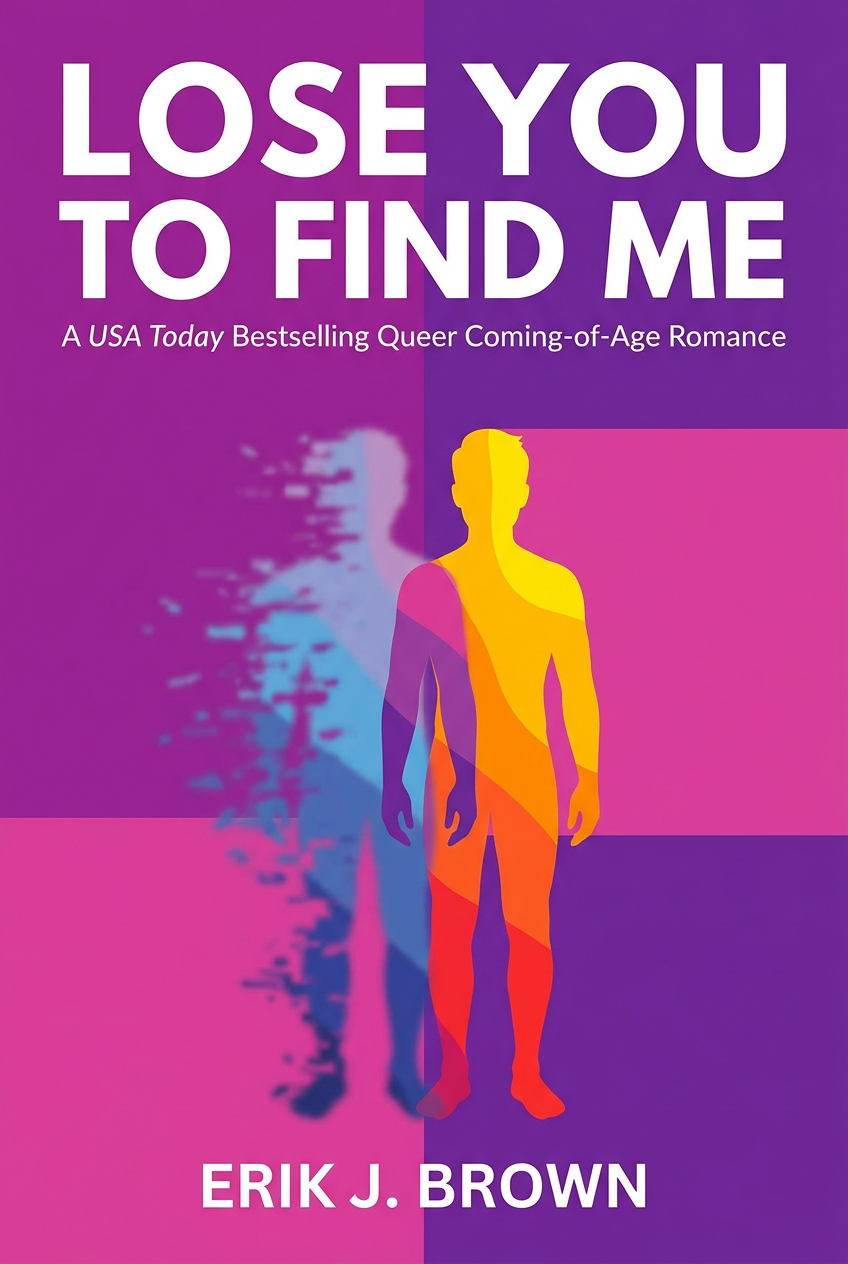
Lose You to Find Me book cover

The Script

The local diner after a high school football game is a universe unto itself. In one booth, a group of cheerleaders rehashes the final play, their voices a bright, sharp counterpoint to the clatter of plates. Across from them, a couple on a first date navigates the delicate territory of shared fries and uncertain silences. In the corner, a lone figure in a letterman jacket stares into a milkshake, the victory on the field feeling miles away from the quiet emptiness of the booth. Each table is an island, yet they are all tethered by the same cheap fluorescent lighting, the same smell of grease and sugar, the same unspoken rules of a small town. It’s a place where you can be surrounded by people you’ve known your whole life and still feel completely, utterly alone, performing a version of yourself you think everyone wants to see.

This feeling of being trapped in a role, of searching for your authentic self amidst the expectations of others, is the emotional core of Erik J. Brown’s work. Growing up queer in a small town, Brown became an expert at navigating these spaces—the diners, the school hallways, the family gatherings—where the pressure to conform felt suffocating. He channeled the longing for connection and the fear of rejection into his writing, creating stories that feel both deeply personal and universally resonant. "Lose You to Find Me" was born from this experience, a desire to write the kind of book he desperately needed as a teenager: one that acknowledges the pain of hiding but celebrates the joy of finally finding a place—and people—where you can truly belong.

Module 1: The High Stakes of First Impressions

We open at Sunset Estates, a retirement community with a deceptively pleasant name. Our protagonist, Tommy, is a high school senior working as a server. He's ambitious, witty, and laser-focused on one thing: getting into La Mère Labont, the Harvard of culinary schools. His entire future hinges on a letter of recommendation from his manager, Natalie. But Natalie is a gatekeeper. She dangles the letter as a prize, offering it only if Tommy completes three mysterious "tasks." This sets up a tense power dynamic. Tommy's ambition makes him vulnerable. He feels he has no choice but to play her game, even if it feels like a raw deal.

Then, the past walks in. Gabe De La Hoya, Tommy's first-ever crush from summer camp six years ago, is the new hire. Tommy is instantly flooded with memories. The shared lunches his dad packed. The way Gabe always picked him first for games. Gabe was foundational to Tommy's understanding of his own identity. He was the first boy Tommy ever had feelings for. But when Gabe introduces himself formally, with no flicker of recognition, it's a gut punch. The pain of being forgotten by someone significant can feel like a personal rejection of your own history. It forces Tommy to question the validity of his own memories. Was that intense connection all in his head?

This kicks off the central tension. Tommy must train the very person who is making him a nervous wreck. And he has to do it all while navigating Natalie's manipulative games. On top of that, he has to maintain a facade of professionalism. He methodically explains the unwritten rules of the job to Gabe. Rule number one: never piss off the hosts. They control your section, and they can make your shift a living hell. He shares insider knowledge about the residents, like Judge Fredericks, who needs her water glass perpetually full. Mastering a service job requires navigating unwritten social codes and power structures. It's about managing relationships.

And here's the thing. Tommy uses humor as a shield. He's constantly making sarcastic jokes and witty asides, both internally and out loud. It’s his way of coping with the stress of the job, the awkwardness with Gabe, and the unfairness of Natalie's power plays. This humor becomes a key tool for connection, but also a defense mechanism against vulnerability.

Module 2: The Rules of the Game, Written and Unwritten

Now, let's explore the world of Sunset Estates. It’s a microcosm of social rules. The author shows us that in any organization, formal rules are just the beginning. The real game is played according to unwritten, person-specific codes.

Natalie, the manager, preaches her "rule number one": never say no to a resident. She tells a story about a resident demanding Baked Alaska. With no ingredients on hand, the kitchen staff improvised one from pineapple upside-down cake. For Natalie, this is the gold standard of customer service. It's about creative problem-solving to ensure resident satisfaction.

But flip the coin. Tommy's personal rule number one is different. It’s "never piss off the hosts." He’s seen how a slighted host can weaponize table assignments, burying a server in a flood of simultaneous orders. For him, peer relationships are the key to survival. Other staff have their own rules. James, the kitchen supervisor, warns against touching Chef Roni’s knives. Ava, Tommy's best friend, knows to avoid certain residents who are a little too "hands-on." Survival in any complex environment depends on understanding which rules actually matter. The official handbook is one thing. The collective wisdom of your peers is another.

This principle extends to Tommy's primary goal: the letter of recommendation. Natalie’s "tasks" are the unwritten rules he must follow. The first task is training Gabe. The second is a surprise "test" involving a notoriously difficult resident. The third remains ominously vague. This structure keeps Tommy in a state of constant anxiety. He’s forced to perform under pressure, never sure if he’s meeting the secret criteria.

Meanwhile, his relationship with Gabe slowly thaws. They start talking, bonding over a shared love of movies. Gabe introduces Tommy to the work of Akira Kurosawa. Tommy teases him for being pretentious. It’s in these small, playful interactions that a genuine connection starts to form, separate from their shared past. Authentic connection is built on shared interests and playful vulnerability. They create inside jokes, like giving each other elaborate, ridiculous contact names in their phones. This creative banter becomes their private language, a space where they can be themselves.

Read More