All Books
Self-Growth
Business & Career
Health & Wellness
Society & Culture
Money & Finance
Relationships
Science & Tech
Fiction
Topics
Blog
Download on the App Store

Lucia, Lucia

A Novel

14 minAdriana Trigiani

What's it about

Ever wondered if you can have a dazzling career and a passionate love story? Discover how to chase your dreams without sacrificing your heart in this tale of a woman who dares to want it all in 1950s New York City. You'll follow Lucia, a determined apprentice for a legendary fashion designer, as she navigates the glamorous but demanding world of Greenwich Village. Learn how she balances her professional ambitions with a sweeping romance that challenges her to choose between the life she's always known and a future she never imagined. This story reveals the timeless struggle of love, family loyalty, and the courage to design your own destiny.

Meet the author

Adriana Trigiani is a New York Times bestselling author of twenty novels, celebrated for her richly drawn portraits of Italian American families and multigenerational sagas. Drawing from her own heritage and the stories of her grandmothers, Trigiani crafts authentic narratives that explore the bonds of family, love, and tradition. Her background as a third-generation Italian American in a Virginia coal-mining town provides the heartfelt texture and vibrant detail that have made her a beloved storyteller for millions of readers worldwide.
Listen Now

Opens the App Store to download Voxbrief

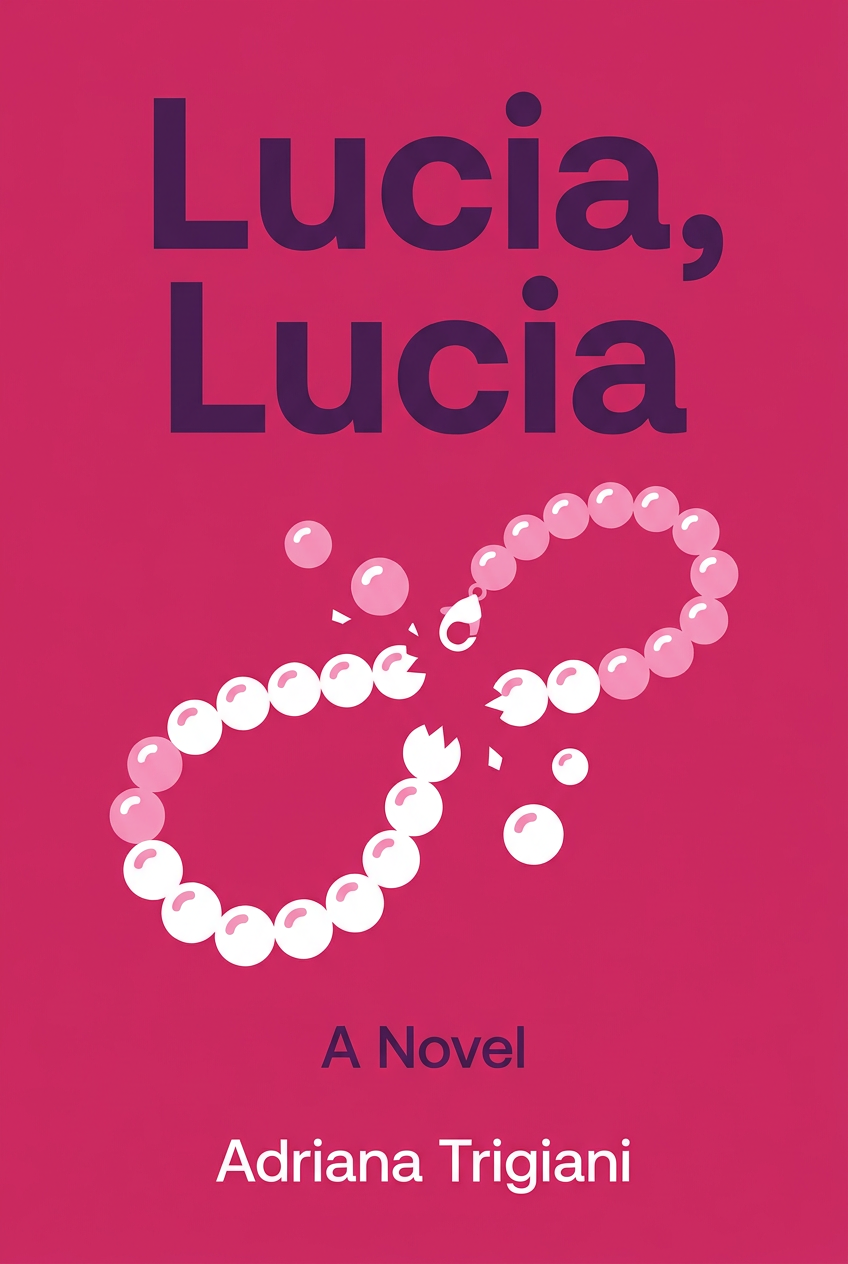
Lucia, Lucia book cover

The Script

Think of a woman you know—your grandmother, a great-aunt, maybe a neighbor from your childhood—who seemed to possess a complete, unshakeable sense of self. Her home had a certain scent, her clothes a particular style, her hands a way of moving that was hers and hers alone. She carried the story of her life as a perfectly tailored coat, one she had stitched herself from the fabric of her choices. These were women who understood that a life was something you made, stitch by stitch, decision by decision, often with limited materials and in the face of immense pressure to conform.

It’s a world of quiet determination, where a woman’s greatest work of art is the life she builds. This is the world Adriana Trigiani was born into and the one she sought to preserve in her novel, Lucia, Lucia. Growing up in a close-knit Italian-American community in Virginia, Trigiani was surrounded by women who were master craftspeople of their own destinies, their stories passed down in kitchens and over sewing machines. She wrote the book as a tribute to that generation of women—specifically her grandmothers—who navigated the seismic shifts of the 20th century with grace and grit, making profound choices about love, family, and career long before society offered them a seat at the table. Trigiani wanted to capture the beauty and sacrifice of a life meticulously crafted, one seam at a time.

Module 1: The Clash of Ambition and Tradition

The story opens in 1950s Greenwich Village, a world rich with tradition. Here, a young woman’s path was often predetermined. Marriage, family, and domestic life were the expected pillars of her existence. But Lucia Sartori is different. She is a rising star at B. Altman & Company, a prestigious department store. She is building a career she loves. This sets up the novel's core conflict.

The central tension revolves around a powerful idea: You must define your own self-worth outside of others' expectations. Lucia feels immense pride in her work. She is a gifted seamstress in the store's exclusive custom apparel department. She earns her own money. She finds deep fulfillment in her craft. This identity clashes head-on with the world she is supposed to enter. Her fiancé, Dante, comes from a traditional family. His mother makes her expectations clear. After the wedding, Lucia must quit her job. She will become a housewife. She will serve the needs of her new family.

Here's the turning point. Lucia refuses. She chooses her career and her independence over a marriage that would diminish her. This decision sends shockwaves through her family. Her mother worries she has ruined her future. But her father, who once escaped an arranged marriage himself, quietly supports her choice. He understands that true fulfillment can't be found in a role someone else designs for you. This module shows us that saying 'no' to a good opportunity can be the most powerful 'yes' to yourself. Lucia turns down a secure, respectable marriage. It seems like a mistake to everyone around her. But it's an act of profound self-respect. She refuses to be a supporting character in someone else's story.

So what happens next? Lucia's choice reflects a broader cultural shift. Women in post-war America were gaining economic independence. They were beginning to imagine lives beyond the domestic sphere. Lucia's story is a microcosm of this change. She navigates the sophisticated world of high fashion by day. She returns to the tight-knit, traditional Italian-American community of Greenwich Village by night. She embodies the tension between the old world and the new. And here’s the thing, this tension is also internal. Lucia still longs for love and family, but she insists it must be on her own terms.

Module 2: The Seduction of a Fabricated Dream

After breaking her engagement with Dante, Lucia is unattached. She’s navigating life as a single, ambitious woman. Then, she meets John Talbot. He is everything Dante was not. He's handsome, mysterious, and moves with an easy confidence through the glamorous upper echelons of New York society. He represents a life of penthouse apartments, candlelit dinners, and exciting social circles. Lucia is captivated. This leads to a critical insight about ambition and desire. Be wary of anyone who sells you a perfect dream without showing you the work.

John Talbot promises Lucia everything. He proposes with a stunning two-carat diamond ring. He speaks of building her a custom house in a wealthy suburb. He showers her with extravagant gifts, like a full-length mink coat. Lucia, who has worked diligently for every dollar she's ever earned, is swept away. She gives him her entire life savings, seventy-five hundred dollars, to put toward their future home. She trusts him completely. She doesn't ask for receipts. She doesn't have the "money talk" her friend Ruth advises. She buys into the fantasy.

But red flags appear, subtle at first. John is evasive about his family and his business dealings. When Lucia gently questions the affordability of the mink coat, he becomes defensive. He turns the question back on her, asking, "You don't trust me, do you?" This is a classic manipulation tactic. It shifts the focus from his lack of transparency to her supposed lack of faith. Lucia's father, Papa, sees it clearly. He is deeply skeptical of John, warning Lucia to "watch what men do, not what they say." This brings us to another key lesson: True partnership is built on transparency. Lucia and John’s relationship is fueled by romance and grand promises. Yet it lacks the foundational trust of open communication, especially about finances. Lucia’s desire for a life different from her parents’ makes her vulnerable. She wants to believe in the effortless glamour John represents. She ignores the quiet alarms.

The dream unravels on her wedding day. John Talbot never arrives at the church. The man she trusted with her heart and her future simply vanishes. The beautiful life he promised was a complete fabrication. The house was never being built. The money was gone. The man himself was a con artist. Lucia is left standing alone at the altar in her wedding gown, a public spectacle of humiliation and betrayal. The perfect dream has become her worst nightmare.

Read More