All Books
Self-Growth
Business & Career
Health & Wellness
Society & Culture
Money & Finance
Relationships
Science & Tech
Fiction
Topics
Blog
Download on the App Store

Martita, I Remember You/Martita, te recuerdo

A Story in English and Spanish

13 minSandra Cisneros

What's it about

Have you ever wondered if the friendships that shaped your youth still echo in the person you are today? This story revisits the intense bonds of young adulthood, exploring how those passionate, formative connections leave an indelible mark on your life, long after you've said goodbye. Follow a young woman's journey from the vibrant streets of Paris to the quiet reflections of her later years. You'll uncover the bittersweet power of memory as she pieces together old letters, recalling a life-changing friendship and the dreams she once shared with her dear friend, Martita.

Meet the author

Sandra Cisneros is a pioneering Chicana writer and recipient of the National Medal of Arts, whose work explores the complexities of identity, community, and belonging across cultures. A dual citizen of the United States and Mexico, she draws from her own experiences of living between two worlds to create stories that resonate with universal themes of memory, friendship, and the search for home. Her unique voice, blending English and Spanish, captures the rich, nuanced realities of the transnational experience reflected in her writing.
Listen Now

Opens the App Store to download Voxbrief

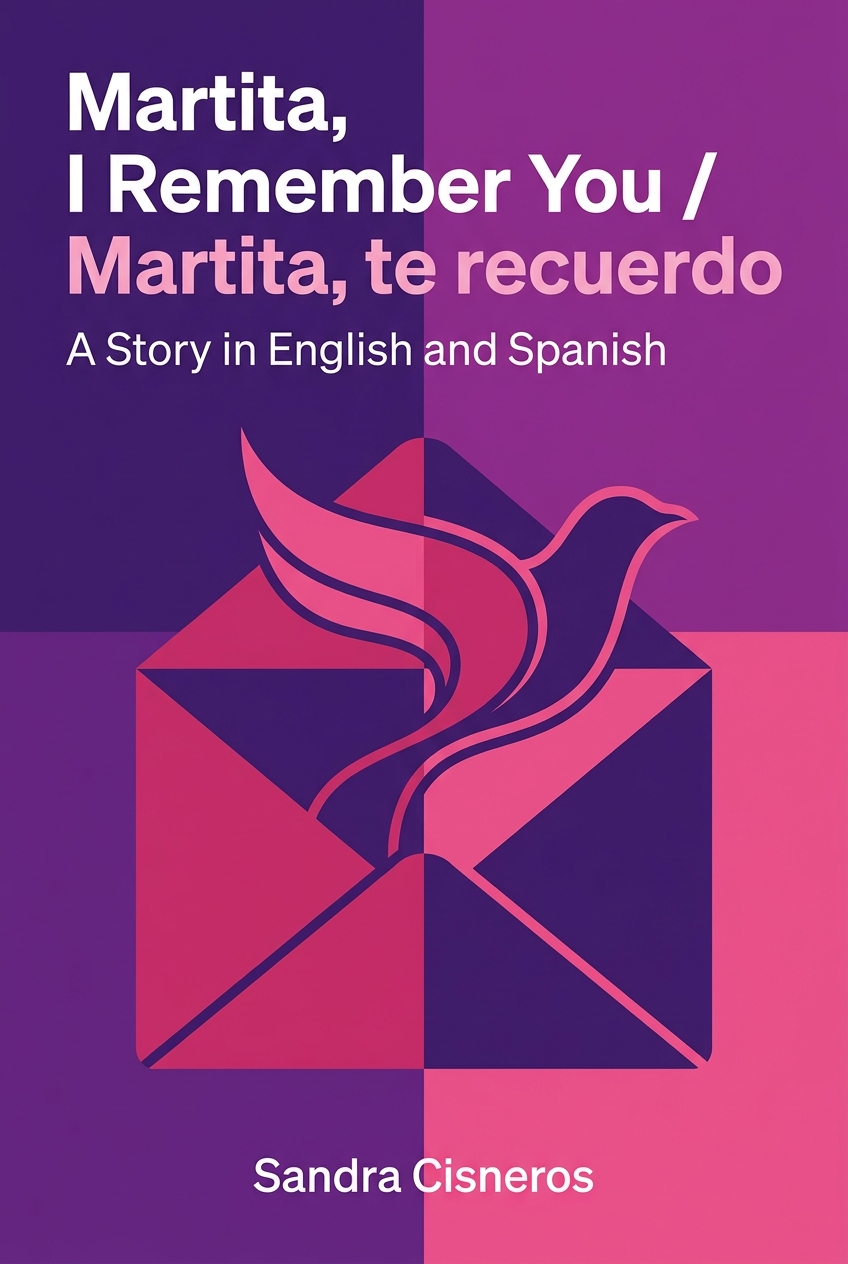
Martita, I Remember You/Martita, te recuerdo book cover

The Script

Imagine you have an old address book, its pages thin and softened with time. You find it tucked away in a drawer while searching for something else entirely. As you flip through, your finger traces over a name, a street, a city—Paris. Instantly, the faint, spidery ink becomes a portal. The scent of rain on cobblestones, the taste of cheap wine, the echoing laughter of a friend you swore you’d never forget—it all rushes back, a vivid, complete world resurrected from a single, forgotten entry.

This flood is the sudden, startling realization that a whole version of yourself—young, broke, idealistic, hungry for life—has been living quietly in the archives of your memory, waiting for the right key. What happens when a letter arrives, turning that key and pulling you back into the fervent friendships and artistic dreams that defined a season of your life? The past is a place you can be called back to, for better or worse, forcing you to reconcile the person you became with the one you once were.

That powerful, immersive pull of a youthful friendship is exactly what Sandra Cisneros wanted to capture. Known for her lyrical prose in masterworks like The House on Mango Street, Cisneros wrote Martita, I Remember You from a deeply personal place. She drew from her own experiences as a young, aspiring artist living abroad, channeling the intense, formative bonds forged in tiny apartments far from home. The story began as a memory, a feeling she couldn't shake—of a friend, a time, a place—and over decades, she painstakingly wove it into this jewel-like novella, a tribute to the ghosts of our youth who never truly leave us.

Module 1: The Performance of Youth

The story drops us into the lives of three young women in Paris. Corina, Martita, and Paola. They are all chasing a dream. But the city of light is also a city of high rent and harsh realities. Their survival depends on a constant, exhausting performance.

This leads to the first core insight. You must project an identity of success, even when you are struggling to survive. The women understand this instinctively. Martita and Paola tell Corina they got their tans skiing in Geneva. It’s a lie. They worked at a tanning salon. But the lie makes them sound wealthy and sophisticated. It gives them social currency in a world that judges appearances. Paola, who came from a provincial Italian town, dyes her hair, gets a new nose, and insists she is from Milan. It’s a complete reinvention. They are performing “Parisian.” They sprinkle their speech with French phrases. They adopt a certain posture. This performance is their armor. It’s a way to belong, or at least to appear like they belong, in a city that can feel deeply alienating.

And here's the thing. This performance is for themselves. Youthful ambition requires you to maintain a fragile, aspirational self-image. Corina refuses to go home to Chicago. Her father begs her to return. But going back means admitting defeat. It means giving up her identity as a "writer" before she has even truly earned it. She lives in what is essentially a broom closet. Her savings are dwindling. But as long as she is in Paris, the dream is alive. She fears the mundane life symbolized by "bus stops and drugstore windows" more than she fears poverty. This is a common state for anyone in a high-stakes environment. You tell yourself a story about who you are and what you're building. You have to believe it, even when the evidence is thin.

Now, let's turn to the next idea. That performance extends to how they navigate the city. Female friendship can become a shield against a hostile world. The three women walk down the Champs-Élysées arm-in-arm. Cisneros writes that this is a conscious tactic. It’s a way "to tell men we are good girls, stay away, leave us the hell alone." Their unity is a form of protection. They create a small, mobile sanctuary in public space. Their bond is a practical survival strategy. When Corina finds herself in an unsafe living situation with two predatory men, Martita and Paola don’t hesitate. They immediately offer her a place to stay. They pool their meager resources. They share a bag of walnuts and tangerines on Christmas Eve. In a city where they are vulnerable, their friendship is their only real safety net.

But flip the coin. Even within this sanctuary, there are cracks. Found families are often built on unstable ground, blurring lines between support and betrayal. The community of young Latin American expats provides a sense of belonging. They gather at parties called peñas. They share music and stories from home. Yet this same community harbors danger. The two puppeteers who offer Corina shelter also objectify and harass her. And in a devastating twist, Martita reveals she is pregnant by one of them, a man who was part of their tight-knit circle. This betrayal shatters the illusion of a perfect found family. It reveals the inherent fragility of these bonds, which are forged in the intense, transient fire of youth.

Read More