All BooksSelf-GrowthBusiness & CareerHealth & WellnessSociety & CultureMoney & FinanceRelationshipsScience & TechFiction
Download on the App Store

Maybe Someday

Your Hand in Mine

19 minZulfi Sayyed

What's it about

Tired of feeling stuck in a cycle of self-doubt and unfulfilled dreams? What if you could finally silence your inner critic and build the unshakable self-love needed to pursue your biggest goals? This summary shows you how to stop waiting for "maybe someday" and start living your best life now. Learn to transform your mindset by identifying and overcoming the limiting beliefs that hold you back. You'll discover practical techniques to cultivate deep self-compassion, turn past failures into future strengths, and create a powerful vision for your future. It's time to take your own hand and step into your potential.

Meet the author

Zulfi Sayyed is a renowned clinical psychologist and couples therapist with over two decades of experience helping individuals navigate the complexities of love, loss, and connection. Witnessing countless stories of hope and heartbreak in his practice inspired him to write Maybe Someday, translating his professional insights into a powerful guide for anyone seeking to heal and find their way back to meaningful relationships. His work is rooted in the belief that even after profound loss, the future holds potential for renewed connection.
Listen Now
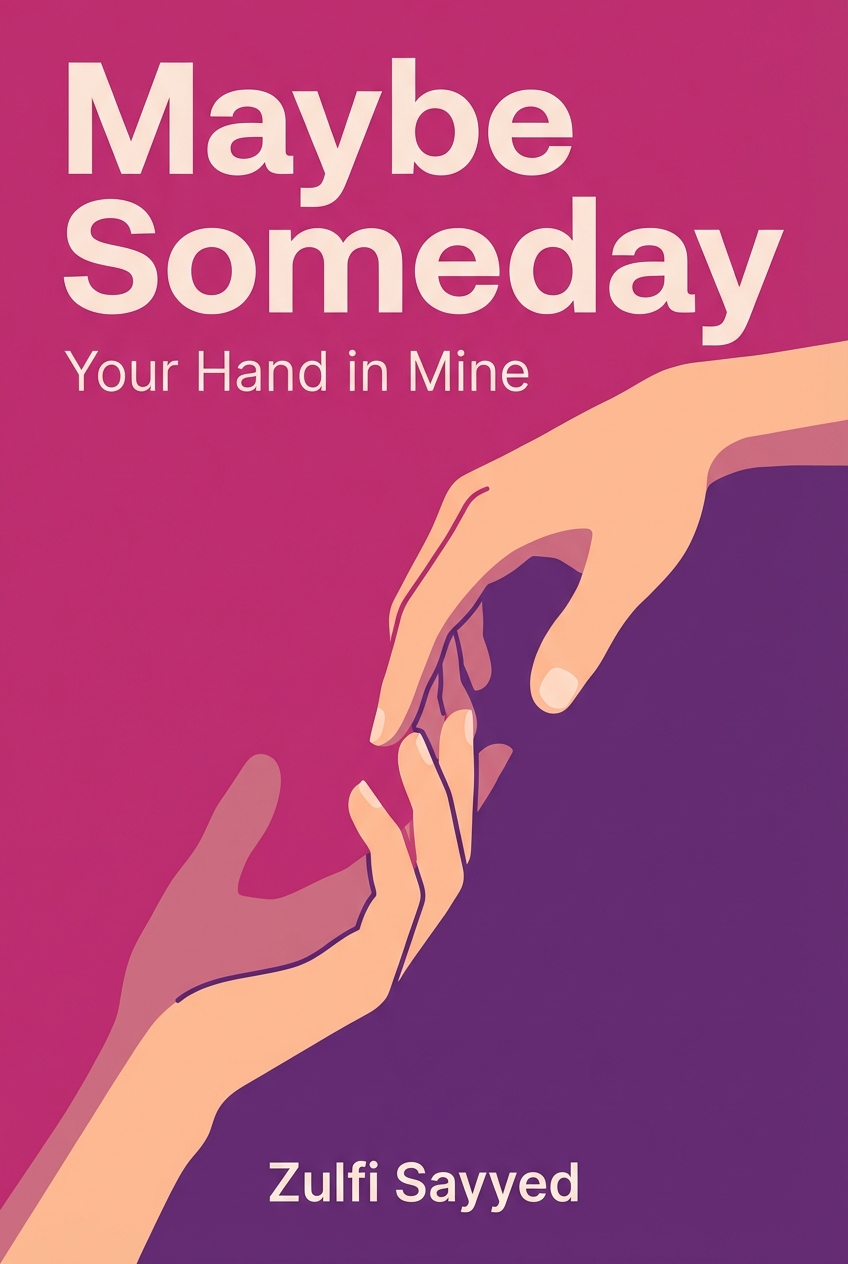
Maybe Someday book cover

The Script

In the basement of a community theater, two set designers are given the same simple instruction: build a doorframe that can stand on its own in the middle of a bare stage. The first designer, a veteran with decades of experience, meticulously measures, cuts, and joins his lumber. Within a few hours, he has a perfectly square, sturdy frame. It is precise, stable, and exactly what was asked for. The second designer, younger and new to the craft, hesitates. She spends the first hour just watching the actors rehearse, sketching the way they walk, the way they slump their shoulders, the way they pause before an entrance. Then, she begins to build. Her frame is not perfectly square. It leans, just slightly, as if tired. The wood is nicked and softened. One side is noticeably more worn, as if from a thousand hands pushing it open. When the two frames are placed on stage, the director walks past the perfect one without a glance. He stops at the second one. He runs a hand over the worn wood. He looks through the slightly crooked opening and says, ‘This one. This is the one that has a story.’ The first frame was a door. The second was a possibility.

That subtle difference—between technical perfection and emotional truth, between building an object and creating a space for a story to happen—is the territory Zulfi Sayyed has explored his entire career. As a poet and playwright who spent years ghostwriting memoirs for ordinary people with extraordinary inner lives, he became fascinated by the gap between the life we live and the story we tell ourselves about it. He saw how we often build perfect, stable frames for our lives, hoping to find meaning, only to discover that meaning lives in the imperfections, the worn-down edges, and the hesitant lean toward an uncertain future. Frustrated by the polished narratives that left no room for doubt or longing, Sayyed wrote Maybe Someday as a collection of imperfect doorframes—an invitation to see the profound story waiting in the quiet, unfinished parts of our own lives.

Module 1: The Internal Battlefield of Ambition

At the heart of the story is Franny Banks, an aspiring actress in 1990s New York. Her biggest obstacle is the relentless battle inside her own head. This struggle is defined by a few key realities.

First, anxiety is a constant, unwelcome collaborator. Franny’s anxiety isn't just pre-audition jitters. It’s a force that shapes her reality. She has nightmares of disastrous auditions where she can’t control her voice and gets pelted with tomatoes. This symbolizes her deep fear of public failure. When she’s awake, this anxiety latches onto her appearance. She obsesses over her "unruly, impossibly curly hair," seeing it as a physical manifestation of her unsuitability for the profession. This internal critic is so powerful it even sabotages her imagined conversations. She fantasizes about asking a successful classmate for advice, only for the daydream to spiral into a full-blown panic attack. Her anxiety isolates her. It makes every professional step feel like a potential catastrophe.

This leads to a crucial coping mechanism. Humor and self-deprecation are armor against disappointment. Franny constantly uses wit to deflect from her deep-seated fears. When her roommate wakes her by throwing a shoe, she doesn’t get angry. She fires back with a sarcastic pitch for his new "personal wake-up service." This humor masks her embarrassment. She uses it on herself, too. When trying to find the motivation for a run, she dryly observes, "I don’t think I’ve ever heard Meryl Streep attribute her success as an actor to her stellar cardiovascular health." It's a way of acknowledging the absurdity of her own efforts while gently mocking her anxieties. This armor is most visible when she thinks about her backup plan. She could become a teacher and marry her college boyfriend, Clark. She describes this with a resigned, humorous vagueness. She'd be living in the suburbs, doing "well, something all day." That little phrase powerfully understates her lack of passion for this "normal life." It's how she copes with the terrifying possibility of failing at her dream.

But here’s the thing. This humor is a shield against a very real threat. Self-imposed deadlines transform ambition into a source of panic. Franny made a deal with herself. She has three years in New York to make it as an actress. The book opens when she has only six months left. This deadline hangs over everything. It turns every day into a frantic progress report. She fears the "slippery slope" of extending her goal. A three-year plan becomes five. Then, before she knows it, she’s serving "lukewarm lasagna to a bunch of businessmen who call you 'Excuse me.'" This vivid nightmare of mediocrity is her ultimate fear. Her fear is of becoming invisible. She has made some progress. She has a good waitressing job, a commercial agent, and a spot in a respected acting class. But she dismisses these achievements. One accomplishment a year isn't what she envisioned. The gap between her tangible progress and her idealized dream creates a constant, crushing pressure.

Read More