All Books
Self-Growth
Business & Career
Health & Wellness
Society & Culture
Money & Finance
Relationships
Science & Tech
Fiction
Topics
Blog
Download on the App Store

My Twenty-five Years in Provence

Reflections on Then and Now (Vintage Departures)

12 minPeter Mayle

What's it about

Ever dreamed of escaping the daily grind for a sun-drenched life in the South of France? Discover how to turn that fantasy into your reality. Peter Mayle, the beloved author who started it all, shares his final love letter to the region he called home for a quarter-century. Journey back to Provence with Mayle as he reveals the secrets to truly living the good life. You'll learn what's changed and what enduring charms remain, from navigating local markets and eccentric neighbors to savoring the simple pleasures of food, wine, and friendship. This is your guide to embracing the authentic Provençal spirit.

Meet the author

Peter Mayle was the beloved British author whose bestselling memoir, A Year in Provence, single-handedly inspired a generation of readers to dream of life in the South of France. After leaving a successful career in advertising, he and his wife moved to Provence, fully immersing themselves in the culture he would so charmingly document. This final book, completed just before his death in 2018, offers his ultimate reflections on the region he called home and shared with the world.
Listen Now

Opens the App Store to download Voxbrief

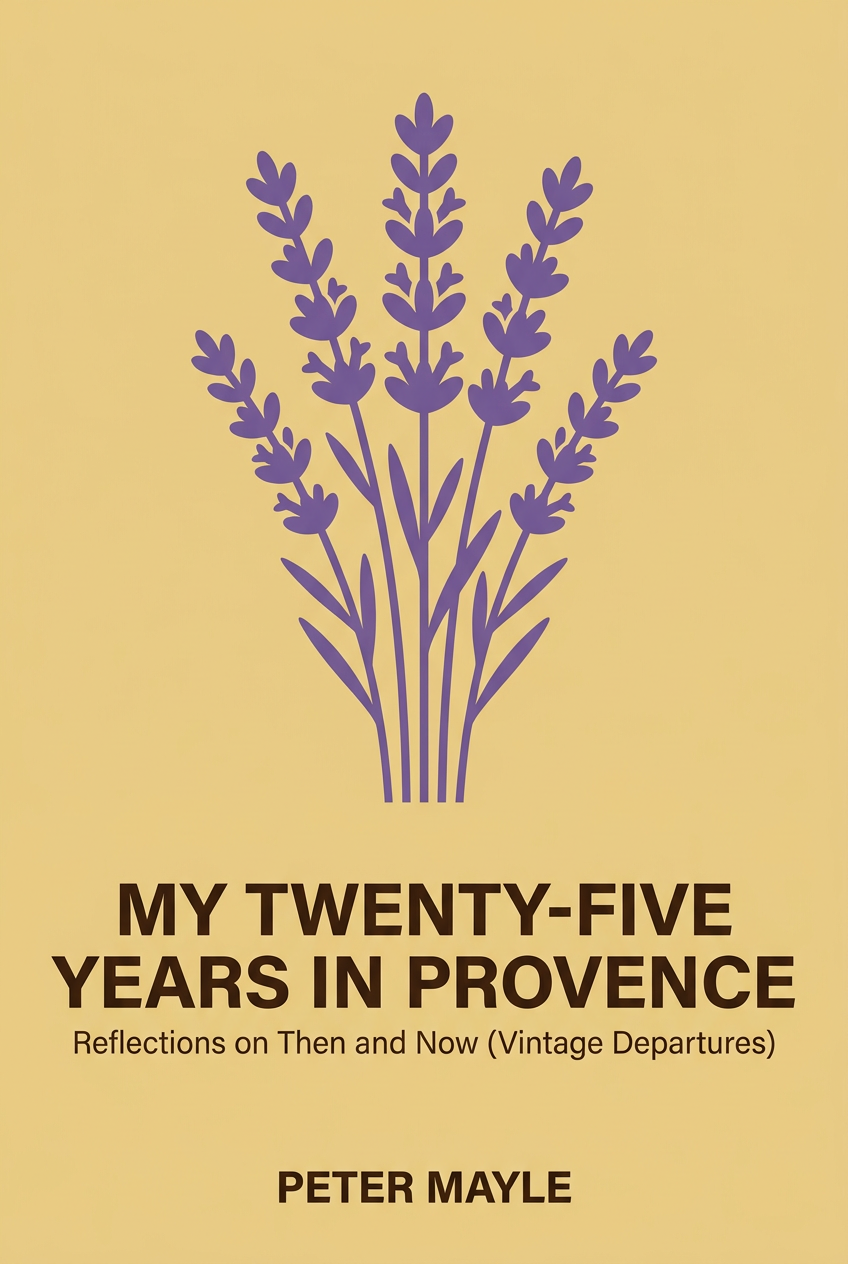
My Twenty-five Years in Provence book cover

The Script

Think of two different approaches to making wine. One vintner uses precise, automated temperature controls, follows a strict timetable, and relies on laboratory analysis to determine the exact moment to harvest. Every variable is managed, every outcome predicted. Their wine is consistent, clean, and technically perfect. Now, imagine another vintner, one who walks the rows every morning, feeling the soil's dampness, tasting a grape to gauge its sweetness, and watching the sky for signs of rain. Their decisions are guided by generations of inherited knowledge and a deep, personal relationship with the land. Their wine might be less predictable, but it carries the unique character of its vintage—the story of that year's sun and storms.

This is a choice between two ways of life. One seeks control, the other seeks connection. One values efficiency, the other embraces the beautiful, frustrating, and often comical messiness of reality. This exact trade-off is what drove Peter Mayle, a successful advertising executive accustomed to the fast-paced, high-pressure world of London, to make a radical change. He and his wife didn't just go on vacation; they sold their home, packed their bags, and moved into a 200-year-old farmhouse in the Luberon region of Provence. 'My Twenty-five Years in Provence' is the chronicle of their hilarious, and at times bewildering, immersion into a culture that operates on an entirely different rhythm—one dictated by the seasons, the long lunch, and the stubborn quirks of neighbors.

Module 1: The Culture Shock of Slow Living

The first major adjustment for any newcomer to Provence isn't the language; it's the clock. The entire region operates on a rhythm that can feel maddening to an outsider used to efficiency. Mayle quickly learns that the fast-paced, one-stop-shop mentality of modern life has no place here. Instead, you must embrace a slower, more deliberate pace of daily life. A simple trip to buy groceries becomes a social tour. You don't just go to the supermarket. You visit the baker for bread, the butcher for meat, and the market for vegetables. Each stop is a performance. A negotiation for two melons can take ten minutes, involving detailed inspection, discussion, and a bit of friendly salesmanship. This is community in action.

And here's the thing: this rhythm is non-negotiable. Mayle’s first shopping lesson was a hard one: everything closes for lunch. From noon until two, the world stops. This is a sacred ritual. Being late for lunch is a cultural sin. This forced pause teaches patience and forces a re-evaluation of what’s truly urgent. It’s a stark contrast to a world where lunch is often a sandwich eaten at a desk.

Furthermore, mastering local life requires learning a non-verbal language. So much of the communication in Provence is physical. It’s a rich vocabulary of tics and gestures that punctuate rapid-fire French. A tap on the nose signals discretion. A jiggle of the hand expresses doubt. To truly integrate, you have to learn to read these visual cues. It's a reminder that communication is about observing and participating in the subtle dance of human interaction. This is especially true when navigating the local real estate market, a world of its own. Agents describe every sagging roof as "picturesque" and every outdated kitchen as "traditional." It’s a game of creative language and hidden pitfalls, like the house Mayle nearly bought before discovering an outbuilding was lost in a card game, creating a legal nightmare. This experience underscores a critical lesson for anyone making a major life change: the most important details are often the ones left unspoken.

Module 2: The Art of Provençal Pleasure

Once you survive the initial shock of the local pace, you begin to understand the philosophy behind it. Life in Provence is organized around the pursuit of simple, authentic pleasure, especially when it comes to food and wine. This is about a deep, almost religious reverence for quality ingredients and tradition. Mayle discovers that true hospitality is found in simplicity and authenticity. He celebrates a small, family-run restaurant called Chez Monique. The menu is simple and changes daily. The wine list is just red, white, or rosé, served in carafes. The chef is content to cook what he knows and what is fresh. This focus on doing one thing well is a powerful business lesson in itself.

Building on that idea, the experience of enjoying these simple pleasures is deeply social. When Madame Monique runs the restaurant, she not only welcomes guests but also their dogs, providing a bowl of water. Her own dog, Alphonse, greets newcomers. This creates an atmosphere that is personal and inclusive, a world away from the sterile, transactional nature of many modern restaurants. The same principle applies to buying wine. It's a "marvelously pleasant and civilized" interaction where you are invited to taste at the vineyard, turning a commercial transaction into a social event.

But flip the coin. This deep-rooted culture has its own challenges. Integrating into a small community means accepting intense social scrutiny. As foreign outsiders, Mayle and his wife become "a minor local news item." Strangers stop them in the street to ask about their house hunt. An old man feels comfortable enough to ask to use their telephone, a rare commodity, to make a long-distance call to Martinique. These interactions are a double-edged sword. They represent a neighborly, close-knit community, but also a near-total lack of privacy. Finding the balance between being part of the village and maintaining personal space becomes a crucial survival skill. It teaches that true belonging is about gracefully navigating the unwritten social rules of the community you wish to join.

Read More