All Books
Self-Growth
Business & Career
Health & Wellness
Society & Culture
Money & Finance
Relationships
Science & Tech
Fiction
Topics
Blog
Download on the App Store

My Wicked Wicked Ways

Poems (Vintage Contemporaries)

15 minSandra Cisneros

What's it about

Ever feel like you're living between two worlds, struggling to define your own identity? Discover how to embrace your multifaceted self and find power in your unique voice. This collection of poems is your guide to navigating the complexities of culture, womanhood, and personal freedom. Through Sandra Cisneros's intimate and rebellious verses, you'll explore the vibrant streets of Chicago, the dusty landscapes of Texas, and the rich heritage of Mexican-American life. Uncover the "wicked ways" of a woman claiming her own story—from family ties and passionate loves to the defiant act of becoming yourself, unapologetically.

Meet the author

Sandra Cisneros is a pioneering Chicana writer and recipient of the National Medal of Arts, celebrated for her lyrical and groundbreaking explorations of identity and community. Born in Chicago, the only daughter in a family of seven children, she frequently moved between the United States and Mexico, an experience that profoundly shaped her unique voice. Her poetry in My Wicked Wicked Ways captures the complexities of navigating cultural expectations, female desire, and the journey to forge a self-defined path.
Listen Now

Opens the App Store to download Voxbrief

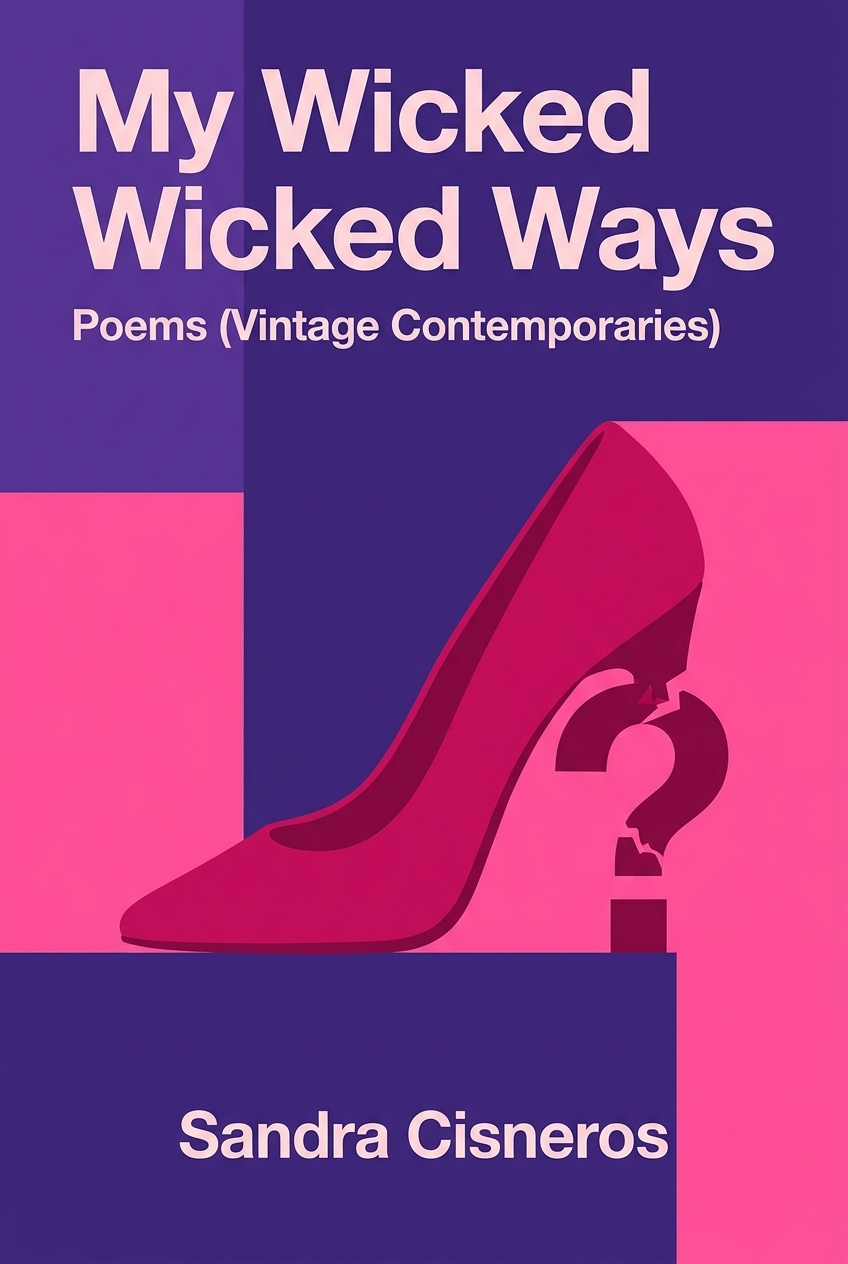
My Wicked Wicked Ways book cover

The Script

In a family, there are two altars. One is in the living room: the public shrine of carefully framed photographs, the smiling, well-behaved children, the proud parents, the story everyone agrees upon. It is a story of unity, of shared values, of a respectable path. Then there is the second altar, the one kept in a dusty back room of the heart. This one is built from loose, uncaptioned snapshots: the forbidden kiss, the secret cigarette, the dress that was too loud, the moment of defiance that felt more true than a lifetime of obedience. This altar holds the jagged pieces of a self that doesn't fit the official family portrait, the desires and contradictions that are the real, messy, glorious truth of a life being lived.

For a young woman straddling two cultures—the strict, traditional world of her Mexican heritage and the freewheeling landscape of America—that second altar becomes a sanctuary. It’s the only place she can be whole. Sandra Cisneros built her literary career in that very space, giving voice to the whispers from that hidden, private altar. A pioneer of the Chicano literary movement, Cisneros wrote My Wicked Wicked Ways as a declaration. These poems were her way of arranging her own snapshots, of honoring the wicked, wonderful, and contradictory truths of a woman claiming her own story, one line at a time.

Module 1: The Architecture of a Rebel Identity

This first module explores how Cisneros constructs an identity from the ground up. It’s a process of defiance, displacement, and artistic transformation.

The journey begins with a fundamental choice. You must reject the life others have planned for you. Cisneros makes this clear from the start. She "chucked the life my father’d plucked for me." This was a radical break from familial and cultural expectations. For many, especially in demanding professional fields, there's a pre-written script. Go to the right school. Get the right job. Climb the ladder. Cisneros suggests that true self-creation requires questioning that script. It requires the courage to leap, even if it feels like jumping into fire. This is the foundational act of autonomy. It’s the decision to be the author of your own story.

So what happens next? After the rejection comes the search. To build a new self, you must use solitude and displacement as tools for self-discovery. Cisneros didn't just leave her father's house; she "vagabonded the globe like a rich white girl." She embraced being an outsider. She found power in the silence of her own apartment. This solitude was a crucible. It forced her to confront herself and fueled her creativity. This is a powerful lesson. We often see solitude as a problem to be solved. We fill our calendars to avoid empty space. But Cisneros shows that intentional isolation can be a powerful asset. It creates the mental and emotional room needed to hear your own voice above the noise of external expectations.

Building on that idea, the final piece of this architecture involves a powerful reframing. It’s the ability to transform personal struggle into creative fuel. Cisneros calls her early writing years the "girl grief decade" and her "wicked nun years." She doesn't hide the pain, loneliness, or rebellion. She lists her "bad" acts with a certain pride: "Played at mistress. / Tattooed an ass. / Lapped up my happiness from a glass." Why? Because these experiences were raw material. She concludes, "I took the crooked route and liked my badness." This is a critical insight. Our culture often tells us to hide our scars and our missteps. Cisneros argues the opposite. Your struggles, your "wickedness," your deviations from the norm—these are the most fertile grounds for innovation and art. They are the source of your unique perspective and your most powerful work.

Read More