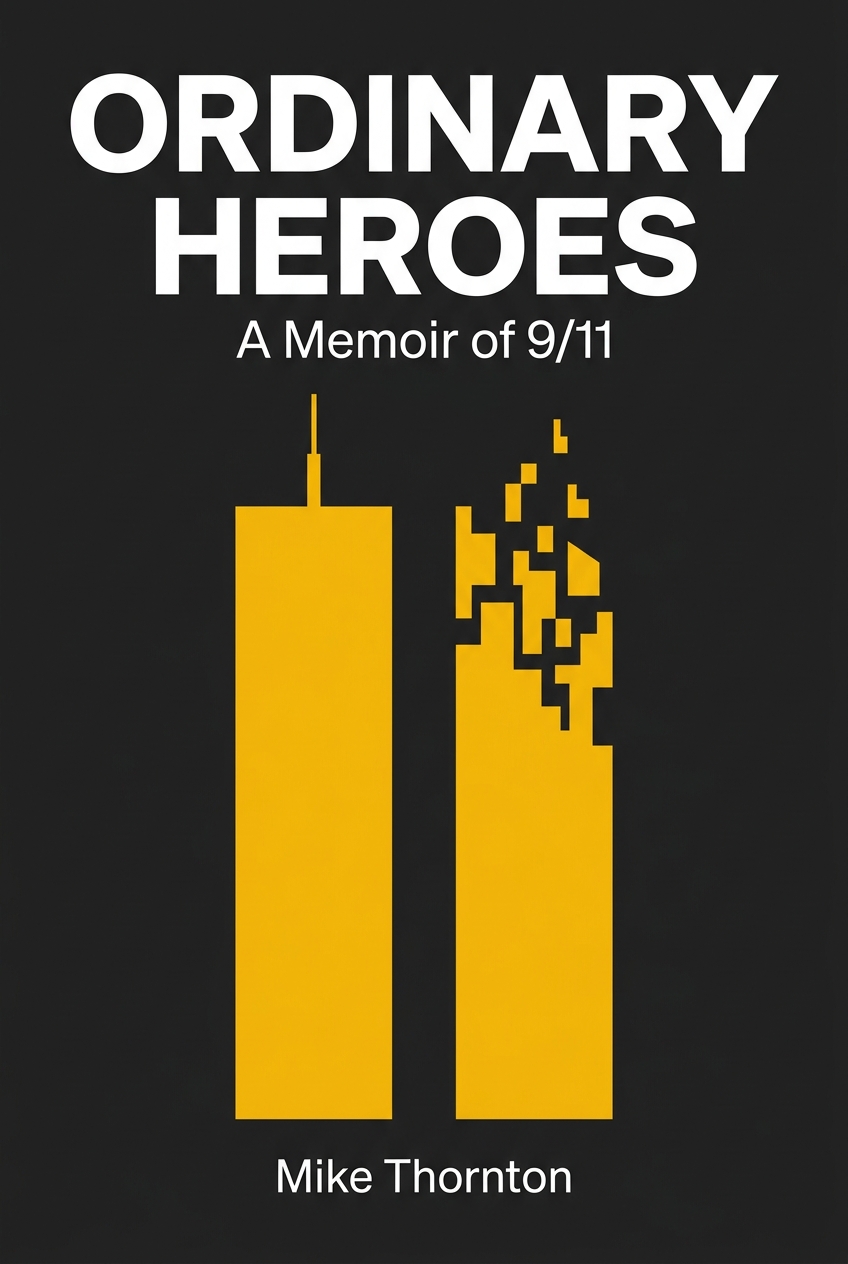
Ordinary Heroes
A Memoir of 9/11
What's it about
What if the greatest acts of courage aren't planned, but are born from split-second decisions in the face of chaos? Discover the true story of how ordinary people, just like you, can rise to become heroes when confronted with the unthinkable. This gripping memoir of 9/11 takes you inside the World Trade Center with survivor Mike Thornton. You'll learn the minute-by-minute survival strategies and selfless choices made by everyday office workers that saved countless lives, proving that heroism is found in the heart, not the training.
Meet the author
Mike Thornton is a retired Fire Department of New York FDNY Battalion Chief who led his team through the rescue and recovery efforts at Ground Zero on September 11, 2001. His two decades of service in some of the city’s busiest firehouses provided the foundation for his firsthand account of the courage, sacrifice, and resilience he witnessed that day. This book is his tribute to the ordinary people who became heroes and a testament to the enduring strength of the human spirit in the face of tragedy.
The Script
On the night of October 31, 1972, a small rubber boat carrying five U.S. Navy SEALs slipped through the dark waters off the coast of North Vietnam. Their mission: a silent, high-stakes reconnaissance of a heavily defended enemy position. The plan was precise, rehearsed, and seemingly foolproof. But within minutes, the plan disintegrated. The team found itself in a chaotic firefight, pinned down and taking heavy casualties. One SEAL, Mike Thornton, was grievously wounded and left for dead. His lieutenant, Tommy Norris, was also hit and exposed. In that moment of absolute collapse, when training and protocol offered no answers, something else took over. Thornton, despite his own life-threatening injuries, turned back into the storm of gunfire to rescue his fallen comrade.
This act of defiance against impossible odds—of choosing to save one person when the entire mission was lost—is the defining moment in the life of the man who wrote this book. Mike Thornton is one of the most decorated SEALs in history, awarded the Medal of Honor for that very rescue. But for Thornton, the medal was the beginning of a question he would spend his life exploring. Why do some people, in moments of extreme crisis, make the choice to run toward danger for the sake of others? He wrote Ordinary Heroes as an investigation into the source of that impulse he felt on the battlefield—an impulse he believes exists within everyone, waiting for its moment.
Module 1: The Firehouse Ethos — A Culture of Mission and Brotherhood
Before a single alarm sounds, the foundation of any effective response team is its culture. For the Fire Department of New York, this culture is built on a shared mission, deep camaraderie, and structured rituals. It's a professional family.
The author shows us that the desire to be a hero is a powerful, unifying motivator. New firefighters, known as "probies," often join for a simple reason. One rookie put it plainly: "I always kinda wanted to be a hero." This is about a deeply felt calling to help others in danger. It’s a purpose that gives the job profound meaning. As one captain said, you need to look in the mirror each morning and know you are doing something with your life. This shared sense of mission is the bedrock of the firehouse.
This mission is reinforced through daily rituals. For instance, communal meals are a critical tool for team cohesion. Every night, firefighters cook and eat together. They use this time to debrief after calls, share stories, and strengthen bonds. The hierarchy is respected even here. Officers are forbidden from cooking or washing pots. That is the firefighters' domain. This ritual reinforces that everyone has a role and that they are a single, interdependent unit.
Next, new members must earn their place through a period of intense testing and integration. A probie like Tony Benetatos starts at the bottom. He performs menial tasks like mopping floors and washing the fire trucks. He endures good-natured hazing, like having a bucket of water dumped on his head. An older firefighter explained the logic. "We’re going to bust your chops till you laugh about it." This process is about testing a new member's resilience and humility. It ensures they can handle pressure and are truly committed to the team.
Finally, the book makes it clear that firefighting operations depend on highly specialized roles and seamless teamwork. The firehouse on Duane Street housed two distinct units. Engine 7 was the engine company, responsible for getting water on the fire. Ladder 1 was the ladder company, or "truck," responsible for search and rescue. Handling a fire hose alone is a team sport, requiring four people to manage the pressure and direct the nozzle. Every member, from the chauffeur positioning the truck to the officer in command, must execute their role flawlessly. This division of labor, drilled through relentless training, allows the team to function as a single, effective organism in the chaos of a fire.