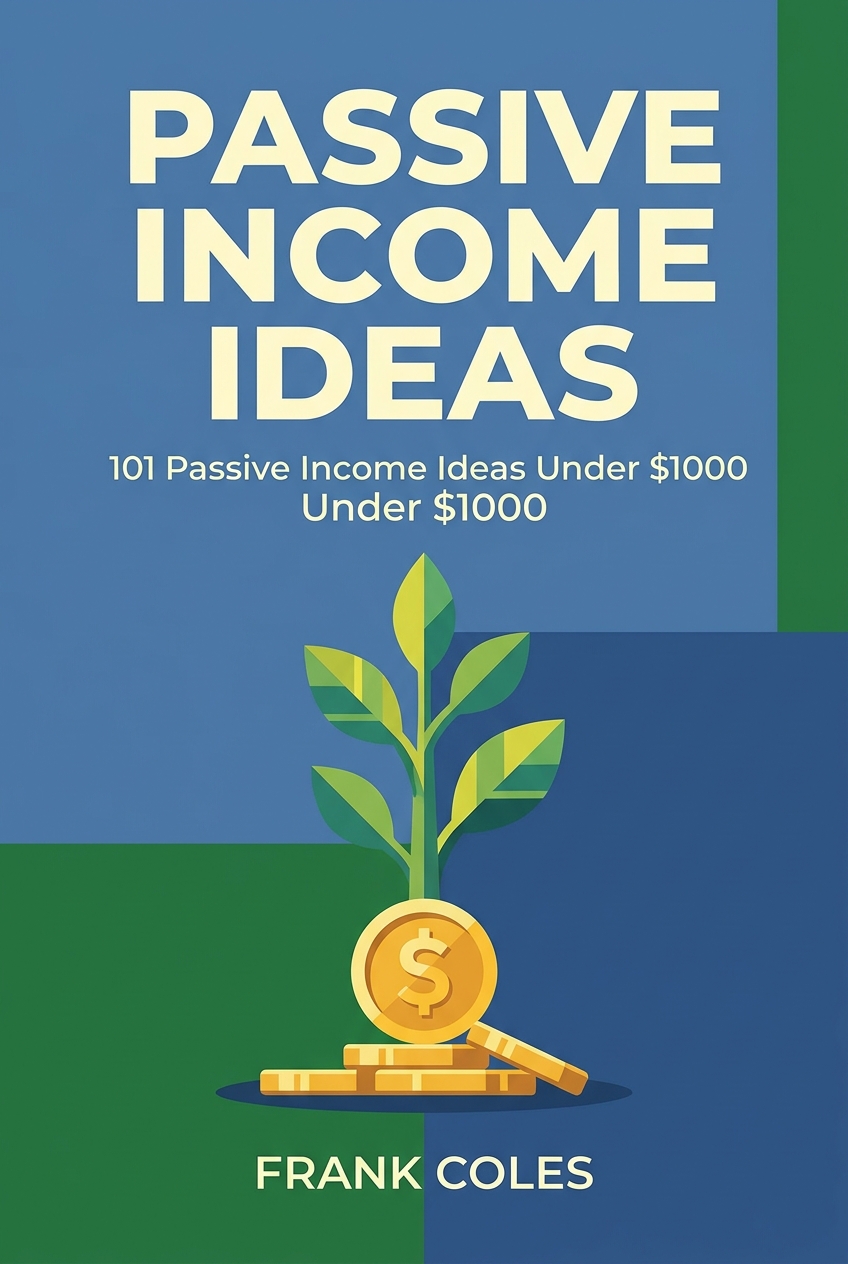
Passive Income Ideas
101 Passive Income Ideas Under $1000
What's it about
Tired of trading your time for a paycheck? What if you could build income streams that make money while you sleep, travel, or relax? This guide reveals how to start generating passive income with less than $1000, turning your financial daydreams into a tangible reality. Discover 101 practical, low-cost strategies you can implement today. You'll learn the secrets to launching a profitable blog, creating digital products, investing in dividend stocks, and much more. Forget get-rich-quick schemes; this is your blueprint for building sustainable wealth, one smart investment at a time.
Meet the author
Frank Coles is a self-made entrepreneur and financial independence coach who has personally built seven distinct passive income streams, each starting with less than $1000. After escaping the 9-to-5 grind by meticulously testing low-cost business models, he dedicated himself to demystifying financial freedom for everyone. His practical, real-world experience forms the foundation of the accessible strategies he shares, proving that significant wealth generation doesn't require a large initial investment, just the right knowledge.
What's it about
Tired of trading your time for a paycheck? What if you could build income streams that make money while you sleep, travel, or relax? This guide reveals how to start generating passive income with less than $1000, turning your financial daydreams into a tangible reality. Discover 101 practical, low-cost strategies you can implement today. You'll learn the secrets to launching a profitable blog, creating digital products, investing in dividend stocks, and much more. Forget get-rich-quick schemes; this is your blueprint for building sustainable wealth, one smart investment at a time.
Meet the author
Frank Coles is a self-made entrepreneur and financial independence coach who has personally built seven distinct passive income streams, each starting with less than $1000. After escaping the 9-to-5 grind by meticulously testing low-cost business models, he dedicated himself to demystifying financial freedom for everyone. His practical, real-world experience forms the foundation of the accessible strategies he shares, proving that significant wealth generation doesn't require a large initial investment, just the right knowledge.
The Script
You've reached the end of the free preview.