Post Corona
From Crisis to Opportunity
What's it about
Will the post-pandemic world crush your business, or will you be one of the few who thrives? The COVID-19 crisis didn't just change the world—it accelerated the future, creating unprecedented threats and opportunities. Discover which trends are now permanently reshaping the business landscape. Learn how to navigate this new reality from NYU professor Scott Galloway. He reveals how the pandemic fast-forwarded a decade of tech adoption and market consolidation, creating a winner-take-all environment. You'll get a clear-eyed analysis of which companies will dominate and how you can position yourself and your career to capitalize on the immense shifts ahead.
Meet the author
Scott Galloway is a Professor of Marketing at NYU Stern School of Business, where he teaches brand strategy and digital marketing to second-year MBA students. An outspoken entrepreneur who has founded nine companies, his incisive and often provocative analysis of the tech landscape gives him a unique lens on the business shifts accelerated by the pandemic. Galloway combines academic rigor with real-world battle scars to identify the looming crises and massive opportunities emerging in a post-corona world, making his insights essential for any modern leader.
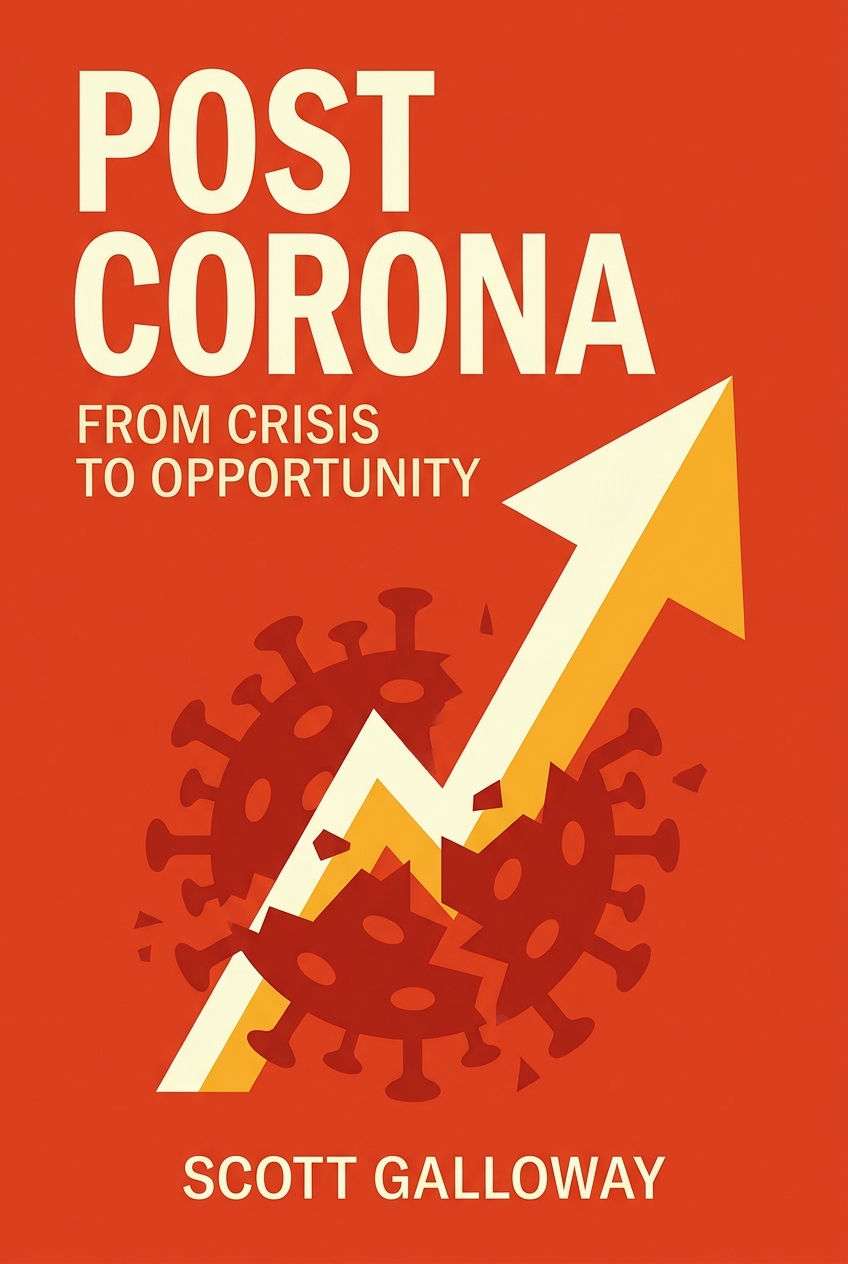
What's it about
Will the post-pandemic world crush your business, or will you be one of the few who thrives? The COVID-19 crisis didn't just change the world—it accelerated the future, creating unprecedented threats and opportunities. Discover which trends are now permanently reshaping the business landscape. Learn how to navigate this new reality from NYU professor Scott Galloway. He reveals how the pandemic fast-forwarded a decade of tech adoption and market consolidation, creating a winner-take-all environment. You'll get a clear-eyed analysis of which companies will dominate and how you can position yourself and your career to capitalize on the immense shifts ahead.
Meet the author
Scott Galloway is a Professor of Marketing at NYU Stern School of Business, where he teaches brand strategy and digital marketing to second-year MBA students. An outspoken entrepreneur who has founded nine companies, his incisive and often provocative analysis of the tech landscape gives him a unique lens on the business shifts accelerated by the pandemic. Galloway combines academic rigor with real-world battle scars to identify the looming crises and massive opportunities emerging in a post-corona world, making his insights essential for any modern leader.
The Script
You've reached the end of the free preview.