All Books
Self-Growth
Business & Career
Health & Wellness
Society & Culture
Money & Finance
Relationships
Science & Tech
Fiction
Topics
Blog
Download on the App Store

Sonny Boy

A Memoir

12 minAl Pacino

What's it about

Ever wonder what truly drives a legend? Get ready to step behind the curtain and into the mind of Al Pacino. This is more than a memoir; it's a raw, unfiltered masterclass on life, art, and the relentless pursuit of a dream against all odds. You'll discover the untold stories from his childhood in the South Bronx that forged his resilience and the on-set secrets from The Godfather and Scarface that defined his craft. Pacino reveals his personal struggles with fame, fatherhood, and finding his true voice, offering a powerful blueprint for anyone determined to live an authentic, passionate life.

Meet the author

Al Pacino is one of the most acclaimed and influential actors in the history of film, an Academy Award winner whose iconic performances have defined cinema for over fifty years. This legendary career, however, began with a difficult childhood in the South Bronx, a period that shaped his artistic soul and fueled his relentless pursuit of truth on stage and screen. In Sonny Boy, Pacino turns the lens on himself, revealing the intensely personal story of the young man who would become a cultural titan.
Listen Now

Opens the App Store to download Voxbrief

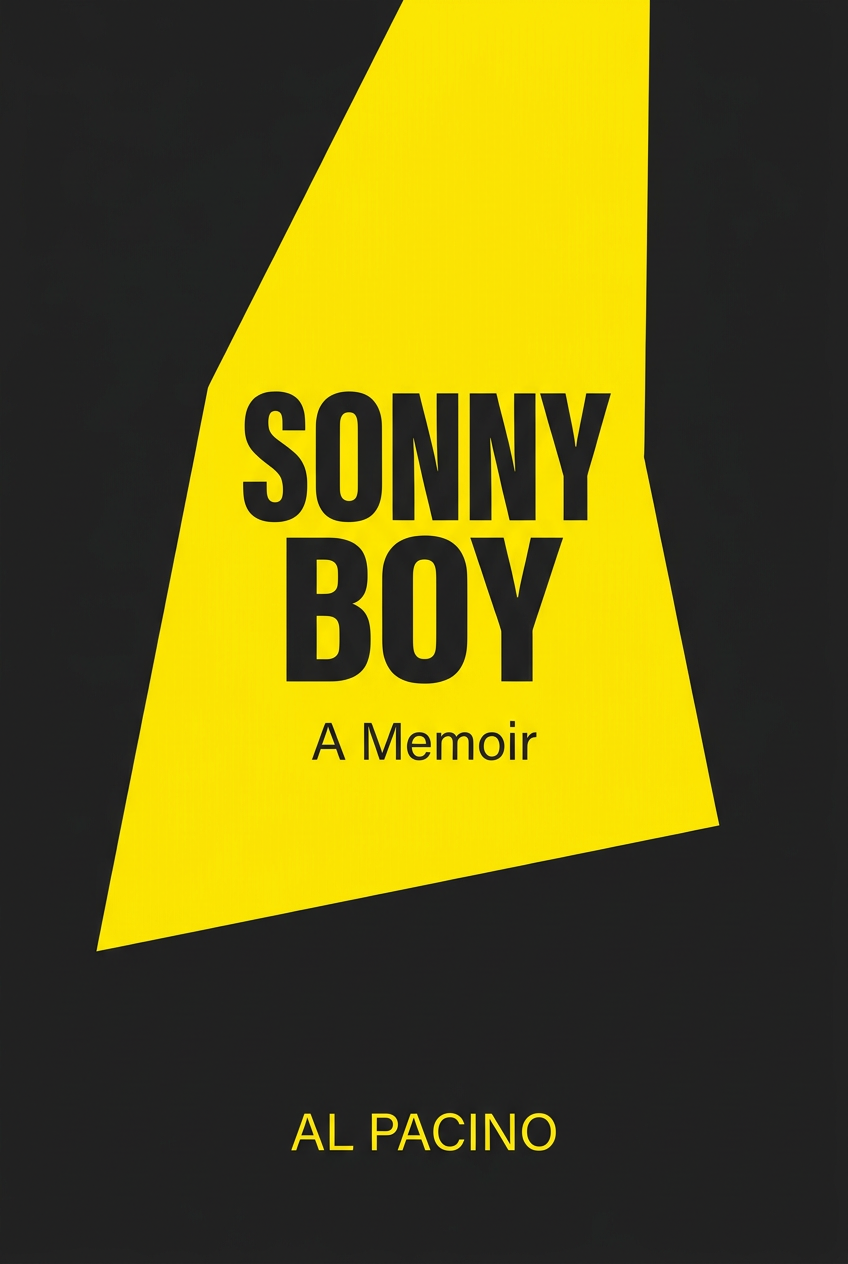
Sonny Boy book cover

The Script

There are two kinds of memory. The first is a photograph, a clean, well-lit portrait of a moment. It’s the official story, the one you show at parties and family gatherings—sharp, clear, and agreed upon. It says, 'This is what happened.' The second kind of memory is a stain on the floorboards. It’s a dark, irregular shape that you might try to scrub away or cover with a rug, but you always know it’s there. This memory is the lingering evidence of an event. It holds the smell of spilled wine, the echo of a slammed door, the feeling of a cold draft that shouldn't exist. The photograph tells a story, but the stain is the story, in all its messy, inconvenient, and undeniable truth.

Most of us live our lives collecting photographs, polishing the official narrative. We tell ourselves and others the clean version of our childhood, our successes, our relationships. But what happens when the floorboards of your life are covered in stains, when the unofficial story is the only one that feels real? This is the question that haunted Al Pacino for decades. Known to the world for his explosive, iconic characters—men who lived their lives like open wounds—Pacino’s own story was a quieter, more fragmented affair, a collection of stains he felt he could never properly explain. He grew up with the ghosts of South Bronx apartments and the unspoken histories of his Sicilian-American family, not a clear narrative. "Sonny Boy" is Pacino’s attempt to finally get down on his hands and knees, to trace the outlines of those stains, and to understand the story they’ve been telling all along.

Module 1: The Actor's Instrument Is a Wounded One

Pacino's story begins with a profound insight into the source of his art. For him, acting was an instinct born from instability and observation. His early life was a whirlwind of motion. His parents split when he was just two. He and his mother were constantly moving, living in tenements across the South Bronx. This chaos became his first teacher.

He argues that authentic performance is forged in the crucible of personal experience, not academic technique. Pacino’s only entertainment was the movies. His mother took him from the age of three. He would come home and reenact entire films, like Ray Milland’s harrowing performance in The Lost Weekend. As a small child, he was already channeling complex adult emotions because he felt them, not because he was taught. His "instrument" was tuned by poverty, by the absence of his father, and by the vibrant, dangerous streets of his neighborhood. This approach suggests that to truly connect with a role, or any creative endeavor, you must bring your whole life to it. The scars, the joys, the ruptures—they are the source of your unique voice.

This leads to another core idea. Mentorship provides the structure that raw talent desperately needs. Pacino was a ship without a rudder until he met his teacher and lifelong friend, Charlie Laughton. After being kicked out of the prestigious HB Studio for a performance deemed too raw and personal, it was Charlie who explained what had really happened. The old guard, he said, "saw the future" in Pacino's visceral style and was terrified by it. Charlie became the father figure Pacino never had. He provided life lessons, literary recommendations, and unwavering belief alongside his acting guidance. He gave Pacino the framework to harness his chaotic energy. This reminds us that talent isn't enough. We need trusted guides who can see our potential, give us honest feedback, and help us build the discipline to turn raw ability into masterful execution.

And here's the thing about that raw ability. True artistic drive is a compulsion, a necessity for survival. Pacino makes a critical distinction. He says other people wanted to act. He had to. He frames his ambition as a matter of survival. This was the only path for him. This conviction was his "Higher Power," an unshakable belief that he would be a star, even when he was homeless and sleeping in hallways. This was a quiet, internal certainty that gave him the strength to endure years of poverty, rejection, and menial jobs. For any professional facing immense challenges, this principle is a powerful anchor. When your work feels like a core part of your identity, a necessity for your own survival, you unlock a level of resilience that ambition alone can't provide.

Module 2: The High Wire of Hollywood

We've explored the foundations of Pacino's craft. Now, let's turn to how he navigated the treacherous world of professional filmmaking. His transition to Hollywood was a constant battle between his artistic instincts and the commercial demands of the studio system.

A key lesson from this period is that you must trust your director's vision, especially when you can't see the full picture. When Francis Ford Coppola offered Pacino the role of Michael Corleone in The Godfather, the studio was furious. They wanted a star, not an unknown theater actor. Throughout the early weeks of filming, Pacino was on the verge of being fired. The executives watched the dailies and saw nothing. They complained he wasn't "doing" anything. But Pacino and Coppola had a plan. Michael's transformation was meant to be a slow burn. His power would emerge quietly. Pacino was lost, insecure, and felt like an outsider. But he held on to one fact: "Francis wanted me." That trust in his director's belief was his lifeline. It's a powerful lesson for anyone in a collaborative, high-stakes environment. You won't always have all the answers, but trusting a leader with a clear vision can give you the stability to do your best work.

But flip the coin. Sometimes, that trust has to be in yourself. Artistic integrity often requires you to defy conventional wisdom and say 'no.' Pacino was a master at this. Before The Godfather, he was offered the lead in The Gang That Couldn't Shoot Straight. It was a big studio picture. But he had already committed to Coppola's film, a project he felt a deep connection to. He turned the other movie down, triggering a lawsuit from MGM that left him in debt. He chose the artistically compelling path over the contractually obligated one. Later, he turned down the role of Han Solo in Star Wars because he read the script and simply "couldn't make anything out of it." He consistently chose roles that resonated with him personally, protecting his creative energy for what mattered. This discipline of saying 'no' is a muscle. It protects your creative energy and ensures you're investing your time in work that truly matters to you.

This leads to a paradox at the heart of his career. A work’s ultimate value is independent of its initial reception. No film illustrates this better than Scarface. Upon its release, the movie was a critical and commercial disaster. Esteemed directors told him it was a failure. At the premiere, people walked out. Yet, decades later, Scarface became a cultural icon, embraced by the hip-hop generation as a powerful metaphor for ambition and excess. The same holds true for many innovative products or ideas. Early adopters may be few, and critics may be loud. But a work with a strong, authentic core can find its audience over time. The lesson is to play the long game. If you believe in the fundamental quality of what you've created, a lukewarm launch should not discourage you.

Read More