All BooksSelf-GrowthBusiness & CareerHealth & WellnessSociety & CultureMoney & FinanceRelationshipsScience & TechFiction
Download on the App Store

Suicide Notes

11 minMichael Thomas Ford

What's it about

Ever wondered what happens after the darkest moment? Imagine waking up in a hospital, labeled a "suicide attempt," with no memory of how you got there. This is your chance to piece together a life you tried to end, through the eyes of a boy who must now justify his will to live. You'll join fifteen-year-old Jeff as he navigates the bizarre world of a psychiatric ward, armed only with a sharp wit and a journal. Through his sarcastic and painfully honest "suicide notes," you'll uncover the complex reasons behind his despair, confront the absurdity of therapy, and discover the unexpected connections that might just offer a reason to stay.

Meet the author

Michael Thomas Ford is a celebrated author and multiple Lambda Literary Award winner, renowned for his unflinching yet compassionate explorations of LGBTQ+ teen life. Drawing from his own experiences with depression and the complexities of identity, Ford crafts stories that offer a lifeline of hope and understanding to young readers. His work, including the acclaimed novel Suicide Notes, provides an authentic voice for those navigating their darkest moments, showing them they are not alone.
Listen Now
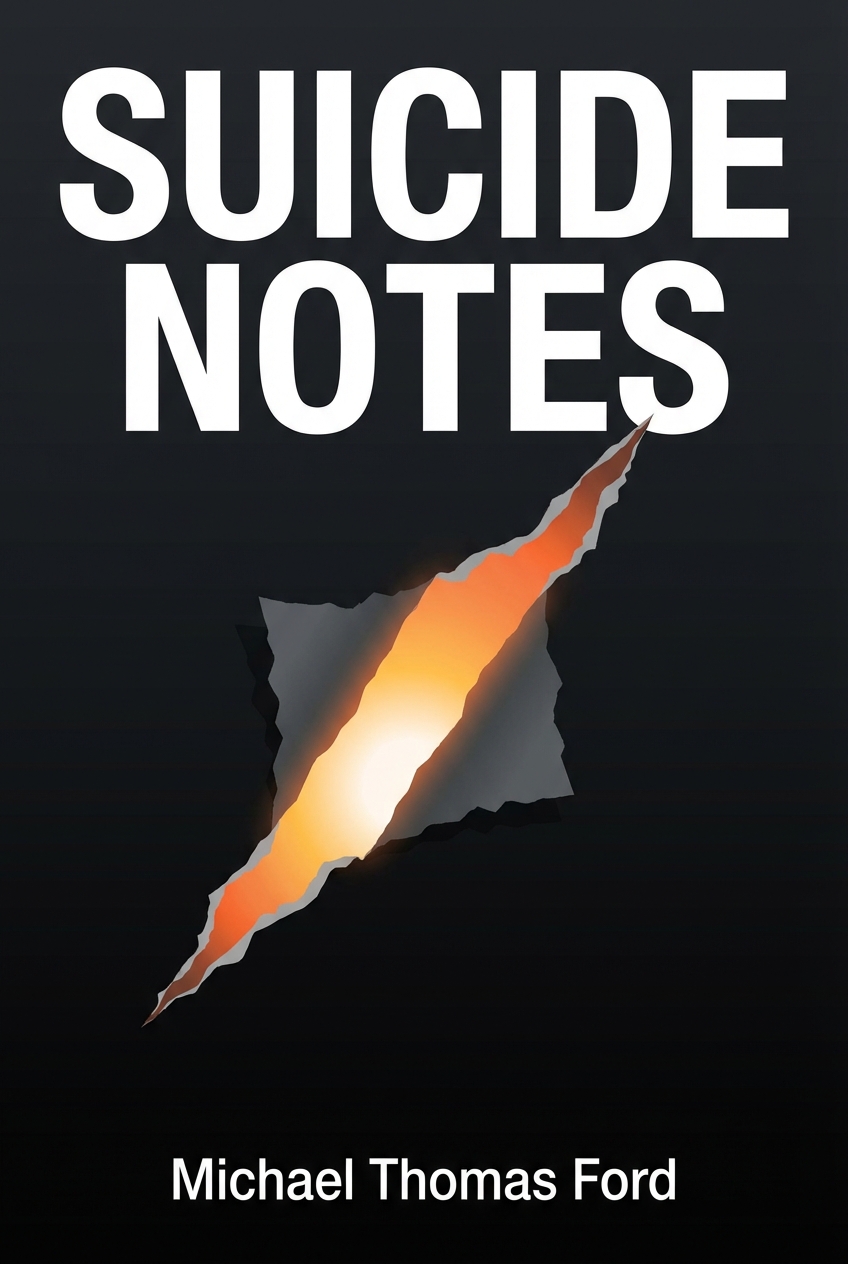
Suicide Notes book cover

The Script

The note is always the last thing. It’s the final performance, the closing argument, the one-act play staged for an audience that will only arrive after the curtain has fallen. It’s supposed to explain everything, to tidy up the emotional wreckage, to offer a clean, logical reason for an act that defies logic. But what if the note is a lie? A lie of omission, a story told by a narrator who no longer trusts his own script. What if the real story is in the messy, contradictory, and unexpectedly funny moments that follow? This is the story of someone who wrote their final act, only to find out it was just an intermission.

Michael Thomas Ford found himself wrestling with this very performance. He was a novelist known for his sharp, often humorous take on contemporary gay life. He saw the profound gap between the public narrative of depression—a somber, tragic monolith—and the private reality, which could be filled with absurd hospital rules, awkward group therapy sessions, and the dark, biting humor that people use to survive the unsurvivable. He decided to write a novel about the bewildering and often ridiculous day-after. He wrote "Suicide Notes" to give a voice to the narrator who flubbed his final line, woke up in the psych ward, and had to figure out what to say for an encore.

Module 1: The Armor of Sarcasm and Denial

When we first meet 15-year-old Jeff, he wakes up in a psychiatric ward after attempting suicide on New Year's Eve. He is angry, disoriented, and absolutely certain a mistake has been made. His immediate reaction is defiance. This introduces the book's first major theme: Humor and sarcasm are powerful defense mechanisms against overwhelming trauma. Jeff doesn't see himself as sick. He sees himself as a victim of circumstance, trapped in a "nuthouse" with people he deems "actually crazy." He copes by creating a wall of wit. He nicknames his therapist, Dr. Katzrupus, "Cat Poop." He mockingly asks if group therapy is a "sing-along." This is a sophisticated, albeit subconscious, strategy to maintain control in a situation where he has none. By turning his fear into a joke, he keeps his emotional reality at a distance.

Building on that idea, the narrative shows how this denial extends to his perception of others. Distancing yourself from others' pain can be a way to avoid confronting your own. Jeff meticulously documents the "crazy" behaviors of his fellow patients. There's Alice, who chews her hair and set her mother's abusive boyfriend on fire. There's Bone, who is obsessed with his shoes. Jeff presents this evidence to his therapist to argue his own sanity. He insists, "I'm not like them." This constant othering serves a crucial purpose. If they are the "weird fish," then he is just an observer, temporarily stuck in the aquarium. It’s a flawed but deeply human logic. Acknowledging their pain as valid would mean acknowledging his own, and he's not ready for that.

So here's what that means for anyone navigating a high-stress environment. When you see a colleague using excessive cynicism or humor, it could be a shield. The author suggests that these behaviors are often sophisticated coping strategies. For Jeff, the alternative to sarcasm is facing the terrifying abyss of his own despair. The jokes are a survival tool, keeping him afloat in a sea of emotions he feels would otherwise drown him. The journey of the book is about what happens when that armor starts to crack.

Read More