All Books
Self-Growth
Business & Career
Health & Wellness
Society & Culture
Money & Finance
Relationships
Science & Tech
Fiction
Topics
Blog
Download on the App Store

Surviving Wall Street

A Tale of Triumph, Tragedy, and Timing

15 minScott L. Bok, Chris Sorensen

What's it about

Ever wonder what it really takes to climb the ruthless ladder of Wall Street? Forget the Hollywood myths. This is your chance to learn the unwritten rules of finance from an insider who not only survived but thrived, navigating epic booms and devastating busts. Get ready to go behind the curtain of high-stakes investment banking. You'll discover the critical timing secrets for making career-defining moves, the strategies for building powerful alliances, and the mental fortitude required to turn market chaos into personal triumph.

Meet the author

Scott L. Bok is the CEO of Greenhill, a leading independent investment bank he helped take public, and has advised on over one hundred major transactions. His four-decade career on Wall Street provides the foundation for his gripping account of navigating the industry's dramatic highs and lows. Bok's unique insider perspective reveals the intense human stories behind the headlines, offering a rare look at the triumphs, tragedies, and critical timing that define a lifetime in the world of high finance.
Listen Now
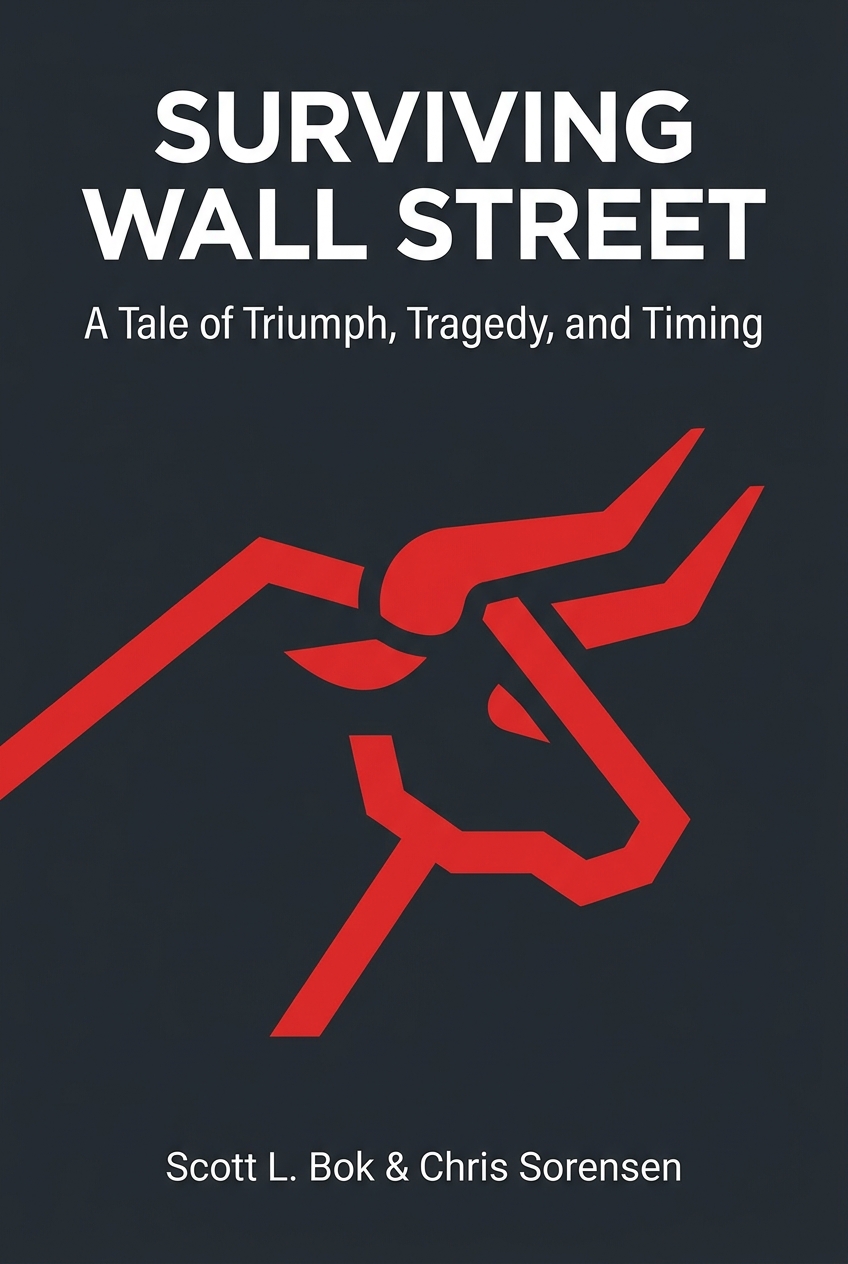
Surviving Wall Street book cover

The Script

Two recent graduates land coveted jobs at the same investment bank. They have identical degrees from the same elite university and start on the same desk, analyzing the same deals. One meticulously follows the unwritten rules: arrive before the boss, leave after them, double-check every number, and never question a senior banker's request. They work grueling hundred-hour weeks, fueled by caffeine and ambition, their life shrinking to the four walls of their cubicle. The other graduate, while still working hard, makes a point to grab coffee with colleagues from different departments, asks probing questions in meetings that challenge assumptions, and isn't afraid to admit when they don't know something. They leave the office at a reasonable hour to decompress, knowing that a burned-out analyst is an ineffective one.

Months later, during a high-pressure, all-night session to finalize a merger, the first analyst is exhausted, making simple errors that jeopardize the deal. The second, clear-headed and well-connected, identifies the flaw, leverages a relationship in another department to get the correct data quickly, and helps save the project. On the surface, both were playing the game, but only one understood the real rules of survival: that Wall Street is less a test of endurance and more a complex human ecosystem. One played to survive the week; the other played to build a sustainable career. This subtle but critical distinction—between just working on Wall Street and actually thriving there—is precisely what motivated one of the industry's most successful leaders to finally share what he'd learned. Scott L. Bok, the CEO of a global investment bank, has spent decades watching brilliant young people either burn out or lose their way. He wrote this book as a practical field guide, a collection of the hard-won lessons he wishes someone had given him on his first day, to help the next generation navigate the treacherous, rewarding world he knows so well.

Module 1: The Anatomy of a Wall Street Career

A career on Wall Street is rarely a straight line. It’s a winding path shaped by chance, ambition, and the brutal realities of a hypercompetitive world. The author, Scott Bok, embodies this journey. His entry into finance was almost accidental. A Midwesterner with a law degree, he only considered investment banking after a classmate sent him a magazine article. This single, serendipitous event redirected his entire professional life.

This leads to the first core insight. Your career path is shaped as much by serendipity as by strategy. Bok’s story shows that you don't need a grand plan from day one. He switched from litigation to corporate law based on a single piece of advice. He chose Morgan Stanley over Drexel Burnham Lambert after witnessing an insider trading scandal unfold at his law firm. Each step was a reaction to an opportunity or a risk. The lesson is to remain open and agile, ready to pivot when unexpected doors open. For professionals today, this means cultivating a wide network and staying curious. Your next big move might come from a casual conversation, not a five-year plan.

Building on that idea, Bok’s early years reveal another truth. Elite environments forge professional identity through intense, high-stakes work. His time at the prestigious law firm Wachtell Lipton was a trial by fire. He worked around the clock on complex mergers and acquisitions. He was exposed to legendary corporate raiders. This "nerdy version of the Navy SEALs" instilled a capacity for intense focus and rigorous execution. However, it also provided an early ethical wake-up call. When a partner at the firm was arrested for insider trading, it drove home the immense risks of chasing fame without integrity. The takeaway is clear. Seek out demanding roles early in your career. The pressure will accelerate your learning curve. But always remember that your reputation is your most valuable asset.

And here's the thing. As firms grow, that intense, focused culture often gets diluted. Bok witnessed this firsthand at Morgan Stanley. The 1997 merger with Dean Witter, a retail brokerage, created a financial behemoth. But it blended Morgan Stanley’s "aristocratic culture" with a "meat-and-potatoes" environment. Bok felt his specialized M&A advisory role become less significant. He was now just a small part of a massive, diversified machine. This illustrates a critical principle: corporate scale can diminish your sense of purpose and impact. You have to actively decide what matters more to you. Is it the stability and resources of a large organization? Or is it the focused impact and cohesive culture of a smaller, more specialized team? Bok’s eventual decision to leave and help build Greenhill & Co. was a direct answer to this question. He chose impact over scale.

Read More