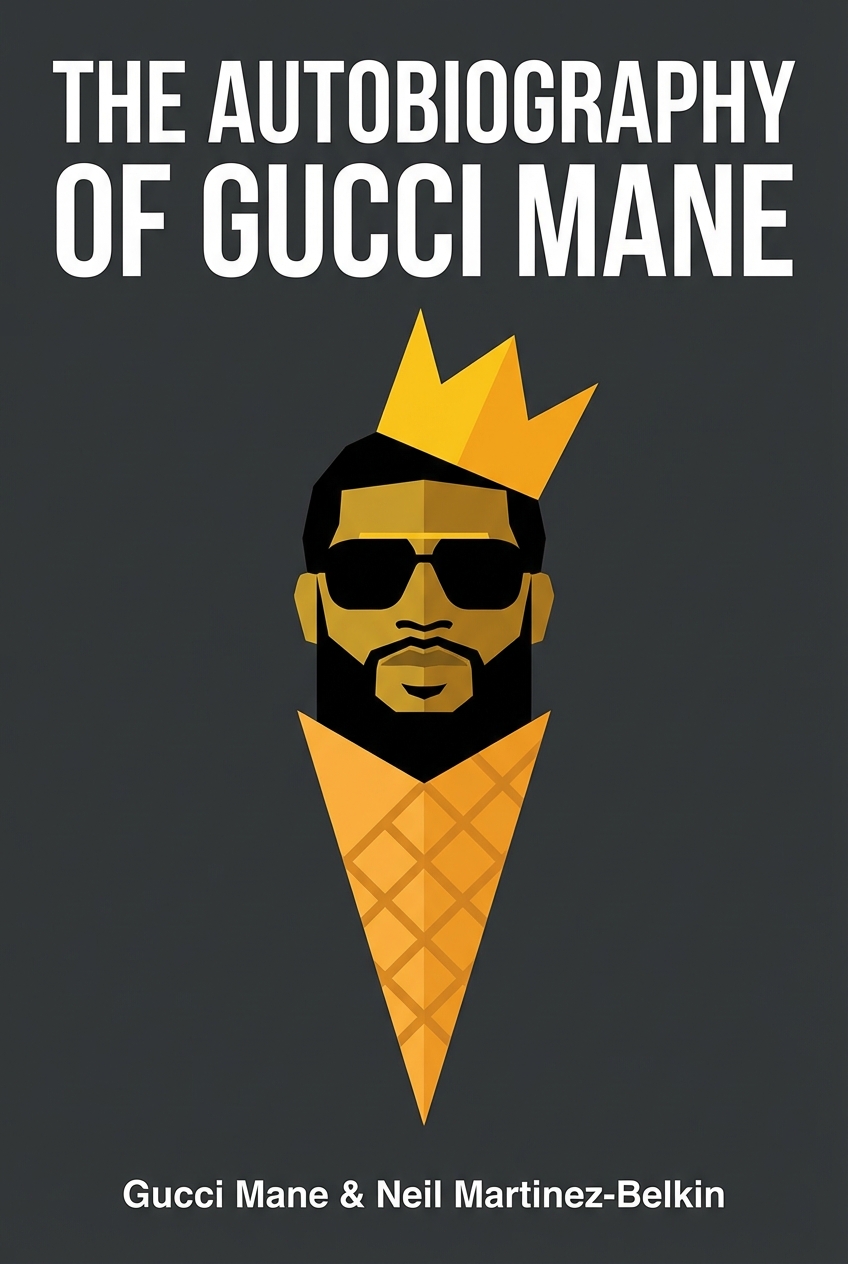
The Autobiography of Gucci Mane
What's it about
Ever wondered how to transform your life from the absolute bottom to the very top? Discover the raw, unfiltered story of Gucci Mane, the trap god who turned a life of crime, addiction, and prison into a legendary music career and a story of radical self-reinvention. Learn the mindset that took him from the streets of East Atlanta to global superstardom. You'll get his firsthand account of the hustle, the betrayals, and the intense focus required to build an empire, conquer personal demons, and ultimately achieve a life of health, success, and peace.
Meet the author
Neil Martinez-Belkin is the New York Times-bestselling co-author of The Autobiography of Gucci Mane, which he helped the artist write while Gucci was still in prison. A former editor at XXL Magazine, Neil spent years documenting the Southern hip-hop scene and its most iconic figures. This deep immersion and trusted relationship allowed him to uniquely capture the raw, unfiltered story of a hip-hop legend's journey from the streets of Atlanta to global superstardom, told in Gucci's own voice.
The Script
The studio air is thick, a mix of stale smoke and the low hum of expensive equipment waiting for a command. Outside, the world moves at its own pace, but inside this room, time bends. A beat drops, a hypnotic loop that feels both menacing and magnetic. A voice cuts through it—not just rapping, but testifying. Every bar is a document, every ad-lib a footnote to a life lived on the absolute edge. This is an archive being built in real time, a frantic effort to record a story before the story's owner is erased, either by a rival, the law, or his own hand. Each track is a polaroid of a moment: the dizzying high of a sold-out show, the cold dread of a prison cell door slamming shut, the quiet paranoia of being a king with a target on his back. The urgency is palpable, a race to get the narrative down before the opportunity vanishes forever.
That urgency is what fueled Radric Davis, known to the world as Gucci Mane, to finally write his story down as a complete autobiography. He began the process from the inside of a federal maximum-security prison, armed with nothing but a yellow legal pad, a pen, and the flood of memories he had spent a career turning into trap anthems. With the help of journalist Neil Martinez-Belkin, he translated the raw, unfiltered chronicles from his music into a linear narrative. This was an act of testimony, a definitive account from the only person who could tell it, written from a place where the past was all he had and the future was anything but guaranteed.
Module 1: The Trap as a Business School
Long before he stepped into a recording booth, Gucci Mane was a student of the streets. His early life was an education in economics, risk management, and human psychology, all learned in the high-stakes environment of the Atlanta drug trade. This was his primary focus, and he approached it like a founder building a startup.
The first lesson was about product-market fit. He quickly realized that the crack cocaine business was a different world from selling marijuana. He describes serving customers at a squalid smoking house, a scene of such desperation it initially rattled him. But he adapted. He learned that emotional desensitization is a prerequisite for success in brutal environments. He had to grow numb to the horror to focus on the numbers. He treated it like a business problem to be solved, not a moral crisis to be agonized over. This allowed him to operate where others couldn't, turning a liability into a competitive edge.
Next, he focused on innovation. While his competitors sold standard five and ten-dollar bags, Gucci saw a gap in the market. He built his reputation by innovating on pricing and distribution. He introduced "three-dollar sacks." The margins were thinner, but the velocity was higher. His product moved faster, and his name spread. He saw it as an investment in brand awareness. He even paid a "finder's fee" to a local house owner for access to her clientele. He was building a sales channel, analyzing the market, and creating a value proposition that his competitors couldn't match.
But as his illicit business grew, so did the need for stealth. He had to manage his most important stakeholder: his mother. This led to a masterclass in perception management. Maintaining a facade of normalcy is a critical skill for managing high-risk ventures. When his mother found drugs in his laundry, he didn't panic. He fabricated a plausible story about holding them for a neighborhood local who did chores for them. He leveraged his mother's existing goodwill toward this person to make his story believable. He was a good student with a clean record at home. He used his established reputation to create a smokescreen, a tactic any founder managing a "stealth mode" project can appreciate. It’s about controlling the narrative by understanding your audience’s biases.