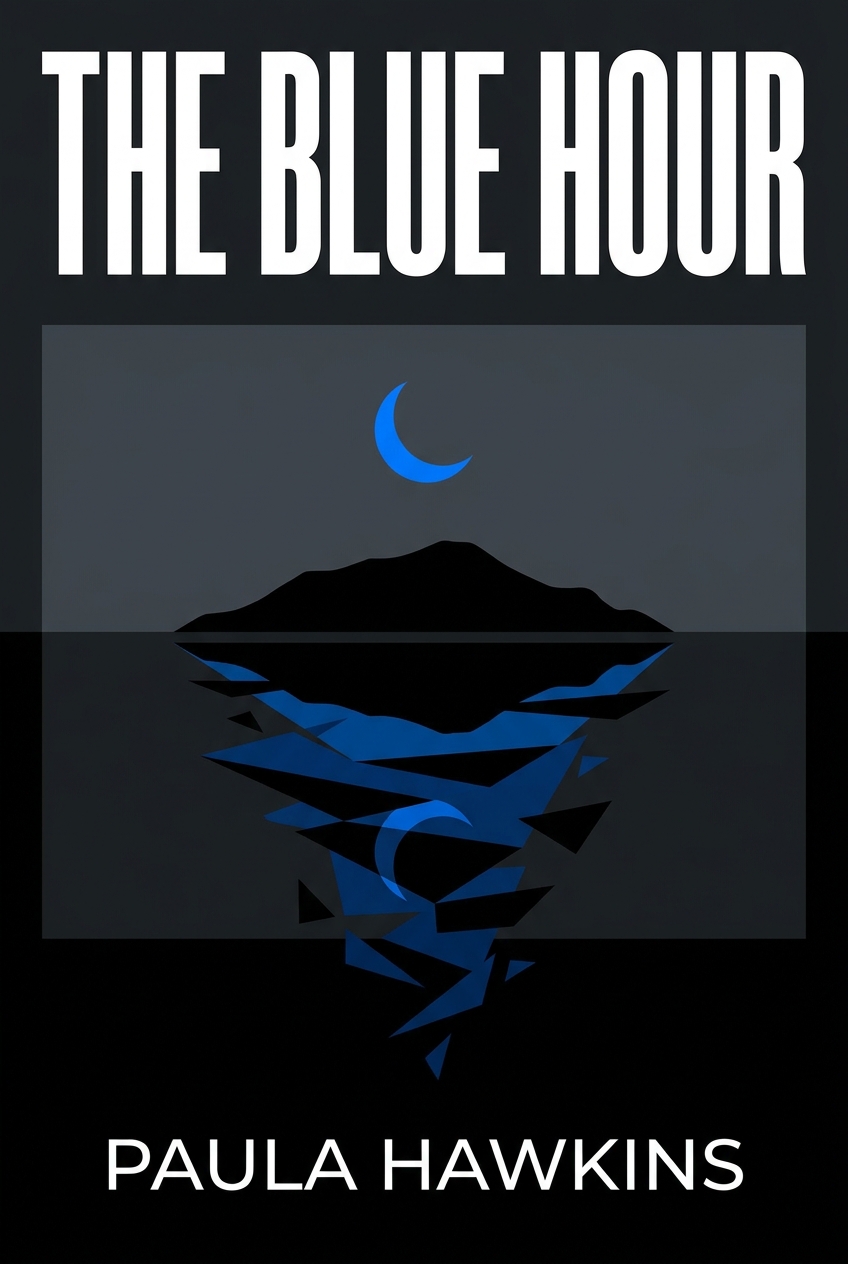
The Blue Hour
The Addictive Novel of Suspense from the NYT Bestselling Author of The Girl on the Train
What's it about
Ever felt a shiver of dread, a sense that a beautiful place hides a dark secret? Uncover the chilling mystery of a remote Scottish island where an acclaimed artist is found dead, leaving behind a cryptic final painting and a legacy of obsession that haunts everyone he knew. You'll explore the tangled relationships between the artist, his wives, and his muses, piecing together clues from a past filled with jealousy and betrayal. Discover how a web of lies can poison a community and learn why some secrets are so dangerous they should never see the light of day.
Meet the author
Paula Hawkins is the 1 New York Times bestselling author of The Girl on the Train, an explosive global phenomenon that sold over 23 million copies worldwide. A former journalist with fifteen years of experience, Hawkins honed her skills in reporting on complex economic and social issues. This background in uncovering hidden truths and understanding human psychology gave her a unique foundation for crafting the intricate, suspense-filled narratives and deeply flawed characters that have become her signature, captivating readers around the globe.
The Script
A forensic artist is handed a skull. It’s a job of translation. She must read the silent language of bone—the curve of a cheek, the angle of a jaw, the faint ridges where muscle once held a face in an expression of joy or sorrow. Her tools are clay and intuition. She builds a person from an echo, layer by layer, knowing that each choice she makes, every millimeter of thickness, nudges the identity in one direction or another. The final sculpture is a hypothesis. It’s a face returned from the void, offered to the world with a question: Do you know me?
But what happens when the skull is not from a stranger, but from your own past? What if the remains belong to the person who was once the center of your world, the one whose disappearance left a hole in your life that nothing could fill? The artist’s hands would shake. The clay would feel different—heavy with memory, with grief, with the suffocating weight of questions she never dared to ask. The professional distance collapses. The act of reconstruction becomes an act of confrontation, forcing her to look not just at the face taking shape under her hands, but at the reflection of her own haunted self in the studio window.
This visceral collision of past trauma and present reality is the territory Paula Hawkins explores. After the global success of psychological thrillers like The Girl on the Train, Hawkins found herself drawn to a story about the long, slow reverberations of loss. She wanted to explore how a foundational relationship, when violently severed, can send fractures through every other part of a person's life for decades. For Hawkins, the mystery is about the painstaking, often brutal, work of reconstructing a self after its central pillar has been kicked away.
Module 1: The Peril of Public Perception
The art world runs on reputation. A single misstep can trigger an institutional crisis. This is the first major theme Hawkins explores. The story opens with the Tate Modern in a panic. A forensic anthropologist emails them. He claims a sculpture by the late, great artist Vanessa Chapman contains a human bone. Not an animal bone, as listed. This email sends shockwaves through the gallery.
The director, Will Goodwin, is terrified of being "cancelled." The curator, James Becker, feels the pressure mounting. This introduces a core insight: institutional reputation is a fragile asset vulnerable to a single point of failure. The Tate's entire post-pandemic show hangs in the balance over one component in one sculpture. The fear is about survival in a world of instant public judgment.
This pressure trickles down to individuals. Becker’s professional identity is deeply tied to his work on Vanessa Chapman. He feels like an outsider in the elite art world. He's the "fatherless bastard of a supermarket checkout girl." Yet, he has built his career around Chapman's legacy. So when the idea of testing the bone comes up, he resists. He argues it would damage the artwork. Personal ambition and institutional loyalty are deeply intertwined. Becker is protecting the art, yes. But he is also protecting his own career. His legacy is linked to hers.
But flip the coin. Sebastian Lennox, the heir to the Fairburn Foundation which owns most of Chapman's work, sees the scandal differently. He views it as a potential marketing opportunity. More controversy means more visitors. This reveals how crisis can be weaponized for commercial gain. His perspective shows a cynical side of the art world. Legacy is a commodity. The conflict between Becker's cautious protection and Sebastian's aggressive opportunism sets the stage for a battle over Chapman’s story. Who gets to tell it? And for what purpose?