All Books
Self-Growth
Business & Career
Health & Wellness
Society & Culture
Money & Finance
Relationships
Science & Tech
Fiction
Topics
Blog
Download on the App Store

The Boy on the Wooden Box

How the Impossible Became Possible . . . on Schindler's List

15 minLeon Leyson, Marilyn J. Harran, Elisabeth B. Leyson

What's it about

Have you ever wondered what it takes to find hope in the darkest of times? Discover the true story of the youngest survivor of Schindler's List and witness how one boy's resilience, courage, and a simple wooden box became symbols of survival against all odds. You’ll learn how Leon Leyson navigated the horrors of the Holocaust, from the Krakow ghetto to the brutal Plaszow concentration camp. This summary reveals the pivotal moments and small acts of kindness that, along with Oskar Schindler's intervention, made the impossible possible for a boy who refused to give up.

Meet the author

Leon Leyson was the youngest survivor on Oskar Schindler's list, a distinction that makes him a uniquely powerful witness to the Holocaust and its lessons on humanity. After decades of silence, he began sharing his story of survival and hope, eventually collaborating with Marilyn J. Harran and his wife, Elisabeth B. Leyson, to ensure his experiences were not forgotten. This book is the culmination of his life's journey, a testament to resilience written by the man who lived it.
Listen Now

Opens the App Store to download Voxbrief

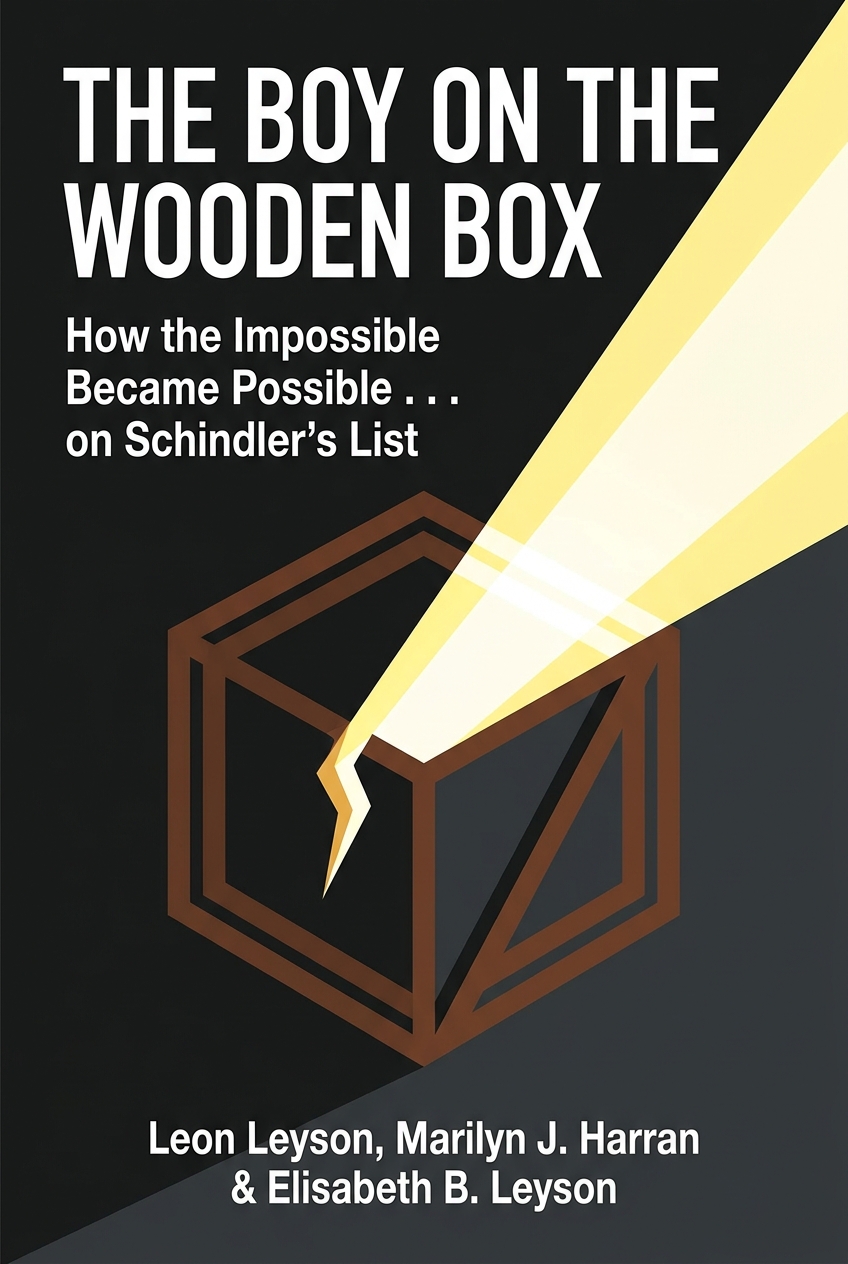
The Boy on the Wooden Box book cover

The Script

Imagine a childhood game of hide-and-seek where the stakes are survival itself. The familiar world of home, the scent of baking bread, the feel of a favorite toy—all of it is suddenly a fragile shell. One day, the game is real. The 'seekers' are uniformed men whose voices carry a chilling finality. Hiding becomes about absolute silence under a floorboard, your heart pounding like a drum against the wood, praying the rhythm doesn't give you away. It’s about learning, with the terrifying clarity only a child possesses, that the world has been divided into two groups: the hunters and the hunted. And you are the prey.

This was the lived reality for Leon Leyson. Before he was a man, he was a boy forced to master the art of becoming invisible in his own city. He was one of the youngest survivors of the Holocaust, a life saved by the enigmatic factory owner Oskar Schindler. For decades, Leyson kept his story locked away, a private history too heavy to share. He built a new life in America, becoming a teacher for nearly forty years. It was only after seeing his own story portrayed in the film Schindler's List that he finally felt compelled to speak, to give a name and a voice to the small boy who had to stand on a wooden box to reach the machines that kept him alive. He wrote this book as a personal testament, ensuring that the boy he once was would not be forgotten.

Module 1: The Erosion of Normalcy

We often think of catastrophe as a single, explosive event. But Leyson's story shows something far more insidious. It begins with small changes. Incremental steps that chip away at normalcy until nothing normal is left.

The story starts in Narewka, a small Polish village. Life was simple. Leon played in the river. He raced homemade ice skates with his brother. His family was close. His father, Moshe, moved to the city of Kraków for a better job. His visits were celebrations. But this idyllic childhood was already living on borrowed time. The family's move to Kraków felt like a step up. They had electricity. They had indoor plumbing. For a young boy from a rural village, it was magic. But outside their apartment, the world was darkening.

This brings us to a crucial insight. Systematic dehumanization begins with seemingly minor restrictions. It started with signs. Jews were banned from park benches. Then they were banned from parks altogether. Ropes appeared on streetcars, segregating Jewish passengers. Soon, they were forbidden from public transport entirely. Leyson’s non-Jewish friends stopped playing with him. Then came the propaganda. Posters depicted Jews as grotesque caricatures. Leyson, a young boy, saw the absurdity. His family was clean. Their noses were not crooked or large. But the poison worked. The community turned against them.

Then, the final pillar of a normal childhood was kicked out. Depriving people of education is a deliberate theft of their future. The Nazis decreed Jewish children could no longer attend school. At first, Leyson felt a flicker of joy. No more homework. But that feeling quickly soured. He realized the difference between choosing to miss school and being forbidden from learning forever. It was a judgment, a formal declaration that he was worthless. A life of learning and opportunity was stolen from him in an instant.

And here's the thing. This slow-motion collapse was punctuated by sharp, brutal violence. Two Gestapo officers burst into their home. They beat and choked his father in front of the family. They dragged him to prison. This single event shattered Leyson's world. His protector was broken. The four walls of their home were no longer safe. The family's savings were confiscated. They survived by selling heirlooms for food. Each small degradation, each new rule, each act of violence was a step down into the hell that was coming.

Read More