All Books
Self-Growth
Business & Career
Health & Wellness
Society & Culture
Money & Finance
Relationships
Science & Tech
Fiction
Topics
Blog
Download on the App Store

The Broom of the System

A Novel (Penguin Orange Collection)

11 minDavid Foster Wallace

What's it about

Do you ever feel like a character in someone else's story, trapped by words and expectations? Uncover how language shapes your reality and discover the strange, hilarious freedom in breaking free from the systems that define you, one absurd conversation at a time. This isn't just a novel; it's a philosophical funhouse. You'll follow the unforgettable Lenore Beadsman through a world of escaped parrots, self-conscious therapists, and a grandmother who's vanished into a phone system. Explore mind-bending ideas about identity, communication, and what it means to be truly human in a world that’s constantly trying to tell you who you are.

Meet the author

David Foster Wallace was a MacArthur "Genius" Fellow and one of the most influential American writers of his generation, celebrated for his maximalist style and intellectual rigor. A philosopher by training, Wallace wrote his debut novel, The Broom of the System, as one of his two undergraduate theses at Amherst College. This ambitious work introduced his lifelong exploration of language, consciousness, and the struggle to find meaning in a media-saturated world, establishing themes that would define his legendary literary career.
Listen Now

Opens the App Store to download Voxbrief

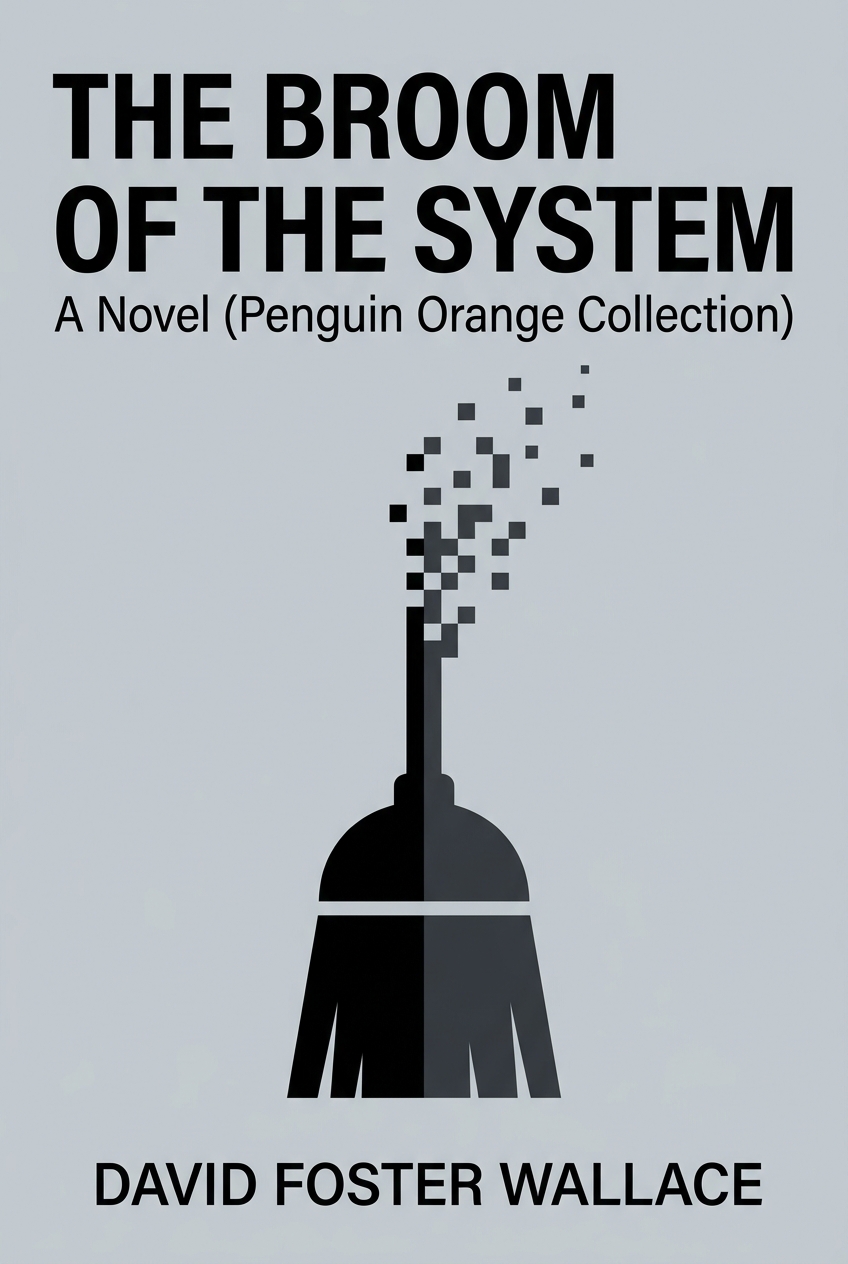
The Broom of the System book cover

The Script

A conversation is a war fought with the most treacherous weapon imaginable: language. We believe we are building bridges of understanding, carefully laying down planks of shared meaning. In reality, we are launching projectiles into an unknowable void, hoping they land somewhere near their intended target. The true horror is that we are understood all too well. Our carefully constructed sentences, meant to convey nuance and intent, are received as raw data, stripped of context and reassembled by a mind with its own agenda. This act of reassembly, this translation, is a form of quiet violence. Every dialogue is a hostage negotiation where the hostage is meaning itself, and the ransom is a temporary, fragile sense of connection.

This battlefield of miscommunication and semantic dread is precisely the territory that a young David Foster Wallace decided to make his home. "The Broom of the System" was born from an obsession that grew out of his academic work in philosophy and logic. While completing two separate senior theses at Amherst College—one in English, the other in modal logic—Wallace became fascinated by the catastrophic gap between what we say and what we mean, and the systems we build, both linguistic and personal, to try and bridge that chasm. This novel is the explosive, fiercely comic result of that obsession, an attempt to dramatize the philosophical problems that haunted him by creating a world where language itself has come unhinged.

Module 1: The Anxiety of the Self

At its core, this book is about the terrifying fragility of personal identity. The characters are constantly questioning if they are in control of their own lives. Or if they are merely actors in a script written by someone else. This creates a deep, pervasive anxiety.

The central character is Lenore Beadsman. She's a 24-year-old switchboard operator in Cleveland, 1990. Her life begins to unravel when her great-grandmother, also named Lenore, disappears from a nursing home along with 24 other residents and staff. Her search is for a stable sense of her own self as much as for her great-grandmother.

A key concept here is that our identity is a story we tell ourselves, and we panic when we lose control of the narrative. Lenore feels her life is being manipulated. She tells her therapist, "I feel like the whole universe is playing pimp for me." She feels her desires are not her own. They feel "forced on you from outside." This paranoia is rooted in her family's legacy. Her great-grandmother, a student of Wittgenstein, believed that "everything was words." That "all that really exists of my life is what can be said about it." If your life is just a story, then the storyteller has all the power. And when that storyteller—your family, your boss, your lover—starts editing the script, your reality crumbles.

This leads to a profound sense of alienation. We see this in Rick Vigorous, Lenore's neurotic and much older boss and lover. He is obsessed with his own narrative. He keeps a journal. He tells elaborate stories. Yet he feels like an "inside outsider," perpetually disconnected. His love for Lenore is possessive. He wants her to verbally confirm her love, believing the words will make it real. He needs to control her narrative to secure his own.

The book suggests a powerful, if unsettling, idea. To manage identity anxiety, we must distinguish between authentic internal desires and imposed external narratives. This is the struggle Lenore faces. Is her attraction to another man, Andrew Lang, a genuine feeling? Or is it a role everyone—her therapist, her friends, the universe itself—is pushing her into? The book shows that the first step is to recognize the conflict. It’s about auditing your own feelings. Are you acting from a place of genuine desire? Or are you fulfilling a role you think you're supposed to play? This is a critical question for anyone navigating the pressures of work, family, and social expectation.

Read More