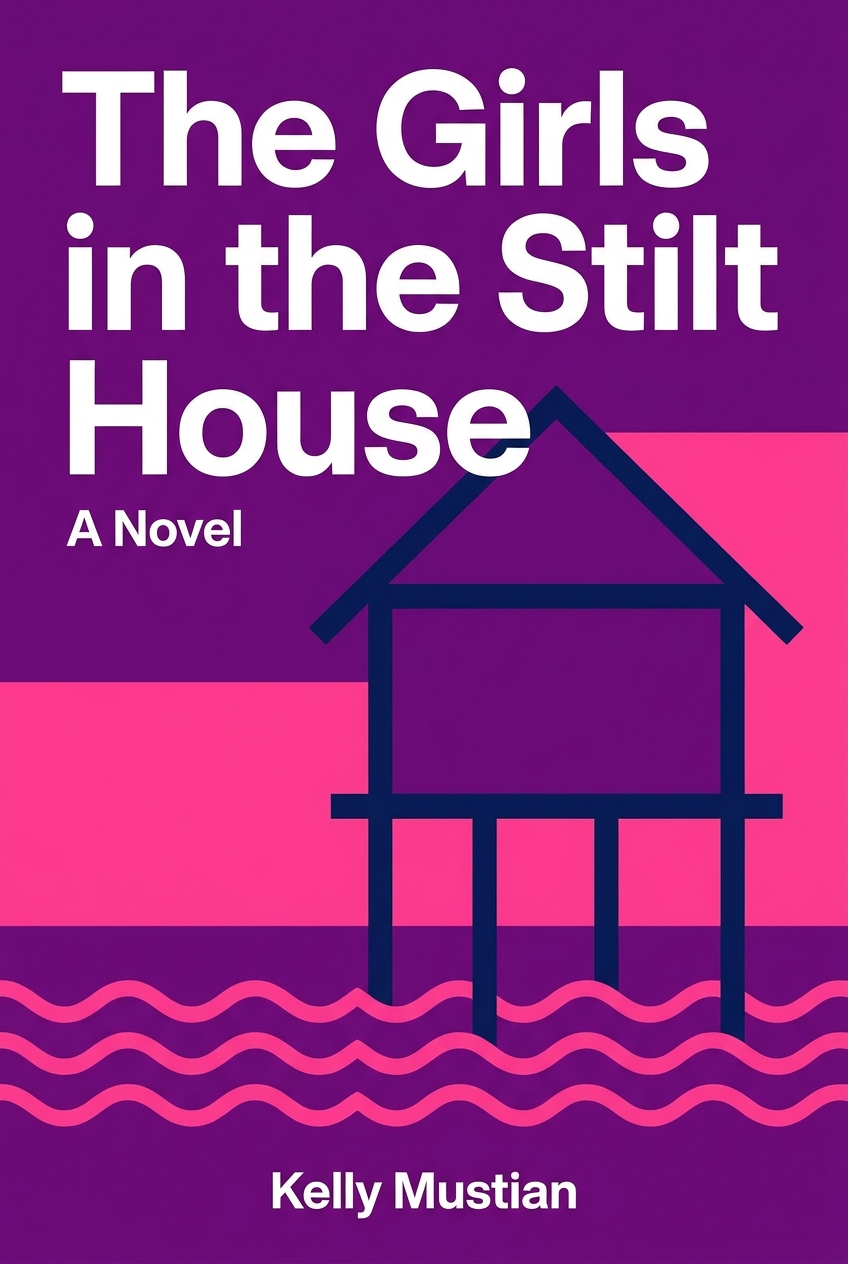
The Girls in the Stilt House
A Novel
What's it about
What would you do if a terrible secret bound you to your worst enemy? In the unforgiving Mississippi swamp of the 1920s, two teenage girls, Ada and Matilda, must answer that question when a single act of violence forces their disparate worlds to collide, leaving them with a shared, dangerous burden. Discover how their fragile alliance is tested by poverty, prejudice, and the prying eyes of their community. You’ll learn how they navigate their treacherous situation, relying on a bond forged in desperation to survive, and explore the impossible choices they must make to protect each other and their secret.
Meet the author
Kelly Mustian is the author of the USA Today bestseller The Girls in the Stilt House, a novel celebrated for its powerful depiction of the American South. A native of the Natchez Trace, her lifelong immersion in the region’s landscape and culture infuses her writing with authenticity and a deep understanding of its complex history. Mustian’s work explores the bonds of womanhood and the pursuit of justice in a world that often denies it, reflecting her keen eye for human resilience.
Opens the App Store to download Voxbrief

The Script
Two people can stand over the same patch of dark, swampy earth, a place just big enough for a secret, and see two entirely different things. For one, that ground represents a final, desperate act—a line crossed that can never be uncrossed, a memory to be buried and fled from. For the other, it is a beginning. It’s a debt owed, a life entangled, a tether that binds them to the very place the first person wants to forget. One sees a grave for the past; the other sees a cradle for an inescapable future.
This shared ground, heavy with the weight of a violent act, becomes a silent character in their lives. It’s the unspoken thing between them, a focal point of fear and necessity. The swamp itself, with its buzzing insects and oppressive humidity, doesn’t judge. It simply holds the secret, its murky water reflecting the faces of two young women—one white, one Black—who are now bound together, whether they want to be or not. Their survival depends on navigating this shared, dangerous space, a partnership forged in the mutual terror of being discovered.
That deep understanding of how a single, traumatic event can weld two disparate lives together is rooted in Kelly Mustian’s own fascination with the stories that lie just beneath the surface of a place. Growing up hearing family tales from Mississippi, Mustian was drawn to the unspoken histories and the complex relationships shaped by the landscape itself. She set out to explore the fierce, often desperate, bonds between women who have no one else to rely on. For Mustian, a certified master naturalist, the swamp was a living force that could both threaten and protect, mirroring the precarious alliance at the heart of her story.
Module 1: Survival in the Swamp
The story introduces us to two young women, Ada and Matilda. They exist in a world where survival is a daily, relentless struggle. This environment shapes every decision they make. It's a world where resourcefulness is a prerequisite for existence. Ada and Matilda live in the remote Trace, a region of swamp and forest in Mississippi. Life here demands constant labor. Ada pumps water by hand. She weeds the garden. She cleans ash from the woodstove. Matilda fishes and hunts, using string traps and deadfalls to conserve precious bullets. Their lives are a continuous cycle of work just to get by.
This brings us to a critical insight. In such a harsh setting, isolation is both a physical barrier and a psychological cage. The swamp is described as "the utter end of a dismal world." The cypress trees look like ghosts. The insect sounds are a constant, mournful dirge. For Ada, returning to her family's stilt house after a year away is crushing. The isolation feels more oppressive than ever. The wilderness seems to creep closer, threatening to swallow any sense of order or hope she tries to create. This physical entrapment mirrors her internal despair.
So what happens next? In a world of scarcity and danger, you learn to see everything through a practical lens. Family relationships become a complex mix of fear, dependence, and strategic calculation. Ada’s relationship with her father, Virgil, is a perfect example. He is a cruel and abusive man. Ada sometimes hopes he is dead. Yet, she also knows she must call out his name at night to avoid being shot by him in a drunken mistake. Her feelings are a confusing blend of dread and the pragmatic need to coexist. This dynamic reveals how survival can warp even the most fundamental human bonds.
Finally, the book shows how suppressing emotion becomes a necessary survival tool. Ada learned this as a child. Her father found joy in her fear. So she taught herself to show none. She learned not to cry when he was cruel. She learned not to show excitement for a rare gift, knowing he might take it back. This emotional numbness was her armor. It was a shield she built to protect herself from further pain and manipulation in a world where vulnerability was a liability.
Module 2: The Unlikely Alliance
The story takes a dramatic turn. Ada's abusive father, Virgil, traps her in a shed and sets it on fire. At that moment, a stranger appears. It's Matilda. She kills Virgil with a hammer and pulls Ada from the flames. This violent, desperate act forges an immediate, pragmatic alliance between them. Here, the author reveals a powerful truth: shared trauma can create a bond stronger than friendship. Ada and Matilda are strangers. One is white, the other Black. Yet, they work together wordlessly to hide Virgil's body. Their partnership is built on a shared, dangerous secret and the absolute necessity of mutual protection.
From this foundation, we see how a pivotal event can shatter a lifetime of oppression. Liberation from a tormentor unleashes a chaotic flood of new emotions. After Virgil's death, Ada feels a strange and powerful surge of life. She is terrified. She is horrified. But she also feels hope and anticipation for the first time. The terror of her new reality is mixed with the exhilarating, dizzying possibility of freedom. This psychological shift marks the beginning of her journey toward agency.
But flip the coin. This new alliance is fraught with tension. Gratitude for a rescuer is often tangled with fear of their unknown past. Ada is in awe of Matilda. She sees her as a savior. But she is also frightened by Matilda's hardened demeanor and intense secrecy. Matilda makes it clear their arrangement is transactional. "I do not work for you," she says. She makes decisions without consulting Ada, driven by a survivalist logic that Ada must accept. Ada’s dependence on Matilda is total, yet she constantly fears driving her away, sensing the precariousness of their bond.
And here's the thing. This new life requires a complete break from the past. Reclaiming autonomy starts with physically and symbolically erasing the oppressor. Matilda immediately begins to change the stilt house. She removes Virgil's mounted alligator hide. She insists they trade his distinctive wagon and mule. They systematically dispose of his liquor, his pelts, and his tools. These are powerful acts of defiance, severing ties to Virgil's legacy and reclaiming the physical space he once dominated with fear.