All Books
Self-Growth
Business & Career
Health & Wellness
Society & Culture
Money & Finance
Relationships
Science & Tech
Fiction
Topics
Blog
Download on the App Store

I Am Not Your Perfect Mexican Daughter

17 minErika L. Sánchez

What's it about

Ever feel like you're not living up to your family's expectations? Discover how to break free from the pressure of being the "perfect" child and forge your own path, even when it feels like you're disappointing everyone you love. This summary of I Am Not Your Perfect Mexican Daughter follows Julia, who is definitely not the ideal daughter her family wants. You'll learn how she navigates grief, family secrets, and cultural clashes to chase her own dreams, giving you a powerful blueprint for embracing your true self.

Meet the author

Erika L. Sánchez is a National Book Award finalist and the bestselling author of I Am Not Your Perfect Mexican Daughter. Growing up as the daughter of Mexican immigrants in Chicago, her own experiences with cultural expectations, family secrets, and personal ambition deeply inform her powerful and authentic storytelling. Sánchez writes to give voice to the complex lives of young women of color, exploring the spaces between cultures, generations, and dreams with unflinching honesty and heart.
Listen Now

Opens the App Store to download Voxbrief

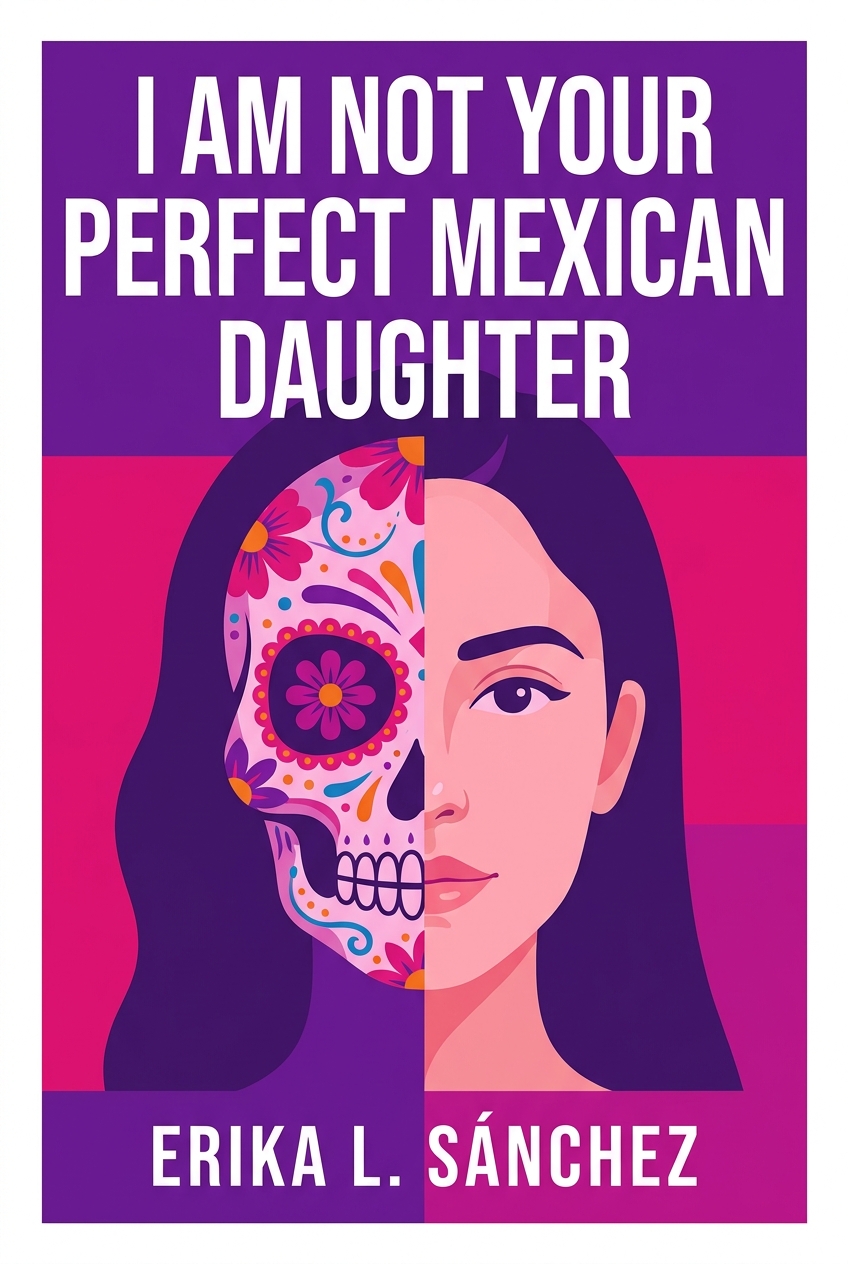
I Am Not Your Perfect Mexican Daughter book cover

The Script

Imagine a family meal where every dish is served with a side of unspoken expectations. A daughter is praised for her quiet obedience, her effortless grace, her seamless alignment with tradition. Another daughter sits at the same table, a ghost in her own home, her every move a dissonant note against the family’s carefully composed melody. One is the cherished heirloom, polished and displayed; the other is the cracked, mismatched cup, shoved to the back of the cabinet, useful but never celebrated. This is about a role, a script written generations ago. One daughter plays her part perfectly. The other can’t even find the stage.

For the daughter who feels like the cracked cup, the grief over her sister’s death is tangled with a suffocating, secret envy. How do you mourn someone who was the living embodiment of everything you were told you failed to be? This suffocating space between grief and resentment, duty and desire, is the emotional territory Erika L. Sánchez set out to explore. Drawing from her own experiences growing up in a Mexican-American family in Chicago, Sánchez, a poet and essayist, wanted to give voice to the complex, often messy, inner lives of young women caught between two cultures and the heavy weight of family expectations. She wrote I Am Not Your Perfect Mexican Daughter to crack open the polished facade of the 'perfect' daughter and reveal the vibrant, angry, and profoundly human girl fighting for air underneath.

Module 1: The Weight of the Perfect Ghost

The story opens in the immediate aftermath of tragedy. Julia’s older sister, Olga, has been hit by a bus and killed. Olga was, in everyone’s eyes, the perfect Mexican daughter. She lived at home. She worked a steady job as a receptionist. She was quiet, obedient, and never caused trouble. She was everything Julia is not. Julia is loud, rebellious, and dreams of escaping Chicago to become a famous writer in New York. This sets up the core conflict. Grief fractures families along pre-existing fault lines. The Reyes family doesn't come together in their sorrow. They fall apart.

Julia’s mother, Amá, grieves with loud, theatrical wails. Her father, Apá, retreats into a stony, beer-fueled silence. Julia herself feels a confusing mix of anger and numbness. She can’t cry, which makes her feel broken. The family dynamic, already strained, completely shatters. Julia feels like the "odd daughter out," now more than ever. Amá’s grief often turns into blame, both spoken and unspoken. She lashes out, suggesting that if Julia had been better behaved, things might have been different. The household becomes a pressure cooker of unspoken resentment and sorrow.

This leads to the next critical point. Idealizing the dead creates an impossible standard for the living. Olga becomes a saint in death. Her memory is polished to a perfect shine. Amá constantly compares Julia to her sister. "Olga was the clean one." "Olga never talked back." "Olga was comfortable here at home." This constant comparison is a crushing weight on Julia. She feels like she can never measure up. The ghost of her perfect sister haunts every corner of her life, making her feel perpetually inadequate. It fuels her rebellion. If she can't be the perfect daughter, she might as well be the opposite.

But what if the perfect sister wasn't so perfect? This is the question that begins to drive Julia. Uncovering a loved one’s secret life complicates the grieving process. While cleaning out Olga’s room, Julia makes a shocking discovery. Hidden in her sister’s closet is not sensible clothing, but sexy lingerie. A silk-and-lace thong. She also finds a hotel key card and a cryptic note. Suddenly, the image of the boring, saintly Olga begins to crack. Julia becomes obsessed. She realizes she didn't know her sister at all. This discovery sends her on a desperate, often reckless, investigation into Olga’s hidden life. She needs to know the truth. Who was Olga, really? This quest for answers becomes her way of grieving, a way to connect with a sister she felt so distant from in life.

For professionals, this module is a powerful reminder. Unspoken expectations and idealized comparisons are toxic. They don't motivate. They alienate. In a team setting, constantly holding up one "star" employee as the benchmark can demotivate everyone else. It creates resentment and stifles individuality. The actionable insight here is to recognize and value different styles and contributions. Instead of forcing everyone to fit one mold, focus on creating an environment where diverse talents can thrive. Acknowledge that people, like Julia and Olga, have hidden depths. What you see on the surface is rarely the whole story.

Read More