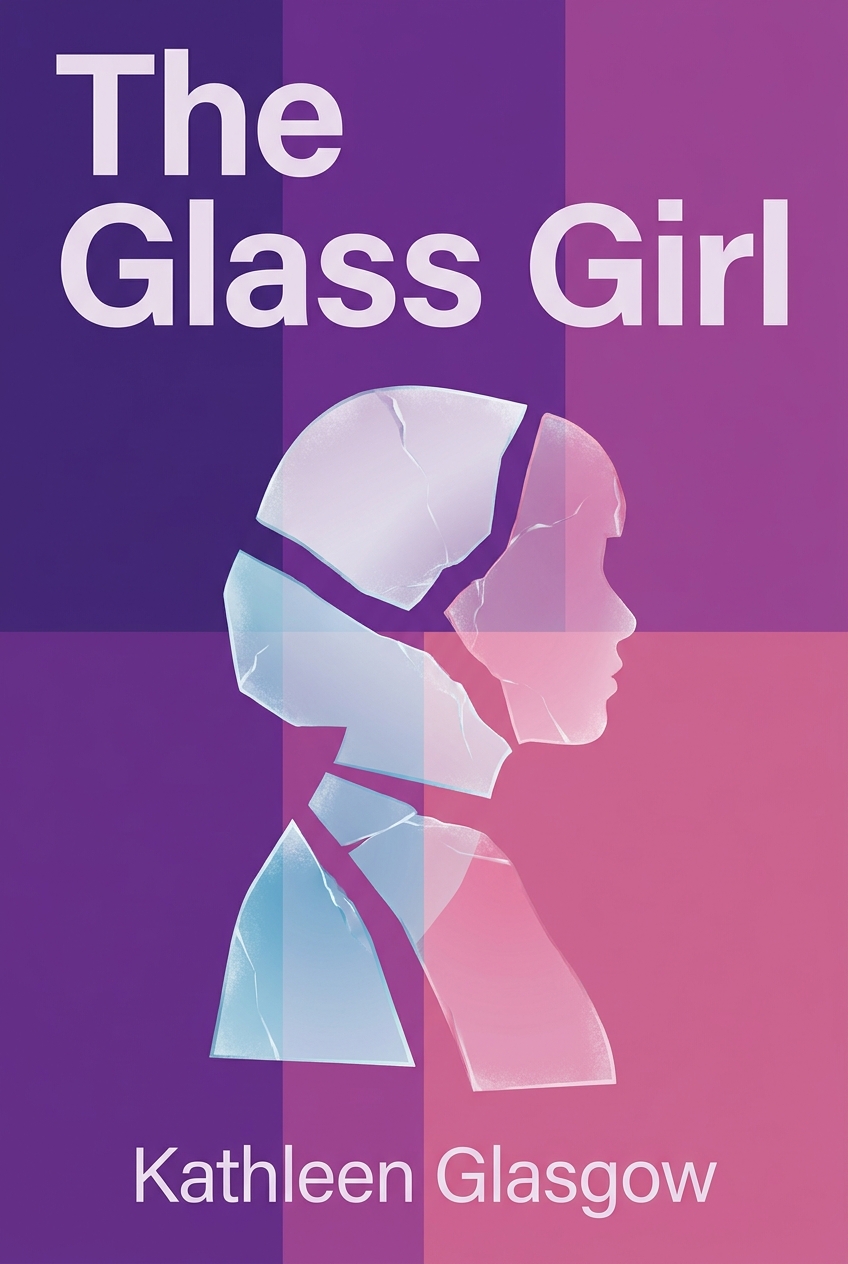
The Glass Girl
What's it about
Do you ever feel like you're about to shatter into a million pieces? This summary explores the crushing weight of grief and the immense pressure to hold everything together for everyone else, showing you a path forward when you feel completely lost and alone. You'll follow Izzy, a young girl navigating the devastating loss of her mother while trying to be the perfect daughter, sister, and friend. Discover how she confronts her silent struggles with anxiety and learns that true strength isn't about being unbreakable, but about finding the courage to embrace your cracks and let others help you heal.
Meet the author
Kathleen Glasgow is the New York Times bestselling author of critically acclaimed novels that have become essential reading for a generation of young adults. Her own experiences with mental health and recovery fuel her passion for writing honest, unflinching stories about girls navigating difficult circumstances. Glasgow writes to give a voice to those who feel unheard and to assure her readers that they are not alone, infusing even the darkest narratives with a powerful message of hope and resilience.
Opens the App Store to download Voxbrief

The Script
A child sits alone in a room, surrounded by fragments. On the floor are shards of a favorite teacup, a broken music box, a doll with a missing eye. Each piece is a memory, a moment of impact, a tiny catastrophe. The child doesn't try to glue them back together into their original forms; that's impossible. Instead, she begins to arrange them, creating a new mosaic from the wreckage. She learns the language of what's broken, finding a strange beauty in what they have become, not in what these things were. This is about the quiet, determined act of living with the pieces, of understanding that a life can be built from the fractures, not in spite of them.
This impulse to find a way forward through the fragments of trauma is the emotional core of Kathleen Glasgow's work. She didn't arrive at this theme through academic study, but through lived experience. Glasgow has spoken openly about her own long journey with mental health, self-harm, and recovery, describing her writing as a way to hold a light up in the darkest rooms of her own past, not as an escape. She writes the books she needed when she was a teenager feeling broken and alone, creating stories that acknowledge the sharp edges of pain without offering easy fixes. For Glasgow, the act of writing The Glass Girl was another step in this process, a way to explore the fragile, resilient nature of a young person trying to piece herself back together after the world has shattered around her.
Module 1: The Anatomy of Numbness
We all build armor to get through the day. For Bella, the protagonist of The Glass Girl, this armor is both literal and metaphorical. It’s a defense against a world that feels overwhelming and a pain that feels inescapable. Her story reveals a critical insight about how we cope. Protective routines and appearances are often shields against internal chaos.
Bella’s day starts with a uniform. Baggy jeans, a baggy T-shirt, and a baggy hoodie. She thinks of this as leaving room for her pain to grow, a way to protect herself from the outside world. This is about creating a buffer. On top of that, she perfects a mask of powder and black eyeliner. She knows this face isn't her. But it hides what she feels inside: a hollow, gray, dying heart. This performance is exhausting. It's a daily obligation just to appear normal.
This leads to a second, more dangerous coping mechanism. When the armor isn't enough, the next step is to seek an escape. Numbing rituals become a lifeline for temporary relief from emotional pain. Bella gets through her day with one thought. The thought of what she can do at the end of it to make things worthwhile for a little while. She craves that "comforting wave" that will take her away and drown everything else out. For her, this ritual is drinking. It starts as a way to dull the sharpness of grief after her grandmother dies and her boyfriend breaks up with her. He told her she was "too much," a comment that haunts her and reinforces her belief that her true feelings are a flaw. So, she drinks. The alcohol replaces what's hurting inside with a numbing warmth.
But here's the thing. This search for numbness creates a profound sense of isolation. The more you try to escape, the more disconnected you become. Feeling invisible and alienated fuels the cycle of self-medication. Bella feels unseen at school. Students knock into her in the hallways, not out of malice, but because they don't even see her. She feels like she doesn't exist. This social invisibility is compounded by the immense pressures of her generation. School shooter drills, environmental collapse, and dismissive adult platitudes that promise "it will get better." It all feels like a sentence she has to serve. The drinking becomes the only reliable way to quiet the noise, both internal and external. It’s a vicious cycle. The pain leads to numbing, and the numbing deepens the isolation, which in turn amplifies the pain.