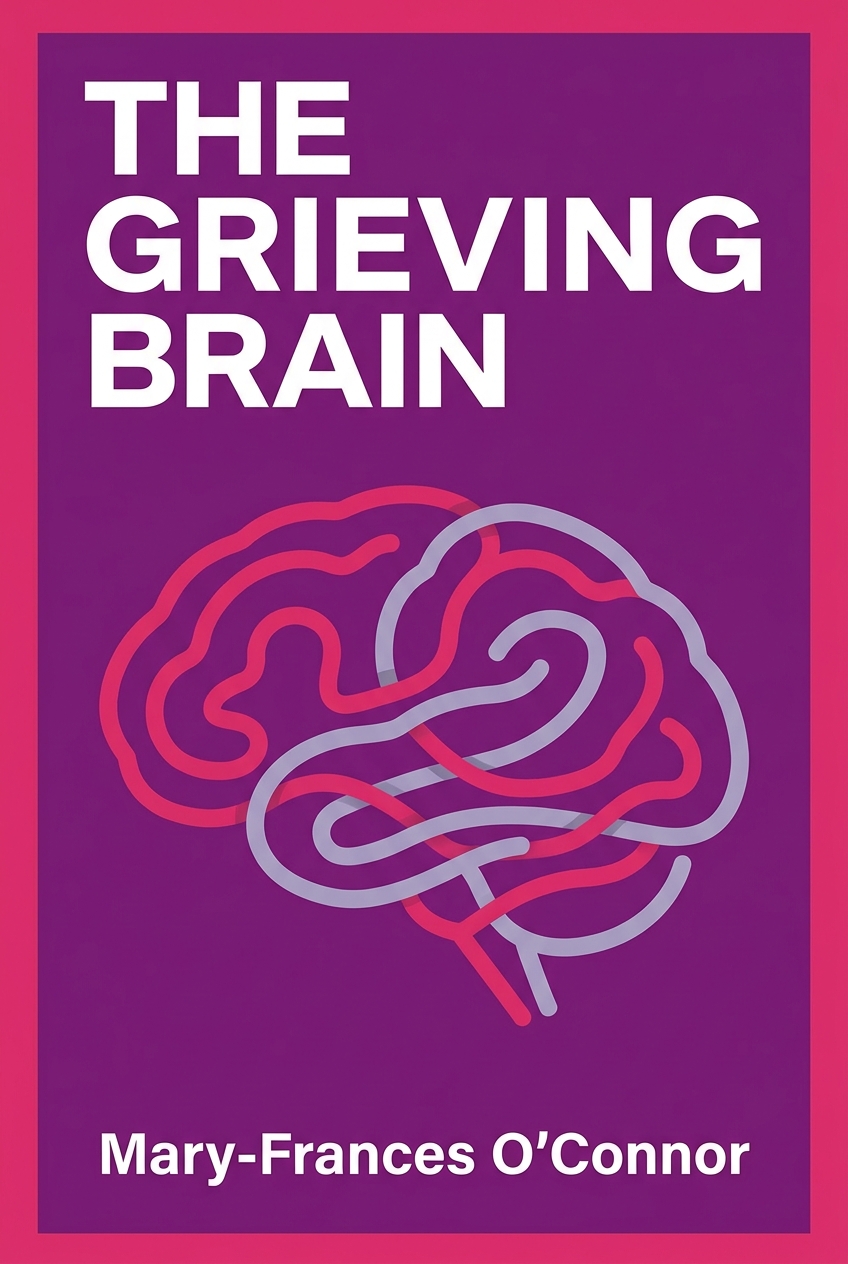
The Grieving Brain
The Surprising Science of How We Learn from Love and Loss
What's it about
Ever wondered why grief feels so disorienting, like your brain is broken? This summary reveals the neuroscience behind heartbreak, showing you that grieving is actually a form of learning. Discover how your brain can adapt to a new reality after loss, without ever having to "get over" it. Drawing on cutting-edge research, you'll learn why your mind keeps searching for a loved one even when you know they're gone. Uncover practical insights into how your brain processes loss, navigates painful memories, and ultimately finds a way to carry love forward while creating a new future.
Meet the author
Mary-Frances O’Connor, PhD, is an associate professor of psychology at the University of Arizona, where she directs the Grief, Loss, and Social Stress GLASS Lab. Leading her own neuroscience laboratory, she has dedicated decades to studying the effects of grief on the brain, using neuroimaging to understand what happens when we grieve. This extensive research, combined with her compassionate clinical work, provides the groundbreaking and hopeful insights found within The Grieving Brain, offering a new paradigm for how we comprehend love and loss.
What's it about
Ever wondered why grief feels so disorienting, like your brain is broken? This summary reveals the neuroscience behind heartbreak, showing you that grieving is actually a form of learning. Discover how your brain can adapt to a new reality after loss, without ever having to "get over" it. Drawing on cutting-edge research, you'll learn why your mind keeps searching for a loved one even when you know they're gone. Uncover practical insights into how your brain processes loss, navigates painful memories, and ultimately finds a way to carry love forward while creating a new future.
Meet the author
Mary-Frances O’Connor, PhD, is an associate professor of psychology at the University of Arizona, where she directs the Grief, Loss, and Social Stress GLASS Lab. Leading her own neuroscience laboratory, she has dedicated decades to studying the effects of grief on the brain, using neuroimaging to understand what happens when we grieve. This extensive research, combined with her compassionate clinical work, provides the groundbreaking and hopeful insights found within The Grieving Brain, offering a new paradigm for how we comprehend love and loss.
The Script
You've reached the end of the free preview.