All Books
Self-Growth
Business & Career
Health & Wellness
Society & Culture
Money & Finance
Relationships
Science & Tech
Fiction
Topics
Blog
Download on the App Store

The Irish Goodbye

A Novel

14 minHeather Aimee O'Neill

What's it about

Have you ever felt the urge to just disappear and start over? This electrifying novel explores the dark side of that fantasy, following a woman who fakes her own death to escape a toxic marriage, only to find that reinventing herself is more dangerous than she ever imagined. You'll discover the intricate steps she takes to vanish without a trace and the psychological toll of living a lie. As her carefully constructed new life begins to unravel, you'll be on the edge of your seat, questioning what it truly means to be free and whether you can ever really escape your past.

Meet the author

Heather Aimee O'Neill is an award-winning writer whose work has appeared in publications such as The New York Times, The Guardian, and Salon. Her deep dive into Irish culture and complex family dynamics was inspired by her own journey reconnecting with her estranged father in Ireland. This personal quest for understanding and belonging infuses her novel with authentic emotion and a profound sense of place, offering readers a powerful exploration of identity and forgiveness.
Listen Now

Opens the App Store to download Voxbrief

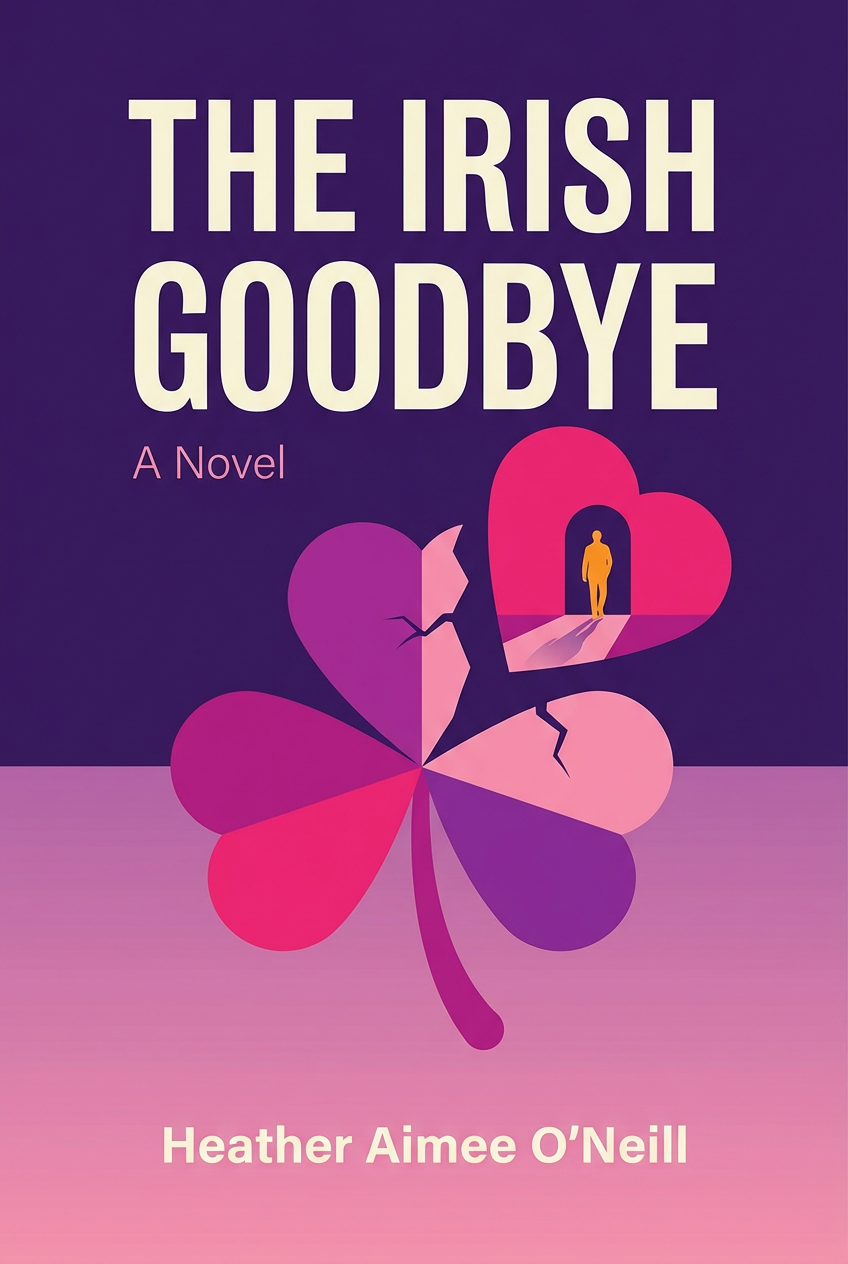
The Irish Goodbye book cover

The Script

Think of a song your older sibling loved—one that played so often it became the soundtrack to your childhood. Now, imagine they're gone, and that song comes on the radio. For a moment, it’s a comfort, a warm echo of their presence. But as you listen closer, you start to hear notes you never noticed before. A discordant chord, a flicker of sadness in the melody, a lyric that suddenly seems sinister. The song hasn't changed, but your understanding of it has shattered. You realize the version you knew was a simplified cover, a story told for a younger audience. The real song was far more complex, haunted, and maybe even dangerous. And now, you have to learn the original version, note by painful note, to understand what really happened to the person you thought you knew best.

This gap between the story we're told and the one we have to uncover is the driving force behind Heather Aimee O'Neill's novel, The Irish Goodbye. She was fascinated by the way grief can act as a brutal editor, forcing us to re-read our own family histories and question the narratives we’ve accepted as truth. Having taught writing for over a decade at institutions like CUNY and the 92nd Street Y, O'Neill saw countless stories of love and loss. She wanted to capture that specific, obsessive moment when a person's death reveals the intricate, often darker, life they actually lived, transforming a loved one from a familiar memory into a haunting mystery to be solved.

Module 1: The Echo Chamber of Grief

The central tragedy in the Ryan family isn't a single event. It's a series of interconnected losses that create an echo chamber of grief. The accidental death of a boy named Daniel Larkin, followed by the suicide of the eldest son, Topher, becomes the family’s unspoken center of gravity. Everything revolves around it. O'Neill shows that unresolved trauma becomes the operating system for family dynamics. The characters don't talk about these events directly. Instead, the grief manifests in their behaviors. The mother, Nora, develops insomnia and retreats into her art, painting seascapes that subtly hint at her loss. The father, Robert, begins to show signs of cognitive decline, at one point mistaking his grandson for his deceased son. The remaining siblings—Alice, Cait, and Maggie—process their grief in divergent ways, creating fractures in their relationships. Alice, who stayed home, carries the burden of daily caregiving and resents her sisters' absence. Cait, who fled to London, uses distance as a shield. Maggie, the youngest, grapples with the traumatic memory of finding her brother's body.

This leads to a critical insight. Grief isolates individuals even when it's a shared experience. Each family member is trapped in their own private loop of pain. For example, Nora keeps a box of condolence cards from Topher’s death in her closet. She has never opened it. She can't bear to read the words, but she also can't throw the box away. It's a perfect physical metaphor for their collective emotional state: frozen in time, unable to process or move on. Alice feels abandoned, left to manage her parents' decline alone. She believes her sisters are willfully oblivious to the family's struggles. She feels the weight of responsibility, and it fuels her anger.

So what's the actionable takeaway here? The book suggests that acknowledging the different ways people grieve is the first step toward connection. When Alice finally confronts her mother about the condolence cards, it doesn't solve everything. But it opens a door. It allows Nora to admit her pain. It allows Alice to see her mother not just as a source of family tension, but as a fellow human being struggling with an unbearable loss. The path forward is about finding a way to talk about the past, even when it hurts.

Module 2: The Performance of Adulthood

The Ryan sisters are all successful professionals. Cait is a lawyer. Alice is a budding interior designer. Maggie is a teacher at a prestigious academy. Yet, when they return to their childhood home, "The Folly," their adult identities begin to crumble. They revert to old roles and insecurities. O'Neill masterfully illustrates how coming home forces a confrontation between who we are and who we were. Cait, dressed in a Chanel suit, finds herself acting like a "horny, angsty, heartsick teenager" when her old flame, Luke Larkin, is near. Alice, who prides herself on being the reliable, responsible one, feels like an imposter in her new design career. She hesitates to even call herself a designer, despite her obvious talent. Maggie, in a committed relationship with her girlfriend Isabel, is haunted by a recent infidelity and feels like a child seeking parental approval.

And here's the thing. This regression isn't just internal. It's a performance for the benefit of the family. Family gatherings often demand a social facade that masks deep personal crises. Alice is hiding an unplanned and unwanted pregnancy. She vomits at her son's basketball game from stress but tells her family it's food poisoning. She's desperate for an abortion but can't bring herself to tell her husband, let alone her Catholic mother. Maggie's relationship with Isabel is imploding after her secret affair is exposed. She tries to hide the conflict, inventing excuses for why Isabel is leaving Thanksgiving dinner early. Cait has impulsively quit her job, is drowning in financial anxiety, and is fixated on reconnecting with Luke, whose brother's death is inextricably linked to her family's trauma.

Each sister is performing a version of "okay" while her private world is on fire. This performance is exhausting. It creates distance and prevents genuine connection. Isabel sees this clearly in Maggie's family. She observes that they all pretend everything is fine when it's not. The breakthrough moments in the novel happen when this performance stops. For instance, when Isabel publicly states, "Maggie and I got into an argument, and I don’t think it’s a good idea for me to stay," it's mortifying for Maggie. But it's also a moment of radical honesty. It shatters the facade. It forces the family to witness a real, messy human moment instead of a curated one. The lesson is powerful. Authenticity is risky, but the performance of perfection is corrosive.

Read More