All Books
Self-Growth
Business & Career
Health & Wellness
Society & Culture
Money & Finance
Relationships
Science & Tech
Fiction
Topics
Blog
Download on the App Store

The Last Days of Night

A Novel

14 minGraham Moore

What's it about

Ever wondered who really invented the light bulb? Dive into the electrifying legal battle between Thomas Edison and George Westinghouse, a high-stakes war of genius and ambition that lit up the world and left one man forgotten by history. You'll discover the untold story of Paul Cravath, the young, untested lawyer hired by Westinghouse to take on the legendary Edison. Follow Paul as he navigates a world of corporate espionage, brilliant inventors like Nikola Tesla, and a bitter rivalry that will determine the future of electricity.

Meet the author

Graham Moore is an Academy Award-winning screenwriter for The Imitation Game, a historical drama celebrated for its brilliant portrayal of genius, code-breaking, and hidden history. This same fascination with the intersection of innovation, ambition, and personal conflict drove him to write The Last Days of Night. Moore's background in both historical fiction and complex character studies uniquely positions him to illuminate the dramatic legal battle between Thomas Edison, George Westinghouse, and Nikola Tesla, bringing this forgotten chapter of American history to vivid life.
Listen Now
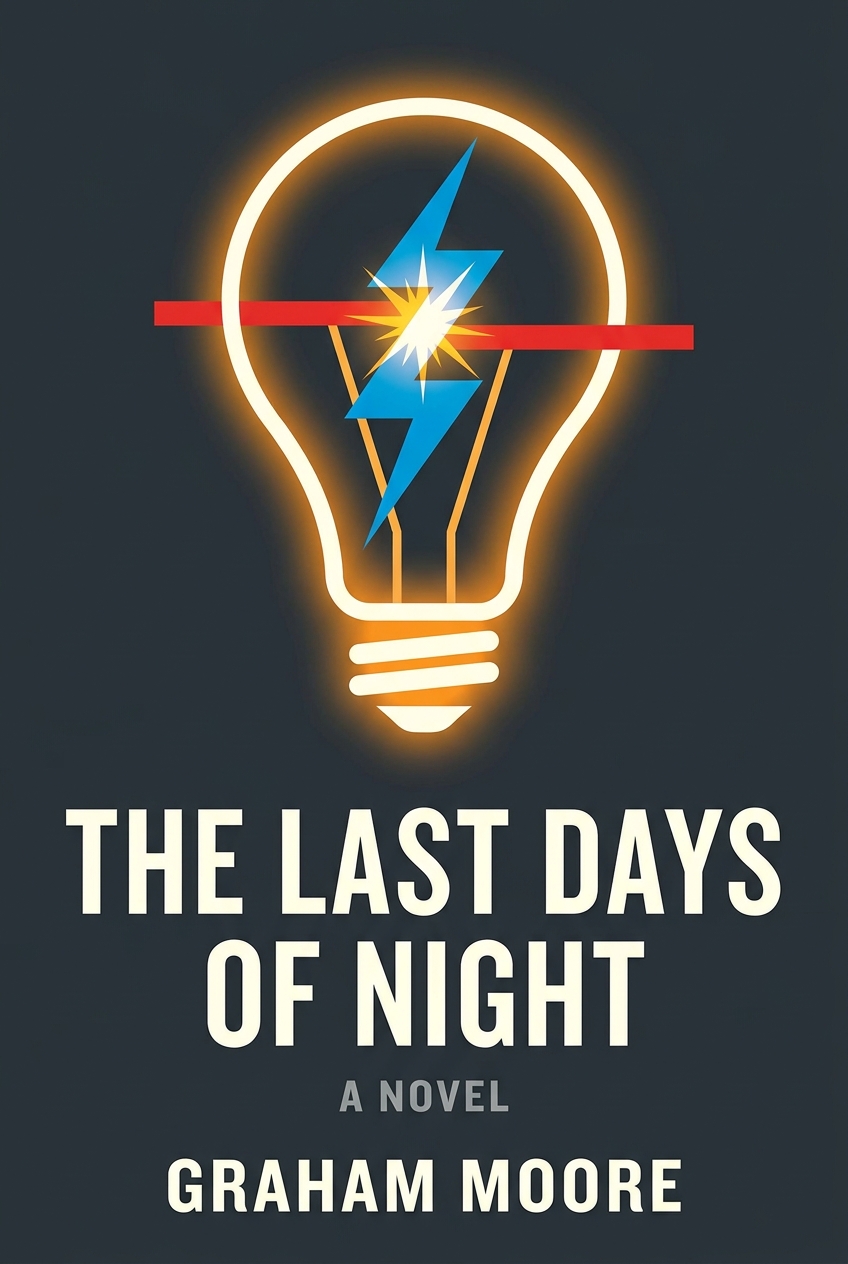
The Last Days of Night book cover

The Script

Think of the defining rivalries in modern culture—the kind that create entire industries in their wake. We saw it with Steve Jobs and Bill Gates, two titans whose competition shaped the personal computer and put a device in every home. We see it today with streaming platforms like Netflix and Disney, battling for our attention and rewriting the rules of entertainment. These contests are epic struggles over technology, market dominance, and the very future of how we live. They force innovation at a breakneck pace, but they also leave a trail of broken alliances, stolen ideas, and reputations ruined in the public square. What if the original blueprint for this kind of high-stakes, world-changing conflict wasn’t fought in Silicon Valley boardrooms, but in the gaslit courtrooms of 19th-century New York?

This is precisely the battle that captivated novelist and screenwriter Graham Moore. He was fascinated by the forgotten war between Thomas Edison and George Westinghouse—a fight over the invention of the light bulb and the very nature of electricity itself. Moore, who won an Academy Award for his screenplay for The Imitation Game, has a unique talent for unearthing the human drama buried inside transformative historical moments. He saw that this was a legal thriller, a character study of ambition, and a foundational myth for modern America, all rolled into one. He wrote The Last Days of Night to pull this electrifying, real-life conflict out of the footnotes of history and place it center stage.

Module 1: The Arena of Innovation

The late 1800s were a time of breathtaking change. New York City was a spectacle of new wealth and new dangers. This is the world we enter. It's a world where progress is so rapid, it often outpaces understanding. A public street can become the site of a horrific public execution by a new, invisible force called electricity. This chaotic energy sets the stage for a new kind of warfare.

The first core idea is that technological progress is driven by conflict, not just invention. Graham Moore doesn't introduce us to a pristine laboratory. He drops us onto a bloody battlefield. The story centers on Paul Cravath, a young, brilliant, and deeply ambitious lawyer. He is summoned to the center of a legal storm. Thomas Edison, the most famous man in America, wants to hire him. He is hired to sue. Edison has filed 312 lawsuits against his rival, George Westinghouse. His goal is to bankrupt his competition through a legal war of attrition. The fight for the future of light will be won in the courtroom, not just the workshop.

This leads to a crucial insight for anyone in a competitive field. Public perception is a weapon that can override technical reality. Edison isn't just an inventor. He is a master of narrative. The public sees him as a wizard, a miracle worker. He actively cultivates this myth. In a theatrical display of power, he shows Paul a button in his office. He presses it. Five miles away, the light in the Statue of Liberty's torch extinguishes. This demonstrates his absolute control. He understands that if the public believes your story, you've already won half the battle. This is a powerful lesson. The best product doesn't always win. The best story often does.

But here's the twist. The fight is psychological as much as it is legal. Paul isn't just fighting a corporation. He is fighting a myth. He is a young, unknown lawyer facing a global icon. What fuels his fight? It's a flash of condescension in Edison's eyes. A look of pity from the giant to the upstart. That look ignites Paul's resolve. He concludes that power is the need for something so great that nothing can stop you from getting it. This is a critical insight for anyone facing a titan. You must understand their deepest motivation. You must find an even stronger one within yourself.

Read More