All Books
Self-Growth
Business & Career
Health & Wellness
Society & Culture
Money & Finance
Relationships
Science & Tech
Fiction
Topics
Blog
Download on the App Store

The Last House Guest

A Reese Witherspoon Book Club Pick

14 minMegan Miranda

What's it about

How well do you really know your best friend? In the idyllic summer town of Littleport, Maine, one woman is about to find out the answer is not at all. A year after her wealthy best friend's shocking death was ruled a suicide, she is haunted by inconsistencies that everyone else wants to forget. Now, as the town and its powerful residents try to silence her, you'll join her dangerous search for the truth. Uncover a web of secrets and lies hiding just beneath the surface of a perfect summer paradise. You'll question every alibi and motive until the final, stunning reveal.

Meet the author

Megan Miranda is a New York Times bestselling author whose gripping thriller, The Last House Guest, was selected as a Reese Witherspoon Book Club Pick. A graduate of MIT, she brings a unique background in science and technology to her intricate, puzzle-like plots that keep readers guessing until the very end. This analytical perspective, combined with her gift for crafting atmospheric suspense, allows her to explore the complex secrets hidden within tight-knit communities and the haunting power of the past.
Listen Now

Opens the App Store to download Voxbrief

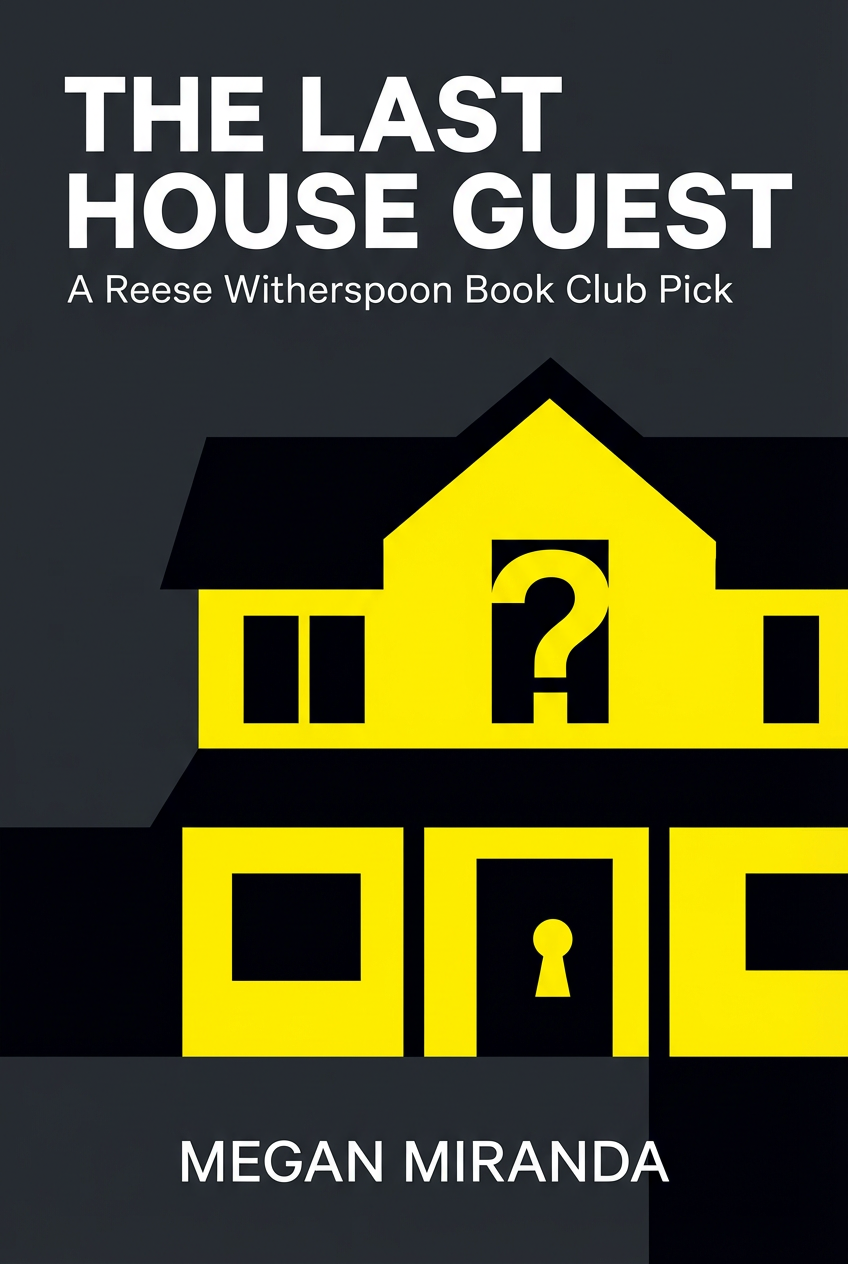
The Last House Guest book cover

The Script

Every summer, a small coastal town performs an intricate, unspoken ritual. The year-round residents, the 'locals,' prepare the stage—stocking shelves, painting trim, and readying the docks. Then, the 'house guests' arrive, flooding the town with money and a vibrant, temporary energy. For a few short months, these two groups coexist in a fragile symbiosis, their lives overlapping in restaurants, on beaches, and at late-night bonfires. But what happens when the season ends? The guests leave, the town exhales, and the shared spaces become quiet again, holding the faint echo of a summer’s worth of secrets. The relationship is transactional, yet deeply personal, built on a foundation of sand that washes away each fall, leaving behind only what refuses to be forgotten.

Beneath this surface-level harmony lies a current of resentment and misunderstanding, a tension that few can articulate but everyone feels. It’s this very tension that fascinated author Megan Miranda. Having spent her own childhood summers in a similar environment, she became an expert observer of the subtle codes, the assumed privileges, and the carefully maintained boundaries between the two worlds. She saw how a place could feel like a paradise to one person and a cage to another, depending on whether you were visiting for a season or living there for a lifetime. "The Last House Guest" emerged from her desire to crack open that idyllic summer facade and explore the dark, complex loyalties that fester when a seasonal friendship is shattered by an impossible death, forcing a local to question every memory she has of the wealthy, beloved guest she thought she knew.

Module 1: The Two Faces of Littleport

The story is set in Littleport, Maine. But as we quickly learn, Littleport is two towns. There's the summer town, populated by wealthy families in magnificent coastal homes. Then there's the winter town, inhabited by the locals who serve them. The author establishes a core tension from this division. Friendships between a summer girl and a local are seen as fierce but fleeting. They rarely last.

The protagonist, Avery Greer, is a local. Her best friend, Sadie Loman, was a summer girl from a powerful, wealthy family. Their decade-long bond was the exception to the rule. But when Sadie is found dead at the end of the summer, that social divide becomes a chasm of suspicion. Avery finds herself trapped between these two worlds, belonging to neither. Your social position dictates the narrative people believe about you. The police rule Sadie’s death a suicide. But the town, and Sadie’s family, need someone to blame. Avery, the local girl who got too close, becomes the easy target. Parker, Sadie's brother, embodies the casual privilege of the visitors. He disregards local rules, confident there will be no repercussions. Avery, in contrast, is constantly aware of how she is perceived. She knows the locals both need and resent people like the Lomans.

This dynamic creates an environment where truth is secondary to perception. In a divided community, suspicion fills the vacuum left by incomplete official narratives. Avery is driven to investigate out of grief and self-preservation. She knows the facts can be twisted. She understands that in a town of insiders and outsiders, the story that sticks is often the one that confirms existing biases. She has to find the real story before the town writes one for her.

And here's the thing. The setting itself becomes a character. Miranda describes Littleport as a "drowned coast," a town carved from the wild through sheer stubbornness. The physical environment forges the character of its inhabitants. The locals are resilient and tough, like the rocky coastline. The summer homes, beautiful but monstrous, stand apart, symbolizing the isolation of the wealthy. The ocean is a constant, ominous presence—a source of beauty, livelihood, and ultimately, tragedy. The very landscape reinforces the themes of division and hidden danger.

Module 2: The Weight of the Past

We've explored the social divisions of Littleport. Now, let’s go deeper into the psychology of its residents. In this town, the past is never really past. It haunts the present, shaping every decision and relationship.

For Avery, her history is a constant presence. She had a troubled youth, a fact the local police haven't forgotten. This history makes her an easy suspect and undermines her credibility. Past mistakes and traumas create a permanent filter on your present identity. When Sadie dies, Avery feels a grim sense of fatalism. She thinks, "This place, it took people from me." Her current loss is layered onto previous losses, creating a pattern of tragedy that feels inescapable. Her grief is about a lifetime of being left behind in a town that takes and takes.

This haunting extends beyond personal history. It's embedded in physical spaces. After Sadie’s death, Avery lives in the Loman’s guesthouse. She constantly catches glimpses of movement in the windows of the main house, only to see her own reflection. The house becomes an echo chamber of loss. Grief can transform familiar spaces into psychological traps. Avery's own image becomes a ghost, a distorted reminder of the person who is gone. She finds that memory only tightens with time, replaying key moments with unnerving clarity.

Building on that idea, the story shows how the performance of social status is built on a shared, unspoken history. The locals have a nickname for the Loman house, "the Breakers," a subtle jab that bonds them together. It's a small act of rebellion, a way of creating an "us versus them" identity. Avery recalls how the Loman house had no interior door locks, a detail she interpreted as a sign of elite status—a performance of a life with no secrets. Parker Loman uses his family’s influence to secure a table at a popular restaurant, a quiet reminder of his place in the town’s hierarchy. These are calculated moves in a social game governed by memory and legacy.

Read More