All Books
Self-Growth
Business & Career
Health & Wellness
Society & Culture
Money & Finance
Relationships
Science & Tech
Fiction
Topics
Blog
Download on the App Store

The Lost Apothecary

A Captivating Historical Mystery Unveiling Secrets of Poison, Revenge, and Female Empowerment―Don't Miss Sarah Penner's Newest Spell-Binding Book, The Amalfi Curse

16 minSarah Penner

What's it about

Have you ever felt trapped by the expectations of others? Discover how a secret network of 18th-century women used hidden knowledge to reclaim their power. This summary unveils the story of a hidden apothecary who dispensed poisons to women seeking liberation from the men who wronged them. You'll learn how a modern-day historian uncovers this centuries-old mystery, connecting their lives across time. Explore the risky choices these women made and the surprising legacy of their rebellion. This isn't just a historical tale; it's an exploration of female resilience, hidden histories, and the timeless quest for justice.

Meet the author

Sarah Penner is the New York Times and internationally bestselling author of The Lost Apothecary, which has been translated into more than forty languages worldwide. A fascination with historical poison, hidden secrets, and forgotten women in history inspired her to leave a career in finance and pursue writing full-time. Her extensive research and love for travel bring the forgotten corners of London and the Italian coast to life in her spell-binding and empowering novels for women.
Listen Now

Opens the App Store to download Voxbrief

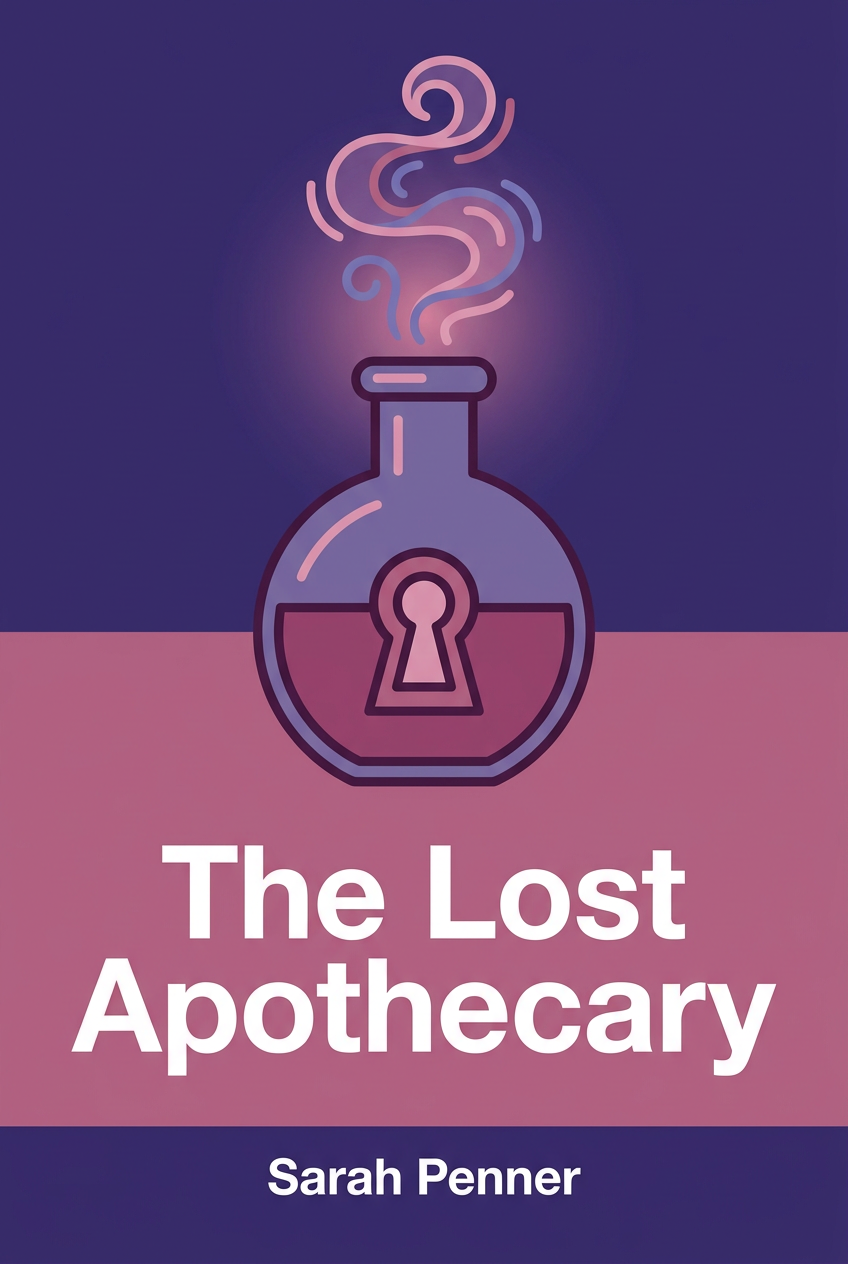
The Lost Apothecary book cover

The Script

In a forgotten corner of an antique shop sits a small, unassuming wooden chest. To one person, it’s a dusty container, its value measured by the integrity of its dovetail joints and the market price for 18th-century pine. They might gently clean it, catalogue its dimensions, and place it on a shelf with a price tag. To another, the same chest is a vessel of secrets. The faint scratches near the lock are a history of desperate hands. The dark stain in the corner is a ghost, the remnant of a spilled concoction. For this person, the chest is a story to be unlocked, a direct line to a life lived and a voice silenced.

This very chasm between an object as a sterile artifact and an object as a living story is what compelled Sarah Penner to write The Lost Apothecary. While researching in London, she stumbled upon a real-life historical phenomenon: mudlarking, the act of searching the river Thames's muddy shores for historical treasures. She became fascinated by the idea of finding a single, small object—like a vial—and imagining the human hands that last held it centuries ago. This curiosity about the secret lives of women, hidden in the artifacts they left behind, sparked the dual narrative of her debut novel, connecting a modern woman’s discovery with the dangerous, hidden world of a female apothecary who once used such vials to dispense her own brand of justice.

Module 1: The Secret World of the Apothecary

The story plunges us into late 18th-century London. We meet Nella, the proprietor of a hidden apothecary shop. It is a clandestine service for women seeking revenge against the men who have wronged them. This module explores the moral complexity and heavy burden of this secret world.

At its core, Nella's work is a subversion of a healing legacy. Her mother ran the same shop before her. But her mother's register was filled with remedies for women's maladies, like aiding childbirth or fertility. Nella, however, has transformed it. She operates from a hidden room behind a false wall. Her new register is a chilling record of life and death. It details the poisons she dispenses, like arsenic and nightshade, and the fabricated causes of death she suggests for her clients' targets. This shift from healing to harm was born from a deep personal betrayal that twisted her purpose.

This brings us to a critical insight. Living a life of secrecy and vengeance inflicts a corrosive decay. Nella is a woman in constant pain. She describes her own physical deterioration in detail. Her cheeks are sallow and sunken. Her joints ache so severely she feels her skin might split open. She directly connects this to her trade, stating, "Killing and secret-keeping had done this to me. It had begun to rot me from the inside out." The psychological weight is just as heavy. Every new request brings a fresh wave of disquiet and dread. Her body reacts with trembling fingers and an aching belly. Her work is consuming her.

And here's the thing. The apothecary's remedies are both poisons and healing agents, reflecting a complex moral service. While Nella is known for her deadly concoctions, she still stocks benign ingredients. She prepares healing oils, tinctures, and salves. For instance, she makes a salve from hog's lard and purple foxglove for a woman's post-childbirth care. This duality reveals the desperation of her clients. They are women seeking help for a wide range of afflictions. Some need to remove a "devious husband." Others need relief from physical ailments. Nella serves them all, blurring the line between healer and executioner. This creates a space that is both a sanctuary and a source of profound moral ambiguity.

This hidden world is sustained by one strict rule. The apothecary's foundational principle is to help women, never to harm them. This code was inherited from her mother. It's the cornerstone of her practice. We see this rule tested when a wealthy client, Lady Clarence, requests a poison. She initially claims it is for her abusive husband. But she later reveals her true intent. She wants to kill her husband's mistress. Nella's refusal is immediate and absolute. She says, "This shop is meant to help and heal women, not harm them. I won't dislodge it." When the lady threatens to steal the poison, Nella destroys it, throwing a full night's work into the fire. This act solidifies her moral boundary, even when it puts her in mortal danger from a powerful, vengeful aristocrat.

Module 2: The Echo in the Present

Now, let's fast forward over two hundred years. We meet Caroline Parcewell, a modern-day American historian whose life is quietly falling apart. On what was supposed to be a tenth-anniversary trip to London, she discovers her husband, James, has been unfaithful. The carefully planned, predictable life she built has shattered. This module examines how an unexpected discovery forces her to confront her own lost identity.

Caroline's story begins with a painful realization. Sacrificing personal passions for a relationship can lead to a devastating loss of self. She had a dream. She was accepted into a history graduate program at the University of Cambridge. But she gave it up when James proposed. She packed away her love for British literature and history. She took a stable but unfulfilling administrative job. The discovery of James's affair forces her to see this sacrifice as a slow erasure of her own identity. Her grief is for her marriage and for the ambitious, adventurous woman she used to be.

So what happens next? Caroline decides to go on the anniversary trip to London alone. Instead of staying in their swanky hotel, she makes a spontaneous choice. She joins a mudlarking tour on the River Thames. This is an activity where people search the riverbed for historical artifacts. And that's when it happens. An unexpected discovery can become a powerful catalyst for self-reclamation. While sifting through the mud, Caroline finds a small, sky-blue glass vial. It's etched with a strange drawing of a bear. Finding this object on her own, separate from James, becomes a symbolic moment. It's proof that she can be "brave, adventurous, and do hard things on my own." The vial awakens her dormant passion for history. It gives her a mission that is entirely her own.

This mission quickly consumes her. The search for external answers often mirrors an internal search for meaning. Caroline becomes obsessed with the vial's origin. She consults the tour guide, Bachelor Alf, who notes its handmade quality. She takes it to the British Library, where a map specialist named Gaynor helps her investigate. This external quest for the apothecary's story serves as a necessary distraction from her internal chaos. As Alf, the guide, advises, "You are not searching for a thing so much as you are searching for an inconsistency of things, or an absence." Caroline relates this directly to her life. She realizes she is searching for the absent pieces of herself: her certainty, her security, her dreams.

But flip the coin. This investigation also puts her in a precarious position. A personal crisis can be dangerously complicated by historical research. Her investigation leads her to a hidden, abandoned cellar she believes was the apothecary's shop. She trespasses to explore it. Later, a personal emergency strikes. James, who has followed her to London, accidentally ingests toxic eucalyptus oil. He mistakes it for cold medicine. When paramedics arrive, they find Caroline's research notebook. It's filled with notes on historical poisons, including the line "Quantities of non-poisons needed to kill." Suddenly, her academic curiosity is viewed as criminal intent. Her historical quest collides with her present-day turmoil, placing her under police suspicion and threatening her freedom.

Read More