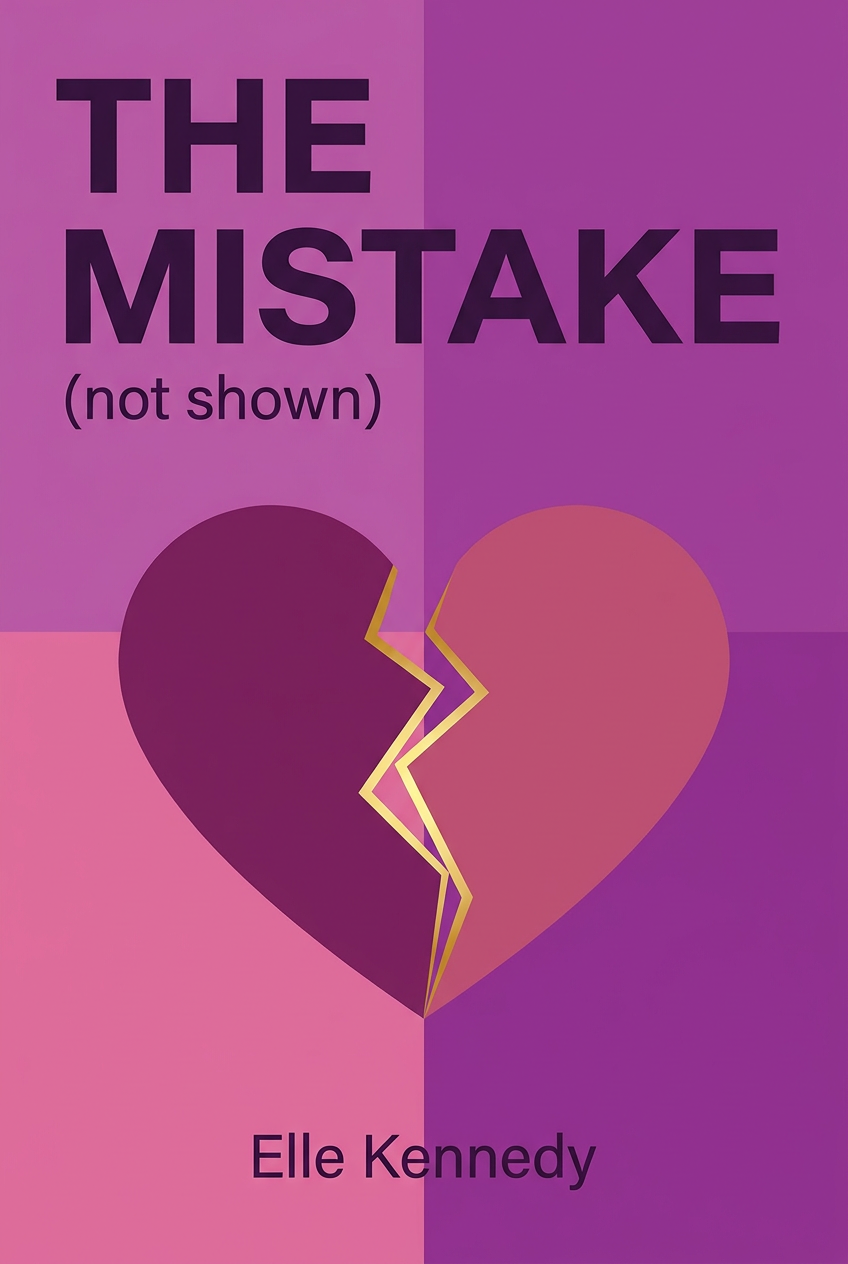
The Mistake
What's it about
Ever had a one-night stand that you just couldn't forget, even when you knew you should? Discover what happens when a single night of passion with a cocky hockey player turns into an unexpected second chance, forcing you to decide if some mistakes are worth making twice. You'll explore the hilarious and heart-wrenching journey of Grace and Logan. Follow their story from a regrettable morning-after to a complicated cohabitation. Learn how to navigate messy relationships, confront your past, and find love when you’re not even looking for it. This is your guide to turning a big mistake into your best decision ever.
Meet the author
Elle Kennedy is a New York Times, USA Today, and Wall Street Journal bestselling author who has sold millions of copies of her contemporary romance and romantic suspense novels. A reader from a young age, she began weaving her own tales of romance and passion, eventually turning her love for storytelling into a full-time career. Her ability to create relatable characters and steamy, heartfelt connections has made her a powerhouse in the romance genre and a favorite among readers worldwide.
Opens the App Store to download Voxbrief

The Script
Think back to the last time you made a truly monumental, cringe-worthy mistake. Not the kind where you burn dinner, but the kind that wakes you up at 3 a.m. years later. It’s a universal human experience, that hot-flash of regret followed by the frantic mental gymnastics of 'what if?' We replay the scene, substituting better lines, smarter choices, anything but the dumb thing we actually did. It’s like having two versions of yourself: the one who blundered spectacularly, and the phantom-you who, in hindsight, would have been impossibly smooth, charming, and perfect. The problem is, you only get to be the first one.
That feeling is precisely the engine that drives John Logan, a college hockey star who seems to have it all. He’s popular, talented, and on the fast track to the NHL. But one night, after a single, impulsive, and deeply regrettable decision involving a sweet, unassuming freshman named Grace Ivers, he finds himself trapped in that 3 a.m. loop. His public life is a highlight reel of goals and parties, but his private reality becomes a relentless campaign to undo his one big mistake. He wants a do-over, a second chance he knows he doesn’t deserve. The story becomes a high-stakes game of its own: can you ever really fix something you so thoroughly broke, especially when the person you hurt has every reason to keep you in the penalty box forever?
Elle Kennedy found the spark for this dynamic in the small, painfully relatable moments of social fumbling. As a seasoned writer of romance, she had explored countless 'meet-cutes,' but she became fascinated by the opposite: the 'meet-disasters.' She wanted to write a story about one person trying to earn redemption after showing their absolute worst side first. Drawing from the high-pressure social world of college athletics, which she’d observed as a space where reputations are made and broken overnight, Kennedy crafted a narrative grounded in a single, powerful question: What does it take to truly earn a second chance when you've already made the worst first impression imaginable?
Module 1: The Performance of Identity
We all wear masks. In a competitive world, projecting an image of control and success is often a survival tactic. The book introduces us to John Logan, a star hockey player who seems to have everything. He has the charm, the talent, and the social status. But this external confidence is a carefully constructed performance.
Logan’s public image of a carefree jock is a deliberate shield against his internal anxieties. He is known for his "killer grin and easygoing charm," enjoying a constant stream of parties and casual hookups. This lifestyle is a distraction. He uses it to escape a "growing despair about the dead-end road he’ll be forced to walk after graduation." His family life is a source of immense stress, with an alcoholic father and a burdensome sense of obligation to take over the family business. The partying and promiscuity are coping mechanisms. They are a way to avoid confronting a future he feels powerless to change.
So what's the cost of this performance? Maintaining a facade of success requires constant deception, which isolates you from genuine connection. Logan lies to everyone, especially his closest friends. He lets his best friend, Garrett, believe he wasn't drafted into the NHL, hiding the fact that he never even entered the draft. He fabricates excuses to avoid social situations that might expose his true feelings. He lies because, as he admits, "the truth is a total bummer, and the last thing I want is for my friends and teammates to feel sorry for me." This web of lies creates a profound sense of isolation. He feels like an "asshole friend," but the alternative—vulnerability—feels even more dangerous.
This brings us to Grace Ivers. She also feels pressure to perform a certain identity. After a quiet freshman year, she returns to campus determined to shed her "good girl" image. Adopting a new social identity is often a conscious strategy to reclaim agency and control your own narrative. Grace decides she is "so over" being the quiet, insecure person she was. She wants to have fun, make mistakes, and stop letting others define her. This decision sets her on a collision course with Logan. She refuses to be just another one of his "puck bunnies," a term for women who chase after hockey players. She is determined to be in the driver's seat this time. This internal resolve to change her own story is the first step toward breaking free from the roles others expect her to play.
Module 2: The Mistake and Its Fallout
Every action has a consequence. Sometimes, a single thoughtless act can unravel a relationship before it even begins. Logan’s first real interaction with Grace is a one-night stand, driven by his need for a distraction. For him, it's just another hookup. For Grace, it’s a disappointing and "underwhelming" experience.
This is where Logan makes his big mistake. He’s so wrapped up in his own issues that he’s completely oblivious to Grace’s experience. Self-absorption leads to careless actions that can cause unintended but significant harm to others. Logan leaves her room immediately after his own pleasure, a move he later admits was a selfish "asshole move." He doesn't get her number. He doesn't engage in any post-hookup conversation. He treats her as a means to an end, a temporary fix for his anxiety. Grace is left feeling used and foolish, concluding that Logan is "selling nothing but false advertising."
But here's the thing. The consequences of our actions don't just affect others; they rebound on us. Regret becomes a powerful motivator when a mistake bruises your ego and challenges your self-perception. Logan becomes obsessed with the encounter because he suspects she faked her orgasm. This perceived failure is a direct hit to his pride as a campus stud. His regret is about his own performance. This ego-driven obsession, however, forces him to see her as a person, not just a conquest. It’s the first crack in his self-absorbed facade.
The fallout extends into their social circles. In a connected environment, personal mistakes quickly become public, creating social pressure and straining friendships. A rumor starts on Twitter, fueled by a jealous rival, claiming Grace lied about hooking up with Logan. The hashtag #GracelessLiar goes viral on campus. Grace is publicly humiliated, feeling intense anxiety and the weight of constant scrutiny. This is a modern-day scarlet letter. Her friendship with her best friend, Ramona, also fractures. Ramona, driven by her own insecurity and jealousy, initially doubts Grace's story and even hits on Logan herself, a profound betrayal that forces Grace to re-evaluate their entire friendship. The mistake doesn't just stay between two people; it ripples outward, creating chaos.