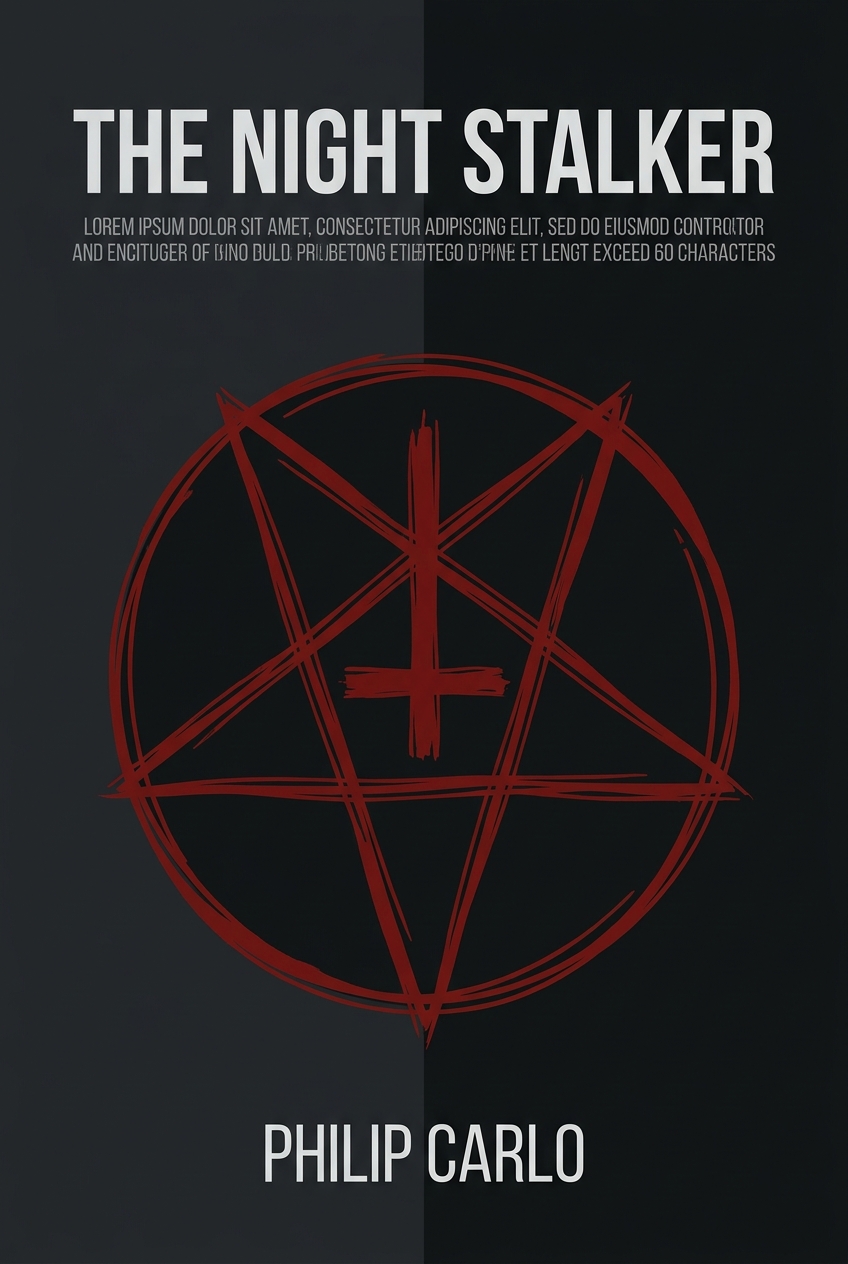
The Night Stalker
The Disturbing Life and Chilling Crimes of Richard Ramirez
What's it about
Ever wondered what transforms an ordinary person into a monstrous killer? This summary unpacks the chilling psyche of Richard Ramirez, revealing the dark forces and twisted events that forged one of history's most terrifying serial predators, the Night Stalker. You'll get a gripping, step-by-step account of Ramirez's brutal crime spree across 1980s Los Angeles. Discover the investigative missteps that let him roam free, the satanic influences that fueled his violence, and the dramatic citizen-led capture that finally ended his reign of terror.
Meet the author
Philip Carlo was the acclaimed true-crime author who conducted over 100 hours of chilling, face-to-face interviews with Richard Ramirez on death row for this definitive account. Growing up in the tough neighborhoods of Bensonhurst, Brooklyn, Carlo was no stranger to violence, having survived a gang-related shooting that left him with a lifelong limp. This firsthand experience with the dark side of human nature gave him a unique and unflinching perspective, allowing him to delve deep into the minds of society's most notorious killers.
Opens the App Store to download Voxbrief

The Script
Two detectives are working a murder case. In the first detective's office, the case files are stacked chronologically, each piece of evidence labeled and cross-referenced on a master timeline. Every lead, every dead end, is a data point to be sorted, a piece of a linear puzzle. He believes the killer, like any problem, has a logical structure that can be dismantled. In the second detective's office, the walls are covered in a chaotic web of photos, notes, and maps. Strings connect seemingly unrelated victims. He isn't looking for a timeline; he's hunting for an echo, a shared vibration of terror that links these disparate lives. He believes the killer is a storm to be felt, a malevolent energy whose pattern can only be understood by surrendering to its illogical, terrifying frequency.
For the citizens of Southern California in the mid-1980s, the storm was very real. A series of brutal, seemingly random home invasions and murders had plunged the region into a state of primal fear. The killer, who entered through unlocked doors and windows, left behind a trail of confusing clues, satanic symbols, and traumatized survivors. The official investigation felt stalled, a collection of disparate facts that couldn't connect the dots. The public, however, felt the echo, the terrifying, unifying logic of a predator who followed no rules but his own.
This gap between the official, procedural story and the lived, visceral terror is where Philip Carlo found his purpose. A journalist who had spent his life immersed in the world of crime, from the streets of Brooklyn to the cells of death row, Carlo felt the LAPD's narrative was missing the monster's heartbeat. He wanted to understand not just what happened, but the 'why' behind the chillingly calm brutality. To get that story, he began an unprecedented series of conversations, spending hundreds of hours face-to-face with the captured killer, Richard Ramirez, determined to map the storm from inside its very eye.
Module 1: Anatomy of a Predator
Before the "Night Stalker" terrorized Los Angeles, Richard Ramirez was a young man adrift. Philip Carlo’s investigation into his early life reveals a disturbing convergence of factors that shaped his path. This is about understanding a perfect storm of negative influences.
The first piece of the puzzle is that early exposure to extreme violence and trauma desensitizes a developing mind. At just twelve years old, Richard's cousin Mike, a Vietnam veteran, became his mentor. Mike wasn't just a soldier; he was deeply traumatized and had become a killer who enjoyed it. He showed young Richard Polaroid photos of sexual violence and decapitations from the war. More horrifically, Richard witnessed Mike murder his own wife in cold blood. This direct exposure to brutality wasn't abstract. It was personal and visceral, and it occurred without any psychological intervention. For Richard, violence became normalized, even exciting, at a formative age.
Building on that idea, the book suggests that a fractured family life and lack of supervision create a vacuum for destructive influences. Richard’s father, Julian, was a man with an explosive, violent temper. His rages created an atmosphere of fear in the home. While Julian never beat Richard, Richard witnessed his father brutally beat his older brothers. This, combined with both parents working long hours, left the children unsupervised. Richard’s older brothers fell into drug use and burglary. His brother-in-law was a "Peeping Tom," and Richard joined him on nightly voyeuristic excursions, finding them thrilling. Without a stable foundation, these deviant behaviors became his primary education.
So what happens next? This environment fostered a deep alienation, which in turn meant fringe belief systems can offer a powerful sense of belonging to the alienated. Richard felt rejected by his family's strict Catholicism and by society. He began sleeping in cemeteries to escape his father's house. It was during this time, fueled by hallucinogenic drugs like LSD, that he began to feel a connection to something else. He started reading about Satanism and found a belief system that didn't judge his dark thoughts. Instead, it validated them. Satan was a non-judgmental ally who understood him. This provided a framework for the violent fantasies he was already having.
Finally, Carlo's work makes it clear that untreated psychological and neurological issues can act as a powerful accelerant for deviant behavior. Richard suffered from undiagnosed epilepsy from a young age, including both grand mal seizures and less obvious "petite mal" staring spells. Neurologists have noted that temporal lobe epilepsy, which he was later diagnosed with, can be linked to altered sexuality and aggression. He also suffered a severe head injury as a toddler that required thirty stitches. These underlying conditions, combined with the trauma and environmental factors, went completely unaddressed. He never received therapy or medical intervention. His compulsions were left to grow unchecked, escalating from voyeurism to burglary and, ultimately, to murder.