All BooksSelf-GrowthBusiness & CareerHealth & WellnessSociety & CultureMoney & FinanceRelationshipsScience & TechFiction
Download on the App Store

The Nightingale

A Novel

13 minKristin Hannah

What's it about

What if the greatest acts of heroism happen not on the battlefield, but in the quiet moments of defiance? Discover the untold story of two sisters in Nazi-occupied France, each embarking on a treacherous path to resist and survive, forcing you to question what you would risk for freedom. This summary of Kristin Hannah's "The Nightingale" reveals the starkly different choices faced by Vianne and Isabelle. You'll explore the impossible decisions of a mother protecting her child versus a rebel joining the Resistance. Uncover the profound strength, sacrifice, and love required to fight a war in the shadows, and learn how ordinary women become heroes when their world is torn apart.

Meet the author

Kristin Hannah is an award-winning and bestselling author of more than 20 novels, including the international blockbuster, The Nightingale, which has sold over 4.5 million copies. A former lawyer turned full-time writer, Hannah found her true calling in telling stories that celebrate the resilience of the human spirit and the bonds of family. Her deep dive into the untold stories of women in WWII-era France was born from a desire to honor their courage and bring their powerful, often-overlooked history to light for a new generation.
Listen Now
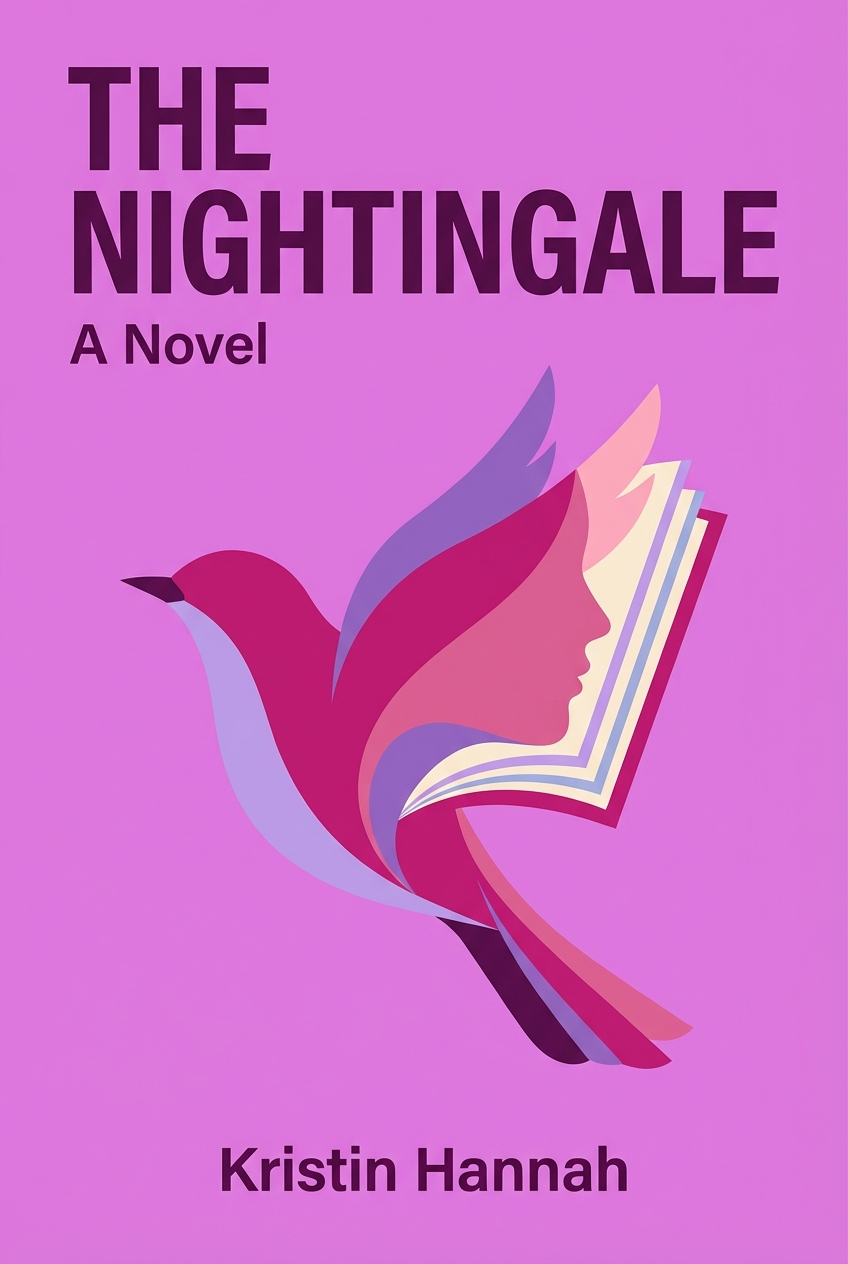
The Nightingale book cover

The Script

In the attic of a dying woman’s home sits an old, forgotten trunk. It’s locked not with a key, but with a thick film of dust and the weight of unspoken history. Inside are relics of a life she has never shared—a faded photograph of a sister, a worn identity card with a false name, a story of quiet heroism and impossible choices made under the shadow of war. For decades, this trunk has been a silent monument to the part of herself she had to bury to survive. It holds the memories of a woman who was once a girl, forced to choose between protecting her own child and saving the children of strangers, between love and survival, between two versions of courage that threatened to tear her soul apart.

This story of buried female bravery, the kind often lost to history books focused on battlefields and generals, is the very territory author Kristin Hannah set out to explore in The Nightingale. After reading about the real-life story of Andrée de Jongh, a young Belgian woman who created an escape line for downed Allied airmen, Hannah became haunted by a question: what were the other women doing? She realized that while the stories of men at war were widely told, the stories of women on the home front—their resistance, their sacrifice, their silent, ferocious courage—were often relegated to the footnotes. A bestselling author known for her deeply emotional explorations of family and resilience, Hannah felt compelled to give voice to these forgotten heroines, crafting a novel that unearths the kind of history that lives in the quiet, dusty trunks of the women who lived it.

Module 1: The War Within — Vianne’s Path of Quiet Resistance

The story begins with two sisters, Vianne and Isabelle, who are fundamentally different. Vianne is the older sister. She is a rule-follower, a wife, and a mother living in the small French town of Carriveau. Her world is defined by caution. She believes that by staying quiet and following the rules, she can protect her family from the encroaching war. But the war comes to her doorstep anyway.

First, her husband is called to the front. Then, the Nazis occupy her town. A German officer, Captain Beck, requisitions a room in her home. Vianne’s initial strategy is one of passive endurance. She believes survival depends on invisibility and compliance. She tells her rebellious younger sister, Isabelle, "We are women. We can’t fight." This mindset is her shield. It’s born from a deep-seated fear of loss, a trauma from her past. She is desperate to avoid a repeat of the pain she felt during the first World War.

But her strategy is tested almost immediately. The Nazis impose increasingly harsh restrictions. Food becomes scarce. Jewish friends and neighbors are targeted. Vianne is forced to confront a terrible reality. Compliance does not guarantee safety. It only delays the inevitable. The turning point comes when her best friend, a Jewish woman named Rachel, is arrested with her young daughter. Vianne had promised to protect them. She fails. The guilt is a fire that burns away her passivity.

This failure forces Vianne to make a choice. She can no longer remain invisible. Her resistance begins with an act of maternal courage. She agrees to hide a Jewish child, a boy named Ari. It's a decision that puts her own daughter, Sophie, in mortal danger. This single act transforms her. She begins a secret, dangerous operation. She starts a small, makeshift orphanage in her home. She forges documents. She uses her position as a schoolteacher to shelter Jewish children, hiding them in plain sight.

This module shows us that heroism isn't always loud. Vianne’s war is fought in whispers. It’s fought in the quiet terror of hiding children from the Gestapo. It’s fought in the daily struggle to find food. Vianne’s story reveals that in war, acts of compassion are acts of rebellion. Her journey is a powerful reminder for any leader. Sometimes, the most courageous thing you can do is not to lead the charge, but to protect your people, quietly and fiercely, in the face of overwhelming odds. It’s about understanding that true strength often lies in endurance and the protection of what matters most.

From this foundation of quiet courage, we see a different path emerge. Let's turn to Vianne's sister, Isabelle, whose war is anything but quiet.

Read More