All Books
Self-Growth
Business & Career
Health & Wellness
Society & Culture
Money & Finance
Relationships
Science & Tech
Fiction
Topics
Blog
Download on the App Store

The Overnight Guest

11 minHeather Gudenkauf

What's it about

Ever wonder if you can truly escape your past? True crime writer Wylie Lark hopes a secluded farmhouse is the perfect place to finish her book. But when a brutal snowstorm traps her, she discovers she isn't as alone as she thought she was. As the storm rages, Wylie finds a child freezing in the snow, leading her to a chilling realization. The farmhouse she's staying in is connected to a dark, unsolved local mystery. You'll uncover how Wylie must confront the secrets of the house, and her own past, to survive the night.

Meet the author

Heather Gudenkauf is the Edgar Award nominated, New York Times and USA Today bestselling author of critically acclaimed thrillers, with over a million copies sold worldwide. A lifelong Iowan and former elementary school educator, she draws inspiration from the chilling secrets often hidden beneath the placid surface of small-town Midwestern life. Her deep understanding of community dynamics and the darker side of human nature allows her to craft the gripping, atmospheric suspense for which she is celebrated by readers and critics alike.
Listen Now

Opens the App Store to download Voxbrief

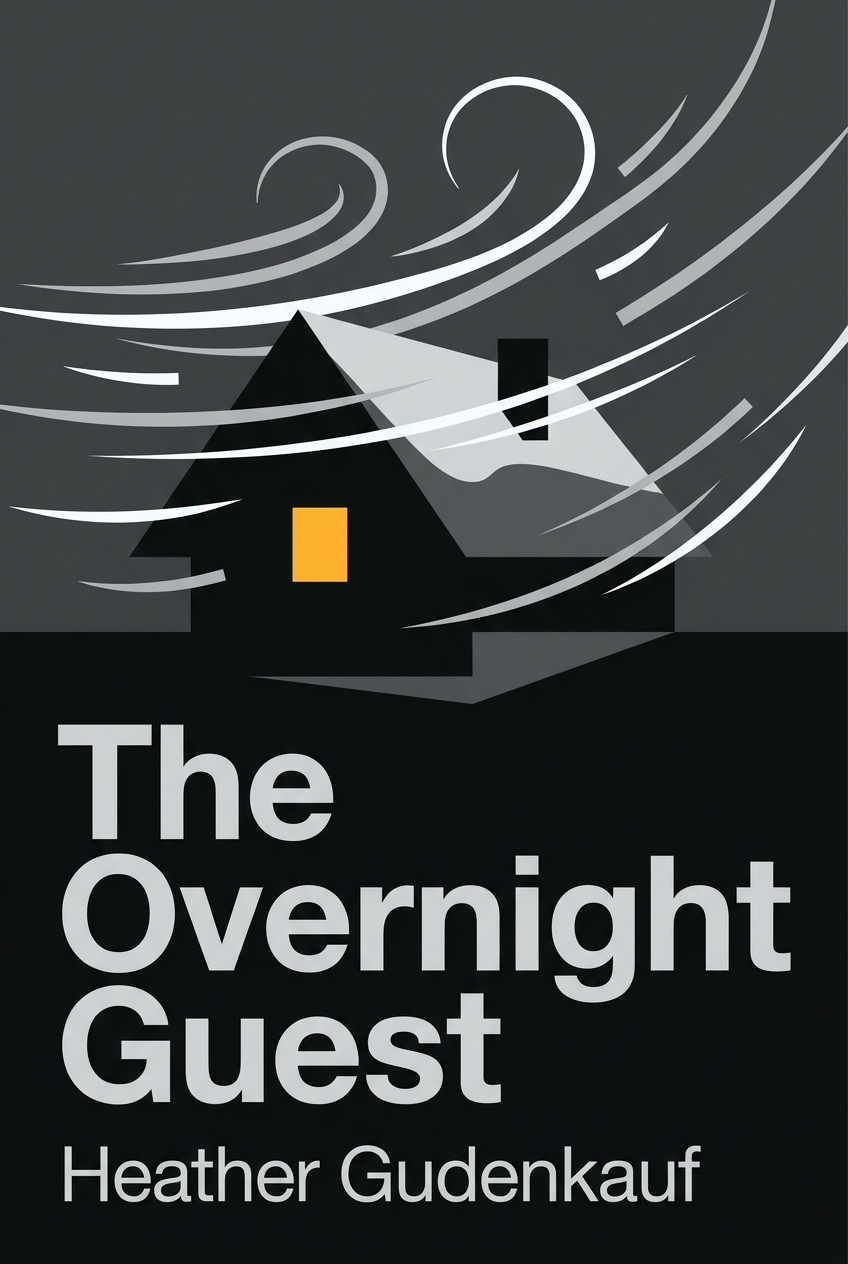
The Overnight Guest book cover

The Script

The old woman’s house stands alone at the end of a dirt road, a solitary shape against a flat, white landscape. Inside, every object is a compromise. The new, high-efficiency wood stove sits beside the original stone hearth, a nod to modern survival that can’t quite erase the memory of the home’s first, harsher winters. Upstairs, a bedroom is stripped bare for a writer’s work, yet a child’s faded height chart remains etched into the doorframe, a stubborn ghost of a family that once filled these rooms. This house is a conversation between then and now, between the life it was built for and the life it shelters today. But when a blizzard descends, burying the road and cutting the power, the house’s past refuses to stay quiet. The wind whispers old secrets through the floorboards, and every shadow seems to hold the shape of a memory you can't quite place, but can't possibly escape.

This chilling sense of a place holding its own traumatic memory is a landscape Heather Gudenkauf knows intimately. Growing up in rural Iowa, she was surrounded by isolated farmhouses and small towns where everyone’s history was intertwined, and the land itself seemed to bear witness to generations of secrets. A former teacher with a profound hearing impairment, Gudenkauf has long been fascinated by what is unsaid—the silent stories that objects and places tell. She wrote "The Overnight Guest" to explore that feeling, crafting a story where the isolation of a snowstorm forces a confrontation with a present danger and the chilling echoes of a past that was never truly buried.

Module 1: The Dual Narrative of Trauma

The book unfolds across two timelines. They seem separate at first. But they are on a collision course. Gudenkauf uses this structure to show how the past is never truly past. It bleeds into the present.

In the present day, we meet Wylie Lark. She's a true crime writer. She has retreated to a remote Iowa farmhouse. She needs to finish a book. A brutal snowstorm descends. It traps her completely. No power. No phone. No way out. Then, she finds a small child nearly frozen to death in her yard. This discovery forces her out of her isolation. It plunges her into a life-or-death crisis.

The second timeline is set twenty years earlier. It follows a young girl named Josie. On a warm summer night, her world is shattered. Her family is murdered. Her best friend, Becky, vanishes. Josie is the only survivor. She is left with a wound, a fragmented memory, and a lifetime of guilt. The narrative here is raw and immediate. It captures the terror of a child facing incomprehensible violence.

This brings us to the first core insight. Trauma creates its own timeline, collapsing the distance between past and present. For Wylie, the storm and the mysterious child are an echo. They trigger her own unresolved trauma, forcing her to confront the very event she has spent her life running from. The farmhouse she chose for her escape is the same farmhouse where her own story of loss began. The dual timelines are a reflection of how trauma works. It’s a ghost that lives with you. It can reappear at any moment, triggered by a sound, a place, or a face in a storm.

And here's the thing. The book suggests that survival often depends on a fragile, desperate hope. In the past, young Josie clings to the belief that someone will rescue her. She hopes her father will find her in the cornfield. She hopes her parents are just oversleeping. This hope is what keeps her moving. It keeps her alive until she realizes a devastating truth. No one is coming. She has to save herself. In the present, Wylie’s hope is more cynical. She hopes to just finish her book and be left alone. But when she finds the child, a new hope emerges. It's the simple, primal hope of keeping another human being alive.

Read More