All Books
Self-Growth
Business & Career
Health & Wellness
Society & Culture
Money & Finance
Relationships
Science & Tech
Fiction
Topics
Blog
Download on the App Store

The Paper Palace

A Novel

14 minMiranda Cowley Heller

What's it about

Have you ever been torn between the life you have and the life you could have had? What if one decision, made in a single summer day, could unravel decades of secrets, lies, and a love that has haunted you since childhood? This is the choice Elle Bishop faces. Dive into a gripping story that unfolds over 24 hours and 50 years. You'll explore the tangled web of a family's tragic history and the agonizing choice Elle must make between her husband and her childhood sweetheart. Discover how one moment of passion forces a lifetime of consequences to the surface, forcing you to question everything about love, loyalty, and the past.

Meet the author

Miranda Cowley Heller spent nearly a decade as the Senior Vice President and Head of Drama Series at HBO, developing acclaimed shows like The Sopranos, Six Feet Under, and The Wire. Drawing on her extensive experience in character-driven storytelling, she has now turned her talents to fiction. Heller spent summers in a similar landscape to the one she depicts in her debut novel, The Paper Palace, infusing the setting and its secrets with a lifetime of personal observation and emotional depth.
Listen Now

Opens the App Store to download Voxbrief

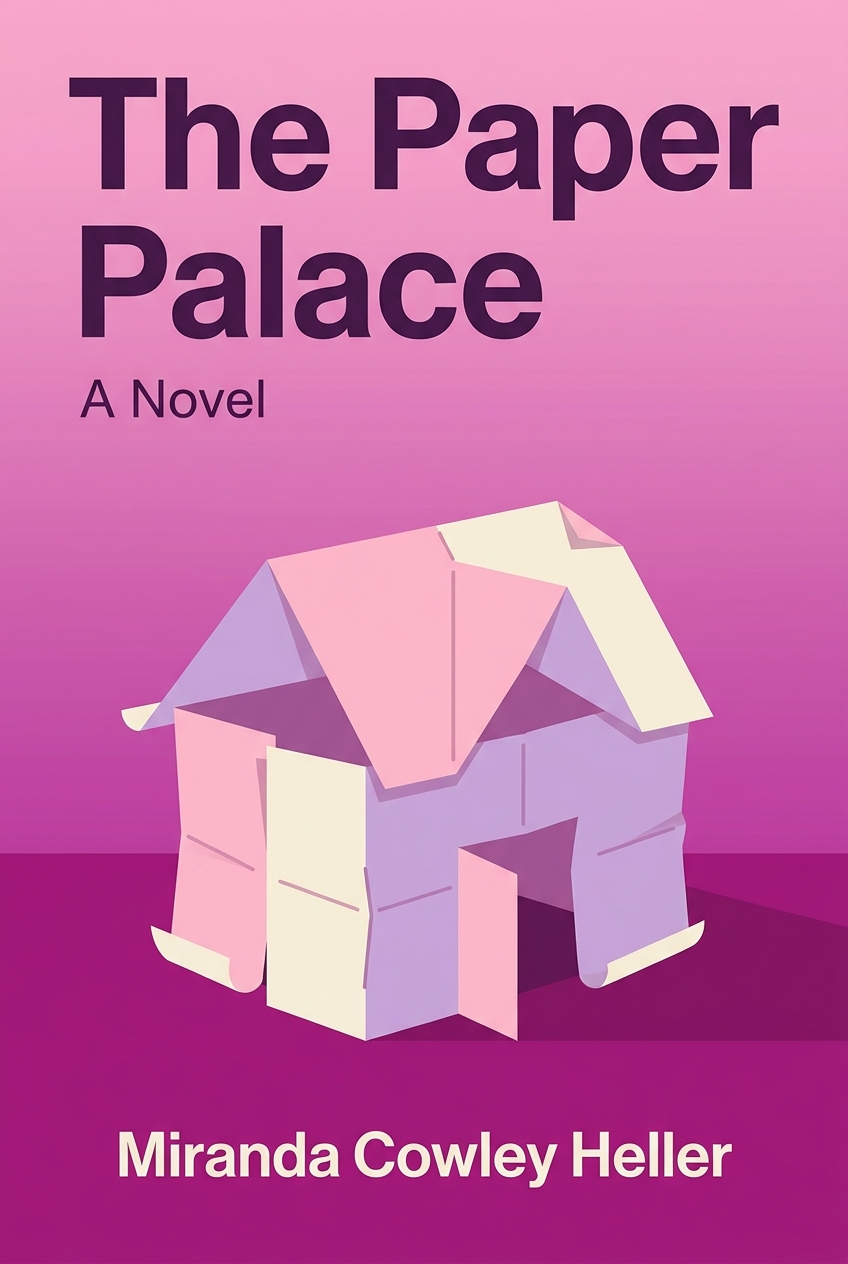
The Paper Palace book cover

The Script

You’re standing on a dock at the edge of a lake, the water perfectly still. Behind you, through the screen door, you can hear the comfortable, familiar sounds of your family—your husband, your children, your mother. But beside you is the person who has known you since childhood, the one who shares a private history that no one else can ever fully access. A single, reckless decision has just been made between you two. Now, the future splits into two distinct paths. One leads back inside, to the life you have carefully built, a life of love and stability. The other leads away from the dock, into a wild, uncertain future with the person who represents your oldest self. You have twenty-four hours to choose, but the decision feels like it was set in motion decades ago.

This is the impossible fulcrum on which a life pivots, a moment where the past crashes violently into the present. It’s a scenario that seems ripped from a high-stakes drama, yet it feels deeply, intimately familiar to anyone who has ever felt the magnetic pull of a formative, lost first love. The woman who crafted this moment, Miranda Cowley Heller, didn't come from the world of fiction writing. She spent years as the head of drama series at HBO, developing some of the most complex and memorable stories for the screen, from The Sopranos to Six Feet Under. After decades of helping other writers find the core of their stories, she decided to tell her own, returning to the landscapes of her childhood summers on Cape Cod. The Paper Palace was born from that deep-seated question: what happens when the one choice you can’t make is the only one that matters?

Module 1: The Weight of the Past

The central idea of "The Paper Palace" is that our past is never truly past. It’s a living entity that breathes in our present moments. The narrative structure mirrors this reality. It jumps between a single 24-hour period and decades of memories. This shows how present decisions are filtered through a lifetime of experience.

The protagonist, Elle, spends a summer morning at her family’s rustic Cape Cod camp. It’s called the Paper Palace. The night before, she finally acted on a lifelong passion. She slept with her childhood best friend, Jonas. Now, she has less than a day to decide. Does she stay with her loving husband, Peter, and their children? Or does she choose the man she has loved since she was a girl?

This is where the first insight becomes clear. Every present choice is a conversation with your past self. Elle’s dilemma is about two versions of her life. The sight of a poetry book on the porch sends her back to a memory of Jonas reading it years ago. A swim in the pond triggers the raw, physical memory of her affair. Every sight and sound at the Paper Palace is a gateway to another time. The past is an active force shaping her thoughts and feelings right now.

This leads to a powerful realization. Trauma creates a fault line in your identity. Throughout the book, we learn about Elle’s fractured childhood. She navigated her parents' chaotic divorce. She endured profound emotional neglect. And she survived a horrific secret trauma involving her stepbrother, Conrad. These events are the cracks in her foundation. In one scene, Elle looks at the scars on her body. They are physical reminders of past events. But they also represent the invisible wounds that influence her choices. She thinks of her life as being "built on a fault line." The secret she carries about Conrad’s death, a burden shared only with Jonas, has kept her from ever feeling whole or fully honest with Peter.

So what does this mean for us? Understanding our own histories is a strategic necessity. The author shows that without confronting these fault lines, we are destined to repeat patterns. Elle’s mother, Wallace, was shaped by her own traumatic childhood. Her cynical advice and emotional distance are echoes of her own pain. She passes this down to Elle. The book suggests that to break these cycles, you must excavate your own past. You have to understand the events that wrote your internal code.

And here’s the thing: this excavation is a continuous process. Memory is an unreliable narrator you must constantly cross-examine. Elle’s memories are vivid but not always accurate. She remembers a grave from her childhood as being on a hill. But when she visits as an adult, it’s in a hollow. She finds old photographs of family trips she has no memory of at all. This highlights a critical truth. Our memories are stories we tell ourselves. They are edited for comfort, for coherence, or to protect us from pain. To make a clear-eyed decision in the present, you have to be willing to question your own story. You have to ask what you might be misremembering, what you have forgotten, and why.

Read More