All Books
Self-Growth
Business & Career
Health & Wellness
Society & Culture
Money & Finance
Relationships
Science & Tech
Fiction
Topics
Blog
Download on the App Store

The Persian

A Novel

12 minDavid McCloskey

What's it about

What if you could step inside the shadowy world of CIA espionage and see how a single agent can change the course of history? Get ready for a high-stakes mission where every choice could lead to global conflict, and trust is the most dangerous currency of all. You'll follow Sam Joseph, a brilliant but disillusioned CIA officer, as he's pulled back into the field to recruit a top Iranian nuclear scientist. Uncover the secret tradecraft, psychological warfare, and gut-wrenching betrayals involved in a covert operation deep inside enemy territory. This is a rare, authentic glimpse into the modern spy game, where one wrong move could ignite a war.

Meet the author

David McCloskey is a former CIA analyst and diplomat who wrote daily intelligence briefings for the White House, four U.S. presidents, and senior cabinet officials. This firsthand experience within the clandestine world of intelligence, including multiple overseas assignments, provides the unparalleled authenticity that fuels his gripping espionage thrillers. His work offers a rare, insider's glimpse into the high-stakes reality of modern spycraft, blending intricate plotting with deep psychological insight drawn from his distinguished career.
Listen Now

Opens the App Store to download Voxbrief

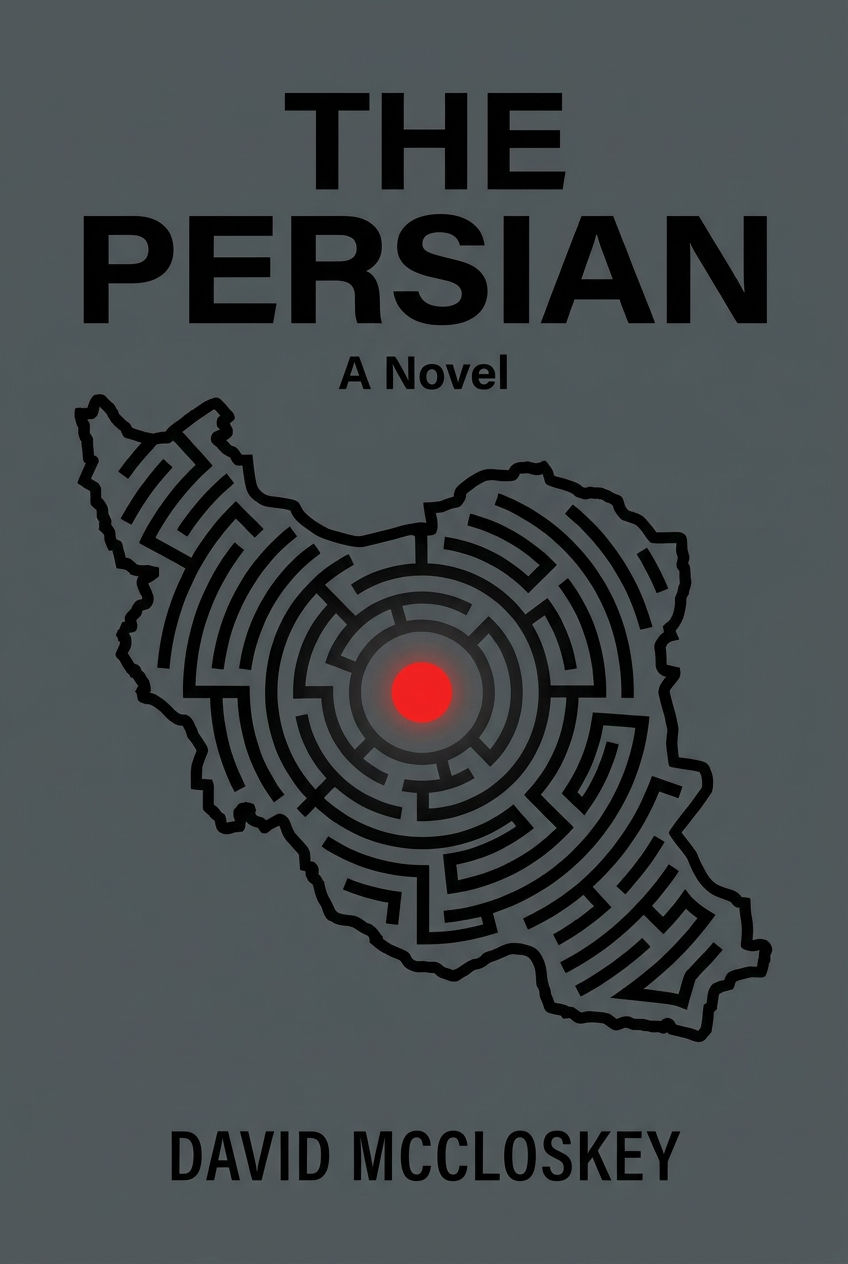
The Persian book cover

The Script

In the crowded bazaar, the apprentice rug merchant learns to see with his fingertips. His master points to the knot count, the subtle shift in wool from one village to the next, the almost imperceptible change in tension that betrays a weaver's distraction. The apprentice learns that one rug is a simple transaction, a piece of floor covering. The other, with a knot count just a fraction higher and a dye that speaks of a specific riverbank, is a map of allegiances, a carrier of messages, a declaration of intent. To the untrained eye, they are nearly identical. To the initiated, one is a commodity; the other is a weapon.

The world is full of these parallel objects, these twin realities hiding in plain sight. One is the official story, the other is the operational truth. David McCloskey spent years of his life learning to distinguish between the two, not in the bazaars of the Middle East, but from the inside of the CIA. As a former analyst covering Iran, his job was to read the world’s most complex and dangerous situations, separating the official pronouncements from the whispers that truly moved events. He saw how intelligence was about understanding the human currents of loyalty, ambition, and desperation that flow beneath the surface. Frustrated by the gap between the public's perception of intelligence work and its messy, high-stakes reality, he wrote The Persian to immerse readers in the authentic world he knew—a world where the right piece of information, understood in the right context, can be the most powerful weapon of all.

Module 1: The Anatomy of a Covert Operation

At the heart of modern espionage is a paradox. Operations are meticulously planned. Yet they are perpetually vulnerable to chaos.

The book shows us how successful missions depend on exploiting predictable human behavior. The Mossad team studies their target, Captain Qaani, for months. They learn his routines. He’s a workaholic. He drives himself without security. He takes the same route to his weekend home. This predictability becomes his vulnerability. The team stages a car breakdown on his route. They use a dead goat, fake blood, and smoke to create a believable, innocent facade. It's a performance designed to lower his guard.

But even the best plans are fragile. An unforeseen event, a child accidentally honking a car horn, shatters the element of surprise. The scene erupts into a chaotic firefight. A team member is severely injured. This brings us to a crucial insight: even the most controlled scenarios can spiral into disaster. The psychological tension is immense. The narrator describes driving "white-knuckled and sweaty," his hand shaking uncontrollably during the ambush. This is a messy, human affair where a single mistake can be fatal.

To manage this chaos, operatives rely on a blend of advanced tech and old-school tradecraft. The team uses coded radio clicks for silent communication. They need real-time facial recognition from headquarters to confirm their target's identity. At the same time, they use a simple chador, a traditional cloak, to conceal cattle prods. It’s a fusion of the digital and the analog. This operational blend is the reality of modern fieldwork. It’s about using every tool available, from satellite feeds to cultural attire, to gain an edge.

Module 2: The Art of Recruitment and Manipulation

How do you convince someone to betray their country? The book reveals it’s a psychological game of seduction played on a field of personal vulnerability.

The recruitment process begins with deep intelligence. Effective handlers meticulously research their targets to create an illusion of omniscience. When the Mossad handler, Arik Glitzman, approaches the protagonist, Kamran, he knows everything. He knows Kamran’s family history, his failing dental practice, even the specific California bungalow Kamran secretly dreams of. This knowledge is leverage. It creates a sense of being completely seen, which is both terrifying and deeply compelling.

From this foundation, the handler reframes the proposition. Espionage is presented as a solution to the target's existing problems. Glitzman doesn't demand cooperation. He offers help. He sees Kamran's professional disillusionment, his feeling of being an outsider, and his financial desperation. So he positions the mission as a path to Kamran's "California dream." It’s a transactional escape plan, an opportunity for a more significant life. The monthly retainer and the promise of a large payout are the tangible components of a new, more exciting reality.

And here’s the thing. The most effective manipulation often feels like genuine connection. Handlers blend menace with camaraderie to build trust and dependence. Glitzman alternates between veiled threats and moments of personal bonding. He shares drunken nights with Kamran. He defends him in a bar fight. This curated friendship erodes resistance. It makes the handler seem like the only person who truly understands. This complex dance of power, money, and manufactured intimacy is the engine of recruitment. It’s how ordinary people are turned into assets in a global shadow war.

Read More