All Books
Self-Growth
Business & Career
Health & Wellness
Society & Culture
Money & Finance
Relationships
Science & Tech
Fiction
Topics
Blog
Download on the App Store

The Rose and the Thistle

A 1700s Scotland Historical Romance with a British Heiress and Scottish Clan Rivalries

15 minLaura Frantz

What's it about

Can a marriage of convenience between sworn enemies ever lead to true love? In 1715 Scotland, Lady Blythe Hedley is sent from her English home to wed the heir of a rival Scottish clan, a union meant to quell a bloody feud and secure her family’s legacy. You'll be swept into the heart of the windswept Highlands, where every glance is loaded and every touch is a risk. Discover how Blythe navigates treacherous clan politics and her own guarded heart as she uncovers a dangerous secret that could either ignite a war or forge an unbreakable bond.

Meet the author

Laura Frantz is an award-winning Christy Award finalist and ECPA bestselling author celebrated for her richly detailed and immersive historical fiction set in the 18th-century. Her deep passion for history and Scottish ancestry fuels her writing, allowing her to transport readers to bygone eras with authenticity and heart. Frantz meticulously researches each novel, weaving compelling characters and intricate plots into the vibrant tapestry of the past, bringing stories like The Rose and the Thistle to unforgettable life.
Listen Now

Opens the App Store to download Voxbrief

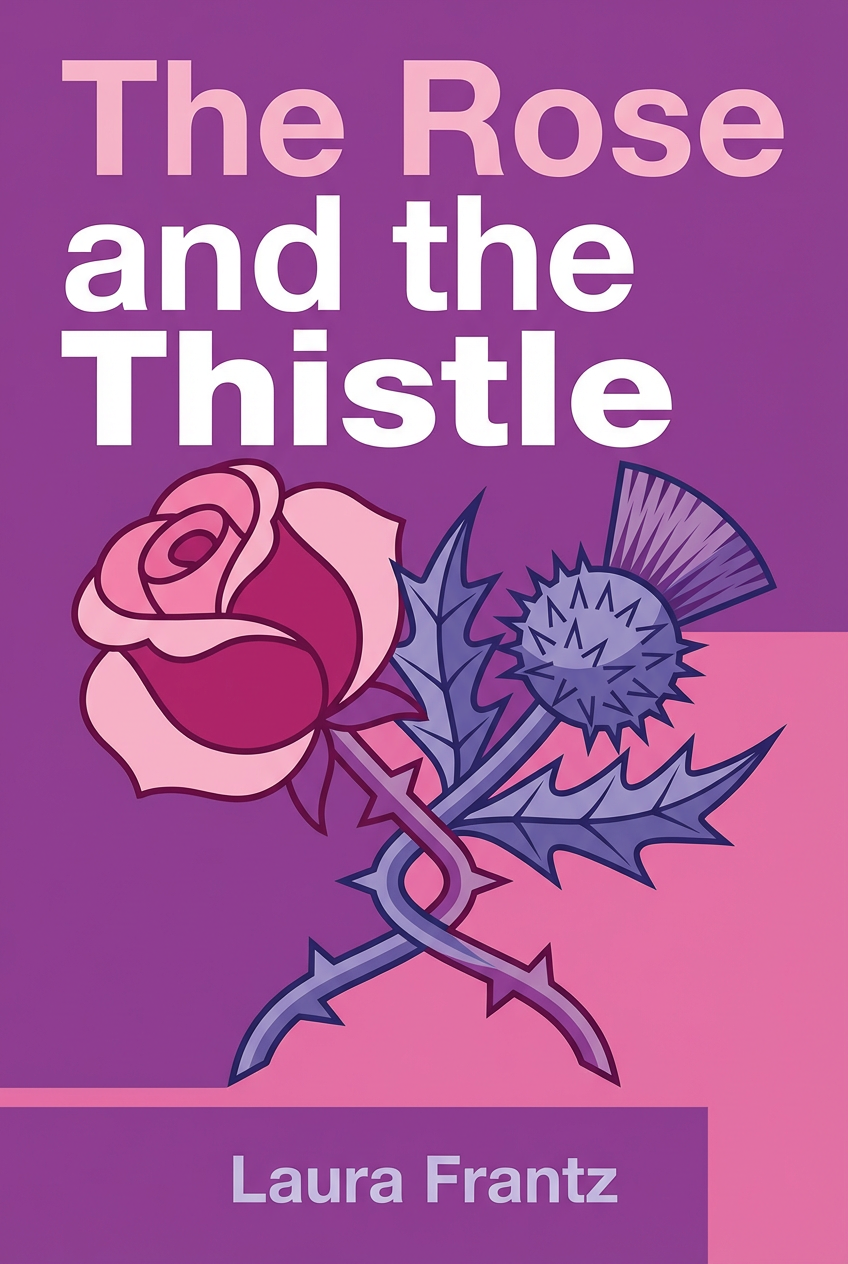
The Rose and the Thistle book cover

The Script

In the silent language of a royal court, a gift is never just a gift. A single strand of pearls can be a promise of allegiance, while an heirloom brooch can be a quiet declaration of war. Every object carries a weight of history and intent, a story whispered from the giver to the receiver. But what happens when the object itself is a paradox? Imagine two nearly identical porcelain teacups, fired in the same English kiln. One is sent to a London drawing-room, where it will serve as a delicate instrument of social maneuvering and political alliance. The other is shipped north, to a windswept Scottish keep, where it becomes a defiant symbol of heritage, a fragile vessel holding a family’s loyalty against an encroaching empire. The cups are the same, but the hands that hold them, and the worlds they inhabit, make them irreconcilable.

This tension between loyalties—the pull of two cultures embodied in the smallest of objects and gestures—is the ground Laura Frantz has cultivated for decades. As a descendant of Scottish immigrants and a lifelong student of 18th-century history, she felt a deep, personal connection to the quiet conflicts that played out in the homes and hearts of those caught between the English crown and the Scottish cause. She wrote The Rose and the Thistle to explore the impossible choices faced by those whose love and honor were tied to two warring nations, forcing them to decide which part of their identity they were willing to break.

Module 1: The Gilded Cage of Duty and Identity

We first meet Lady Blythe Hedley, daughter of an English Duke, living in exile in France. She’s surrounded by the lavish, artificial world of the French court, a place of strict rules and endless frivolity. But beneath the silk gowns and powdered wigs, she feels a profound disconnect. This brings us to our first insight. Your environment and social role often exist in direct conflict with your authentic self.

Blythe is a scholar at heart. She’d rather spend her fortune on books than on fashion, which she views as a mere "asset" in the marriage market. Her pockets contain spectacles and a book of verse, not the vain trinkets of a courtly lady. She finds the court’s amusements mentally empty and seeks solace in quiet chapels, yearning for substance over performance. This internal struggle is a powerful reminder of the pressure to perform a role, whether it’s in an 18th-century court or a 21st-century boardroom. The author uses Blythe's experience to show that societal expectations can feel like a gilded cage, beautiful on the outside but suffocating within.

From this foundation, we see how this conflict shapes her desires. True connection requires being valued for who you are. Blythe longs "to be loved for myself and nothing else," a desire that feels impossible in a world where men are obsessed with "face, form, and fortune." Her value is constantly measured by her inheritance and her role as her father's sole heir. She is a strategic asset, a means to continue a lineage. Her contemplation of joining a convent is a desperate search for a life where her inner world matters more than her external value. This desire for authentic connection is a universal human need, and Blythe’s story shows how deeply it can be compromised by social and familial pressure.

And here’s the thing. This pressure isn't just social; it's political. The entire world of the novel is tilted by the Jacobite cause, the movement to restore the exiled Stuart dynasty to the British throne. Blythe’s father is a key player, a loyal Jacobite plotting a rebellion against the reigning King George I. This leads to a critical realization. Personal lives are inescapably shaped by the political currents of the time. Blythe’s displacement in France, her father’s urgent summons for her to return to England, and the constant threat of espionage are all direct consequences of her family’s political allegiance. The looming 1715 Jacobite Rising isn't a distant historical event; it’s a force that dictates her every move, making her personal safety dependent on the outcome of a rebellion.

Module 2: A Sanctuary Forged in Opposition

We've explored the pressures on Blythe. Now, let's turn to the other side of the story. In Scotland, we meet Everard Hume, the reluctant heir to the Earldom of Wedderburn. He is a man burdened by duty, managing his family’s affairs while his father, the laird, is dying. His world is about to collide with Blythe’s in a way that neither of them expects.

The story intensifies when Blythe’s father, the Duke of Northumbria, secretly meets Everard in a common Edinburgh oyster cellar. The Duke is a marked man, a Catholic Tory under suspicion by the new Protestant Whig government. He fears for his life, but more importantly, for his daughter’s. This desperation leads him to make an impossible request. He asks Everard, a Protestant, to shelter his Catholic daughter. This brings us to a crucial point. In times of crisis, shared humanity can override deep-seated political and religious divides. The Humes and the Hedleys are on opposite sides of every line that matters: Scottish versus English, Protestant versus Catholic, Whig versus Tory. Yet, a decades-old bond between their parents—a godparent pledge—is invoked as a last resort. The Duke’s plea forces Everard to weigh the extreme danger of harboring a "Papist Jacobite lass" against a sacred, personal promise.

Consequently, we see that leadership is defined by the weight of difficult decisions. Everard’s initial reaction is pure resistance. He wants "nae Catholic Jacobite lass here," seeing it as inviting "deadly dangerous" trouble. His identity is tied to his family’s Protestant, Hanoverian-loyal heritage. Taking in Blythe is not just a risk; it’s a betrayal of that identity. However, his dying father challenges him, framing the decision as a test of honor and leadership. A leader's true character is revealed when they must choose between the safe path and the honorable one. Everard is forced to confront what it means to be the Laird of Wedderburn. Is it about preserving the status quo at all costs? Or is it about honoring a commitment, even when it threatens everything he’s meant to protect?

And it doesn't stop there. The burden of legacy is a theme that haunts both protagonists. Everard feels the echoes of his ancestors’ violent past in the Borderlands, making him cautious. He is also dealing with the quiet suspicion that his own brother, David, is a Jacobite sympathizer. For Blythe, the legacy is one of scandal. Her mother was the mistress of a king, a "gilded harlot" whose reputation still clings to the family name. This reveals a powerful truth. Your identity is shaped by the long shadow of your family's history. Both Everard and Blythe are navigating the present while carrying the weight of their families' pasts—one of violence, the other of scandal. This shared burden, though they don’t yet know it, creates a subtle, unspoken connection between them.

Read More