All Books
Self-Growth
Business & Career
Health & Wellness
Society & Culture
Money & Finance
Relationships
Science & Tech
Fiction
Topics
Blog
Download on the App Store

The United States of Cryptids

A Tour of American Myths and Monsters

5 minJ. W. Ocker

What's it about

Ever wondered if a monster lurks in your own backyard? Get ready to discover the legendary creatures hiding in plain sight, from the Jersey Devil to the Mothman of West Virginia. This is your ultimate road map to America's most fascinating and fearsome cryptids. You'll join author J. W. Ocker on a state-by-state tour, uncovering the history, eyewitness accounts, and local lore behind each mythic beast. Learn how these monsters became regional icons and find out exactly where you can go to hunt for them yourself.

Meet the author

J. W. Ocker is the Edgar Award-winning author of books about the strange and macabre, celebrated for his firsthand investigations into oddities across the country. His lifelong fascination with monsters and myths, combined with his passion for road-tripping to their purported habitats, gives him a unique, on-the-ground perspective. Ocker transforms local legends and bizarre history into compelling stories, making him the perfect guide to America’s legendary creatures and the places they haunt.
Listen Now

Opens the App Store to download Voxbrief

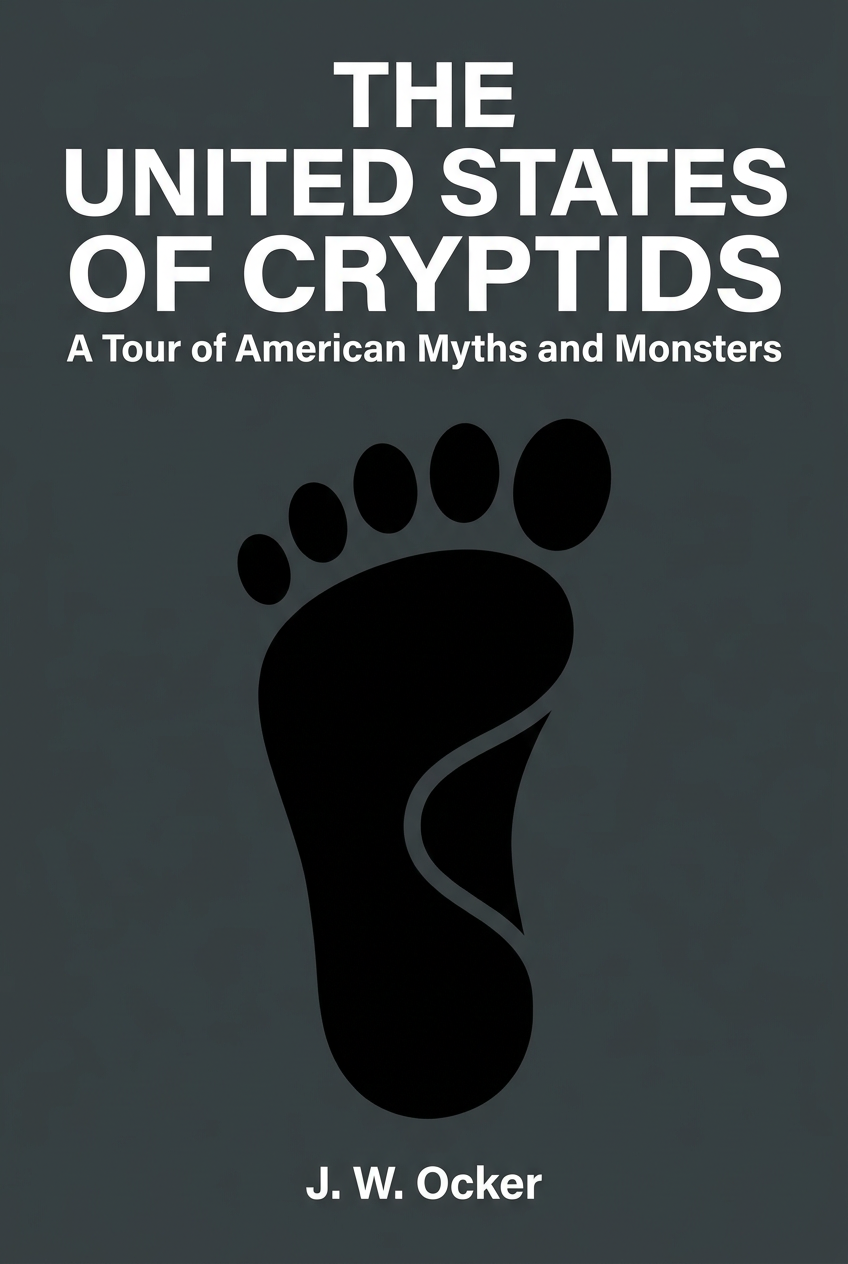
The United States of Cryptids book cover

The Script

Think of two different travel guides to the same small town. The first is polished and official, produced by the chamber of commerce. It details the town's founding date, the architectural style of the historic courthouse, and the operating hours for the local museum. It lists the best-selling dish at the most popular diner. This guide gives you the facts, the clean and approved story of a place. The second guide is a dog-eared, annotated zine passed between backpackers. It doesn’t mention the courthouse, but it tells you which booth in the diner has a strange wobble and a carving of a heart under the table. It points you to a path behind the cemetery that leads to an oddly shaped rock that, in the right evening light, looks like a sleeping giant. This guide gives you the whispers, the folklore, the lived-in story of a place.

One tells you where the town is; the other tells you what the town believes. The official story is about what happened. The unofficial story is about what might have happened, and what might still be lurking just beyond the streetlights. This is the realm of cryptids—the strange beasts of local legend that don't appear in any zoology textbook but are deeply embedded in the identity of a place. They are the strange noises in the woods, the odd shapes in the water, the things we tell stories about to make sense of the unknown. And these unofficial guides, these collections of local lore, are often more revealing about a country's character than any history book.

J. W. Ocker is a professional collector of these unofficial guides. As an award-winning author who specializes in the macabre, the weird, and the wonderful, he has spent years traveling across America not just to see the monuments, but to hear the whispers. He became fascinated by how these local monsters—from the Mothman of West Virginia to the Pukwudgies of Massachusetts—function as a kind of living folklore, a parallel history of the United States. His journey was about understanding why these stories persist and what they say about the places that tell them. This book is the result of that cross-country quest, a road atlas to the nation's most monstrous and beloved local legends.

Module 1: The Cryptid Economy — From Local Legend to Local Landmark

The first major idea in the book is that cryptids are economic assets. Ocker introduces us to the concept of cryptotourism. It’s a surprisingly robust industry. Communities transform monster stories into shared cultural landmarks and revenue sources. It’s a powerful driver of local economies, especially in small towns that might otherwise be overlooked.

Take Point Pleasant, West Virginia. It's the home of the Mothman. In the 1960s, sightings of a winged, red-eyed creature terrified the town. Today, the Mothman is its biggest star. The town has a twelve-foot-tall steel statue of the creature. It has a dedicated Mothman Museum. Every year, it hosts the Mothman Festival. This festival draws over 10,000 visitors to a town of just 4,000 people. Think about that. A local scary story now defines the town's identity and props up its economy.

So what's the takeaway here? The book suggests a powerful truth about branding and identity. Embracing a local cryptid fosters community pride and unity. In Whitehall, New York, the town council was initially embarrassed by Bigfoot sightings in the 1970s. They tried to quiet the story. But eventually, they leaned in. Now, Whitehall has a Sasquatch Calling Festival. It has Bigfoot statues at local businesses. It even passed a local law protecting the creature. Bigfoot became the town's official animal. This shift from embarrassment to celebration created a powerful sense of shared identity.

And it doesn't stop there. Ocker shows us how this process is often very deliberate. The book makes it clear: Cryptids are commemorated through physical installations that anchor their stories in the real world. We see this with the Silver Lake Serpent in Perry, New York. The original monster was an admitted hoax from the 1850s. A hotel owner built a canvas-and-wire creature to attract tourists. Did the town disown the story when the hoax was revealed? No. They built statues. They put the serpent on the town seal. They revived the festival. The monster, fake or not, became a permanent part of the town’s story. This shows that the authenticity of the creature is less important than the