All Books
Self-Growth
Business & Career
Health & Wellness
Society & Culture
Money & Finance
Relationships
Science & Tech
Fiction
Topics
Blog
Download on the App Store

The Vanishing Half

A Novel

12 minBrit Bennett

What's it about

Ever wondered how a single choice could completely redefine your life, your family, and even your identity? Imagine twins, inseparable as children, who choose to live in two very different worlds—one as a Black woman and one passing as white. This story explores the staggering consequences of that decision. You’ll discover how the Vignes sisters’ lives diverge and intersect over decades, forcing you to question the roles of race, family, and secrets in shaping who we become and what we pass on to the next generation.

Meet the author

Brit Bennett is a 1 New York Times bestselling author whose work has been named a best book of the year by The New York Times, The Washington Post, and TIME. Raised in a Southern California community where people would "light-skin-for-the-win," her personal observations of colorism and identity profoundly shaped her storytelling. Bennett's novels explore the intricate ways family, community, and race influence our lives, stemming from a lifelong fascination with the stories we inherit and the ones we choose to tell.
Listen Now
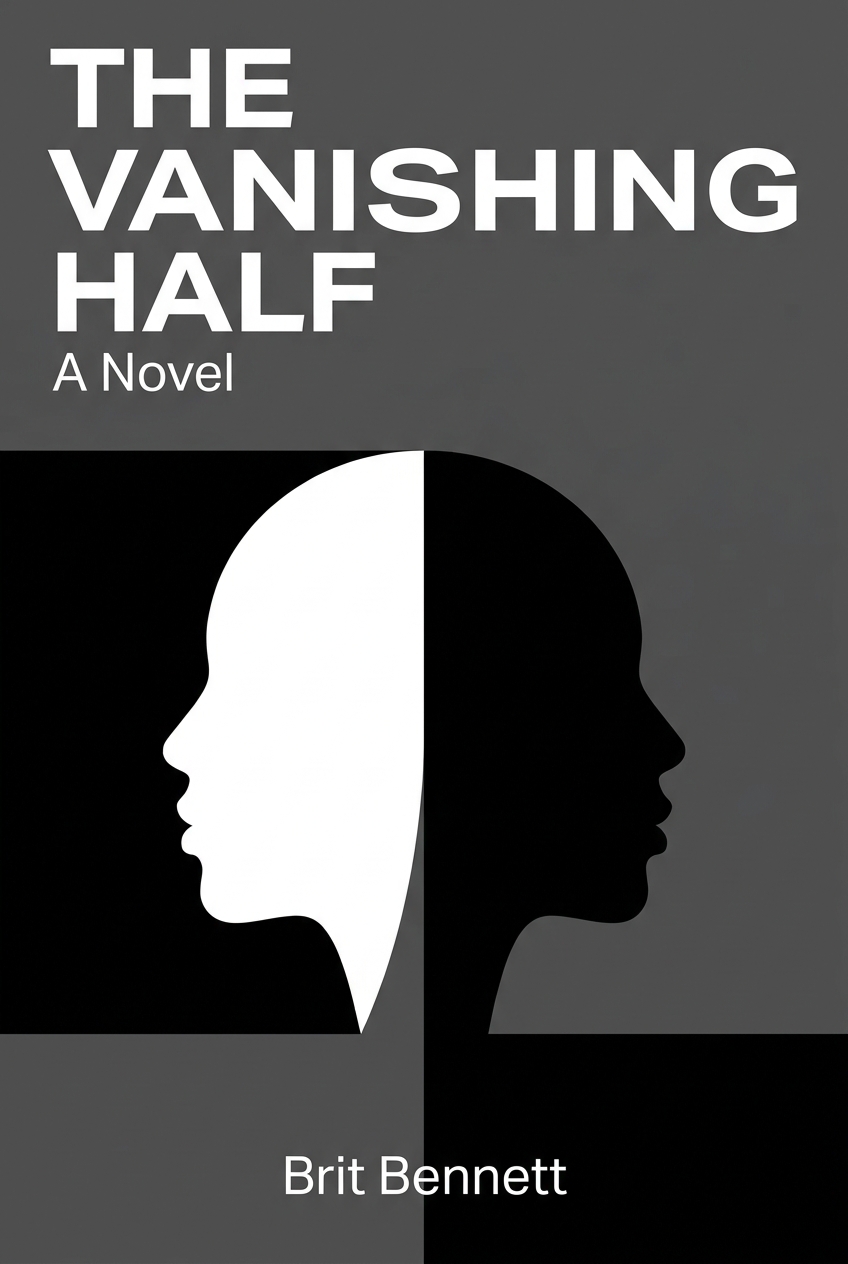
The Vanishing Half book cover

The Script

In a state archive, two identical birth certificates sit side-by-side in a dusty file. They bear the same last name, the same date of birth, the same town. They are perfect duplicates in every way but one: the child’s name. For the archivist, it’s a simple clerical error, a ghost in the machine of public records. But for the family, these two documents represent a schism, a single moment when one life cleaved into two. One certificate anchors a daughter to her home, her history, and the pale skin that makes her an outsider in her own Black community. The other is a passport, an escape hatch into a new life, a new identity, and a new race, purchased at the cost of erasing everything—and everyone—she ever was. The space between these two pieces of paper holds a lifetime of unspoken questions, of choices that ripple across generations.

The idea of a town so small you could accidentally run into a different version of your own life has long fascinated author Brit Bennett. Growing up, she heard a story from her mother about a place in Louisiana where light-skinned Black residents had, for generations, intentionally married to produce even lighter-skinned children, with some eventually choosing to leave and pass as white. This fragment of family lore became the seed for a novel. Bennett, whose writing often explores the intricate landscapes of family and identity, wanted to understand the profound and lasting impact on the person—and the community—who is left behind when someone leaves. She set out to write a story that lives in that gap between the official record and the secret history, exploring what we inherit and what we choose to invent.

Module 1: The Foundation of Identity — Place, Trauma, and Twinship

The story begins in Mallard, Louisiana. This is a unique town, founded by a light-skinned Black man for people just like him. The town's guiding principle was a strange kind of ambition. Each generation was meant to become "lighter still." This creates an immediate and intense pressure. From birth, your value is tied to your complexion. It's a community that polices itself through gossip, social rules, and internalized prejudice.

This is the world that shapes the Vignes twins, Desiree and Stella. They are identical, so close that one feels the other's pain. But their shared world is shattered by a foundational trauma. As children, they witness their father being brutally murdered by a white mob. This event cements a terrifying truth. Your identity is a fragile thing, vulnerable to violence. Even in a town designed for safety, their father's light skin couldn't protect him. This trauma becomes the silent engine driving their future choices. Desiree processes this with anger and a desire to escape the town's suffocating smallness. Stella internalizes it with a quiet, deep-seated fear.

From this shared trauma, their individual paths begin to diverge. Desiree is impulsive and restless, dreaming of a life beyond Mallard. Stella is studious and pragmatic, but she carries a secret ambition of her own. The tension between their shared bond and their individual desires is palpable. The closest relationships are often crucibles for self-discovery. Being a twin means you are seen as half of a whole. But what happens when one half wants to break away? Their mother, Adele, feels this pressure too. She grapples with the local myth that twins must be loved and treated identically, blaming herself when they eventually run away. This sets the stage for the book's central schism. The twins flee Mallard together, seeking freedom in New Orleans. But their escape is the beginning of their separation.

And here's the thing. You can run from a place, but you can't run from the person you are. Or can you? In New Orleans, the twins' lives split. Desiree marries a dark-skinned man, a direct rebellion against Mallard's colorist values. Stella makes a different choice. A more radical one. She disappears. She decides to cross the color line and live her life as a white woman. This single decision cleaves their world in two. It separates not just two sisters, but two possible lives, two different Americas. The rest of the novel is an exploration of the fallout from this choice, a ripple effect that touches generations.

Read More