All BooksSelf-GrowthBusiness & CareerHealth & WellnessSociety & CultureMoney & FinanceRelationshipsScience & TechFiction
Download on the App Store

The Watsons Go to Birmingham

16 minChristopher Paul Curtis

What's it about

Ever wonder how a family road trip could change your life forever? Join the "Weird Watsons" on their unforgettable journey from Flint, Michigan, to Birmingham, Alabama. You'll discover how humor and love can help a family navigate even the most challenging times. This trip isn't just about the miles; it's about growing up. You'll see the world through ten-year-old Kenny's eyes as his family confronts the harsh realities of the 1963 civil rights movement, teaching you powerful lessons about courage, prejudice, and the unbreakable bonds of family.

Meet the author

Christopher Paul Curtis is one of America's most celebrated authors for young readers, earning both a Newbery Medal and a Coretta Scott King Award. After spending thirteen years working on the assembly line in a Flint, Michigan auto factory, he dedicated himself to writing full-time. His experiences in Flint and his deep love for family history inspired him to write his acclaimed debut novel, The Watsons Go to Birmingham—1963, creating stories that are both humorous and historically significant.
Listen Now
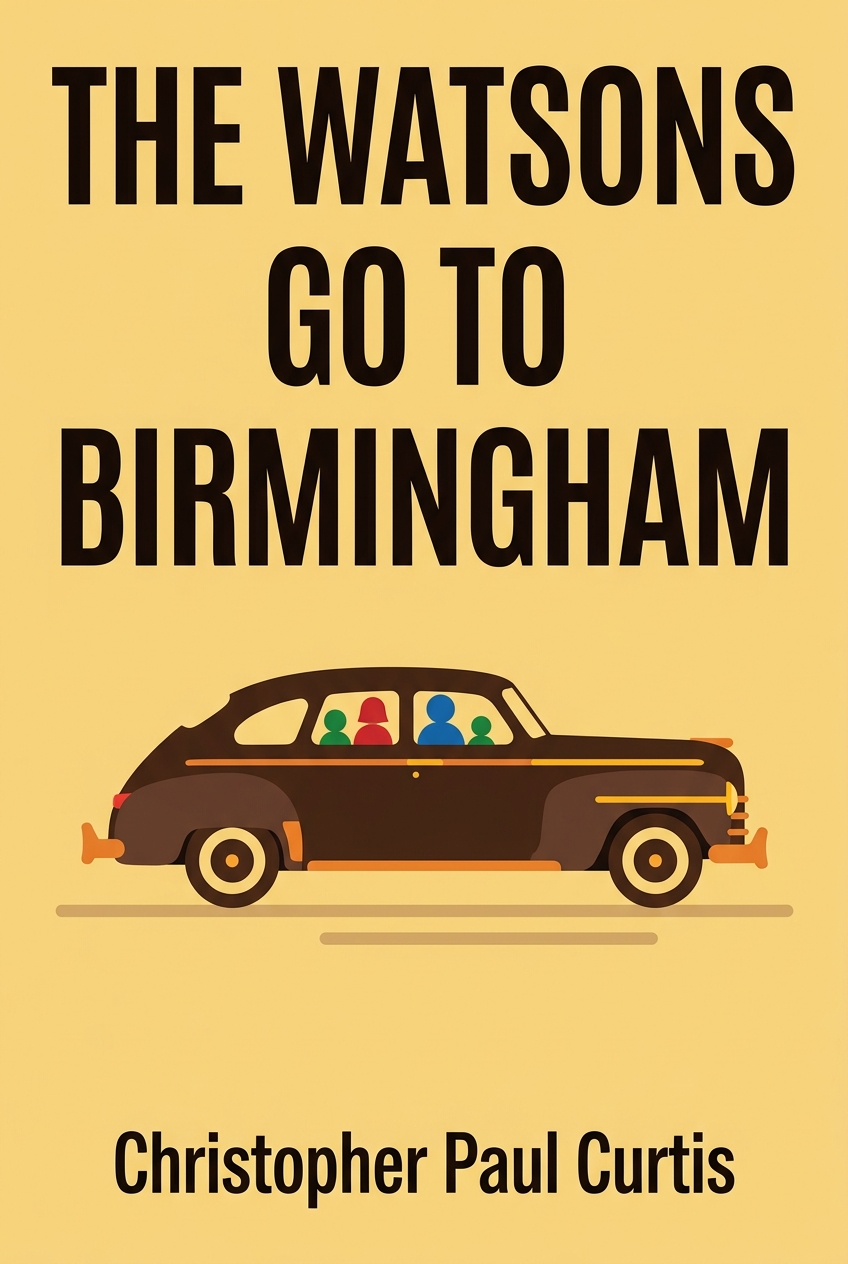
The Watsons Go to Birmingham book cover

The Script

Every family has its own private weather system. There are the sunny, easy days full of laughter, the overcast moods that settle in for no reason, and the sudden, unexpected storms that can blow through the house, leaving everyone rattled. For the Watson family of Flint, Michigan, their weather was mostly predictable, generated by the usual sibling squabbles, parental rules, and the antics of ten-year-old Kenny and his older brother, Byron, the official family troublemaker. Their family car, the trusty ‘Brown Bomber,’ was less a vehicle and more a mobile living room, a contained world where the family’s unique climate of jokes, arguments, and love played out on the road. But what happens when a family takes its familiar, internal weather system and drives it directly into the path of a real, historical hurricane?

That question is at the heart of this story, born from the author's own childhood memories. Christopher Paul Curtis grew up in Flint, Michigan, just like the Watsons, and his family also made the long drive south to visit relatives. He remembers the feeling of leaving the familiar world of the North and entering the segregated, tense atmosphere of the Jim Crow South. Curtis, who spent years working on an assembly line after high school, wanted to write a book that captured that specific feeling—the collision of a normal, loving, funny family with one of the most painful and violent moments in American history. He wrote the story in the early mornings before his factory shifts, aiming to create something that felt both hilarious and heartbreakingly true, a story his own children would want to read.

Module 1: The Power of Family Dynamics

At its core, this story is a deep dive into the messy, hilarious, and fiercely loyal world of family. The Watsons are a real family, not a perfect one. Their interactions reveal how humor, conflict, and love are interwoven, creating a resilient unit capable of weathering any storm.

A key insight is that humor is a powerful tool for bonding and coping with hardship. The Watson household is full of laughter, much of it driven by Dad, Daniel Watson. When the family car won't start in the Michigan cold, he doesn't just complain. He launches into an exaggerated story about a fictional rival, "Hambone Henderson," complete with a Southern accent. He turns a moment of stress into shared entertainment. This is a deliberate strategy to manage the emotional climate of his family. For a professional, this is a lesson in leadership. How do you handle a crisis? Do you amplify the stress, or do you find a way to reframe the situation, inject some levity, and keep the team's morale intact?

But it isn't all jokes. Another critical point is that sibling relationships are a complex mix of rivalry and fierce loyalty. The two brothers, Kenny and Byron, are a perfect example. Byron, the teenage "juvenile delinquent," constantly teases and torments his younger brother, Kenny. He tricks him with a fake tutorial on "How to Survive a Blizzard," only to blow snow in his face. Yet, when Kenny is genuinely bullied at school, Byron’s presence acts as a shield. When a bully steals Kenny's new leather gloves, Byron’s retribution is swift and brutal, a public display of dominance that reasserts the family hierarchy. This dynamic shows that loyalty can be fierce, protective, and even violent. It’s a reminder that within any team or family, support can come from unexpected places, and the toughest relationships often hide the deepest loyalties.

And here's the thing. Parental roles are often shaped by contrasting backgrounds, creating a necessary balance. Momma, Wilona Watson, is from Alabama. She hates the Michigan cold, which she calls a "giant icebox," and constantly yearns for the warmth and slower pace of the South. Her love manifests as overprotection. She forces her kids into so many layers of winter clothing that they can barely move, all because of her deep-seated fear of the cold. Dad, a Flint native, counters her anxiety with humor and practicality. He teases her about Southern stereotypes but also grounds the family with his steady presence. The push and pull between Momma’s cautious, nurturing nature and Dad’s playful, steadying influence creates a balanced and stable environment for their children. It’s a model for co-leadership, where different perspectives and styles create a more robust and complete system of support.

Read More