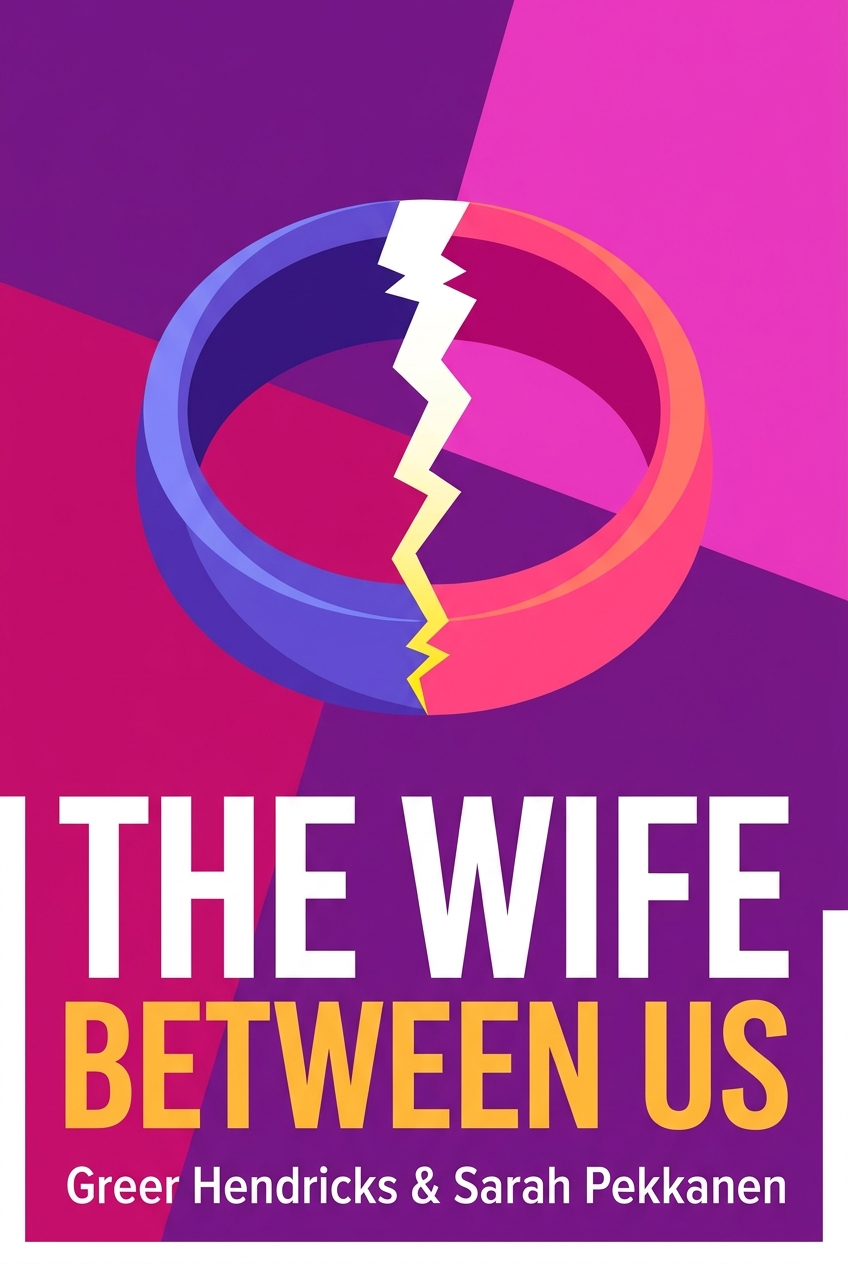
The Wife Between Us
What's it about
Ever wonder if your new partner's ex is truly out of the picture? This thriller unravels the unsettling connection between a woman and the ex-wife of the man she's about to marry. Prepare to question everything you think you know about love, jealousy, and the truth. You'll discover why the seemingly perfect new relationship is built on a foundation of secrets and manipulation. As you dive into the perspectives of both the new fiancée and the obsessive ex-wife, you'll uncover a shocking twist that redefines who the real victim is in this dangerous game.
Meet the author
Greer Hendricks and Sarah Pekkanen are the number one New York Times bestselling coauthors behind the blockbuster thriller, The Wife Between Us. Their powerhouse partnership combines Hendricks’s two decades of experience as a book editor with Pekkanen’s long career as a bestselling novelist. This unique fusion of an editor's eye for suspense and a writer's gift for character gives them unparalleled insight into crafting the psychological twists and intricate plots that have captivated millions of readers worldwide.
Opens the App Store to download Voxbrief

The Script
We think we understand the story of the jealous ex-wife. She is a familiar character, a ghost haunting the edges of a bright new relationship, her obsession a predictable, almost pitiable, force. We see her actions through a clear lens: a desperate attempt to reclaim a life that is no longer hers. This certainty is a form of narrative gravity, pulling every observation into a pre-ordained orbit of meaning. We watch the new, younger woman receive unsettling phone calls and feel a flicker of fear for her, but it’s a fear grounded in a story we believe we’ve already read. The ex-wife is the past, a cautionary tale. The new fiancée is the future, a vessel for hope. The lines are drawn, the roles are cast, and our assumptions become the walls of a room we don't realize we're in.
But what if that room is a hall of mirrors? What if the roles we've assigned are just costumes, and the story we think we're watching is a deliberate performance designed to hide the real danger? This very illusion—the one that makes us so certain of who the villain is and who the victim is—is the puzzle that intrigued co-authors Greer Hendricks and Sarah Pekkanen. Hendricks, a long-time book editor, had spent two decades witnessing how authors masterfully manipulate reader perception. Pekkanen, a seasoned novelist, had spent her career building characters who were never quite what they seemed. Together, they decided to construct a thriller built entirely from the architecture of a flawed assumption, forcing the reader to question not just the story, but their own role in believing it.
Module 1: The Architecture of Deception
The most powerful element of this story is how it's told. The authors build a narrative designed to mislead you from the very first page. It’s a deliberate strategy to make you a participant in the misjudgment.
The book is split into three parts, and the first part is a masterwork of misdirection. We hear from two women. First, a jealous and obsessive ex-wife, Vanessa, who is stalking her replacement. Second, a young, anxious preschool teacher named Nellie, who is about to marry the perfect man, Richard. You naturally assume they are two different people. You feel pity for Nellie and disdain for Vanessa. This is the setup.
The shocking twist is that Nellie and Vanessa are the same person. "Nellie" is the name Richard gave Vanessa when they met, and her chapters are flashbacks to the beginning of their relationship. The obsessive stalker, Vanessa, is desperately trying to warn her replacement.
This brings us to our first insight. The stories we consume are shaped by our assumptions about who is speaking. The authors weaponize our biases. We are conditioned to expect a certain narrative: the bitter ex versus the innocent new love. By playing into this, the book reveals how easily our judgment can be manipulated. We fill in the blanks with our own prejudices. The authors prove that the most effective lies are the ones we tell ourselves.
So what's the takeaway here? In any high-stakes situation, whether it’s a business deal or a personal conflict, we must constantly question the narrative frame. Who is telling the story? What do they have to gain? And crucially, what are my own assumptions coloring my interpretation? The book forces us to become active, critical readers of our own lives. We must learn to separate the storyteller from the story.
Another key insight is that unreliable narration can be a structural deception. The timeline is fractured. The identities are swapped. The authors build a world where our fundamental understanding of "who" and "when" is wrong. This technique mirrors the experience of gaslighting, where a victim's sense of reality is systematically dismantled. The reader experiences this disorientation firsthand, making the psychological impact far more profound. You feel what it’s like to have the ground shift beneath your feet.