All Books
Self-Growth
Business & Career
Health & Wellness
Society & Culture
Money & Finance
Relationships
Science & Tech
Fiction
Topics
Blog
Download on the App Store

The Winemaker's Wife

12 minKristin Harmel

What's it about

Ever wondered if you could truly trust those closest to you in a time of crisis? This gripping historical novel plunges you into the heart of World War II's Champagne region, where one woman's choice could save her husband's life or doom them both. You'll uncover a story of love, betrayal, and immense courage woven through two timelines. Discover how the secrets of a French Resistance cell in 1940 have devastating consequences for a granddaughter visiting France decades later, forcing her to question everything she knows about her family's past.

Meet the author

Kristin Harmel is a New York Times bestselling author whose internationally acclaimed historical fiction, including The Book of Lost Names, has been translated into more than thirty languages. Her deep passion for uncovering the untold stories of ordinary people in extraordinary circumstances led her to the Champagne region of France. Through meticulous research into the French Resistance during World War II, she discovered the incredible history of vintners who bravely fought back, inspiring the powerful narrative of The Winemaker's Wife.
Listen Now

Opens the App Store to download Voxbrief

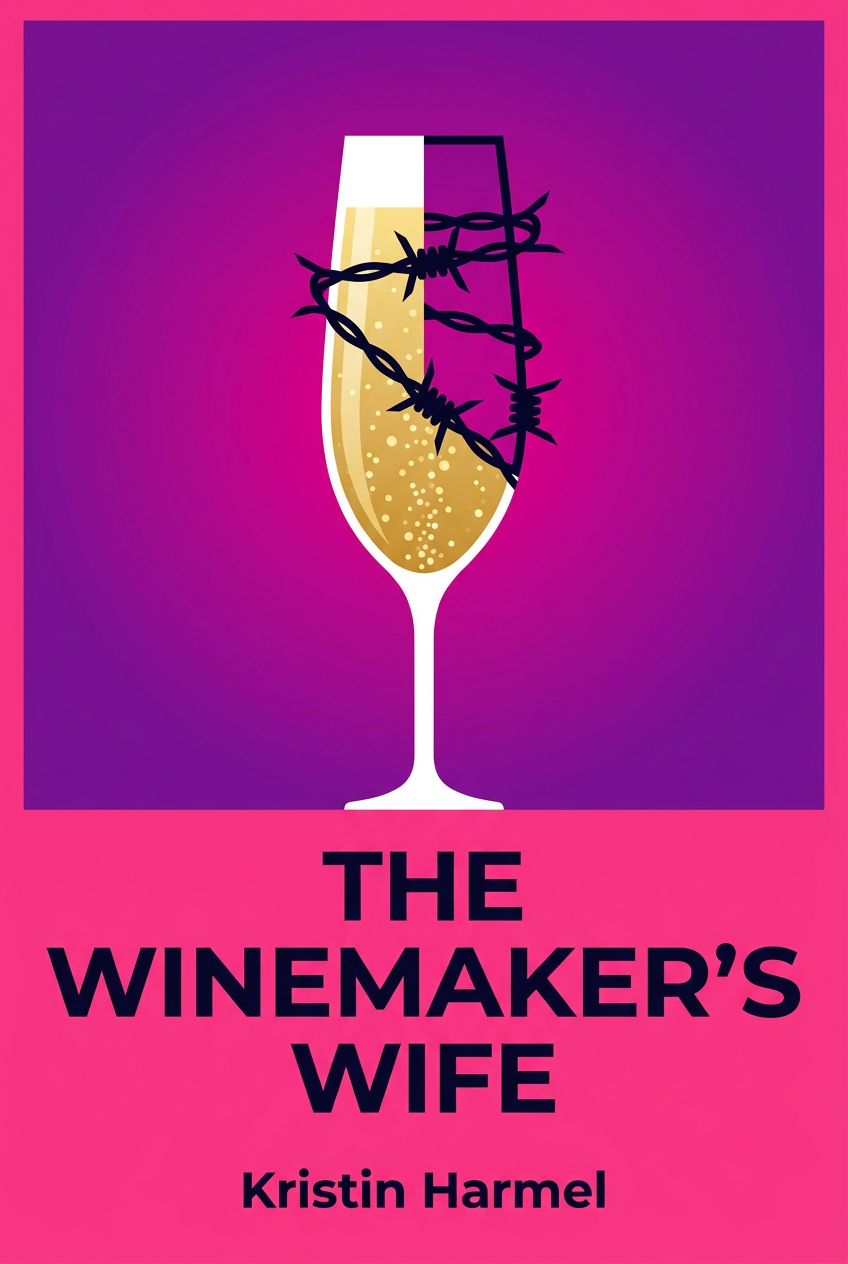
The Winemaker's Wife book cover

The Script

Two identical bottles of wine are placed on a table. For the casual observer, they are simply that: two bottles. But for the vintner who grew the grapes, they represent two entirely different worlds. One bottle holds the story of a perfect harvest—sun-drenched days, gentle rain, a season of ease where everything went according to plan. The other bottle, though it looks the same, holds the memory of a difficult year. It tells a story of late frosts, of battling pests, of agonizing choices made under pressure to save the vines. To an outsider, the difference might be subtle, a barely perceptible note on the finish. But to the winemaker, that single note contains the entire history of a struggle—a testament to what was risked, what was lost, and what was ultimately saved.

This is the world of quiet choices and hidden histories that fascinated author Kristin Harmel. A long-time journalist and novelist known for unearthing the untold stories of World War II, Harmel was drawn to the Champagne region of France for the complex moral landscape that existed beneath the surface of the Nazi occupation. She discovered that the legendary champagne houses were fronts for the French Resistance. Vintners were hiding Jewish families, smuggling weapons in their cellars, and making life-or-death decisions every single day. Harmel wrote The Winemaker’s Wife to explore this duality—to show how ordinary people, faced with impossible circumstances, could use their craft for defiance, and how the most profound acts of courage can be hidden in the most unexpected of places.

Module 1: The Weight of the Past

The story unfolds across two timelines, and in both, the past is an active, breathing force in the present. In 2019, we meet Liv, a woman whose life has just imploded. Her marriage is over, she’s quit her job, and she feels completely adrift. Her journey begins when she accompanies her grandmother, Edith, on a sudden trip to Reims, in the heart of Champagne. It's here that Liv discovers that her own identity is built on a foundation of secrets she never knew existed.

This is where the first insight emerges. Unresolved history creates a hidden burden that shapes present-day behavior. Liv’s grandmother is haunted. Upon arriving at a local brasserie, Edith trembles, her face loses its color, and she flees the conversation. Liv sees this as baffling, but it’s a physical reaction to returning to a place saturated with the trauma of her past—a past that includes her best friend being executed by the Germans. Edith’s lifelong emotional distance, which Liv always found puzzling, is suddenly re-framed. It’s a shield built over decades of loss.

But it doesn't stop there. The book suggests that personal identity is incomplete without an understanding of one's roots. Liv feels this acutely. She tells the family lawyer, “It’s my story, too.” Her quest to understand her grandmother’s secrets is a deep-seated need to understand herself. This is a powerful reminder for anyone navigating their own path. Our personal narratives don't begin with us. They are shaped by the choices, sacrifices, and secrets of those who came before. Ignoring that history means operating with an incomplete picture of who we are.

Module 2: Moral Compromise in a World Without Rules

Let's shift to the 1940s timeline, where the core of the drama unfolds at the Maison Chauveau, a champagne house owned by Michel and his wife, Inès. When the Germans occupy France, the rules of polite society evaporate. Survival becomes the only game, and every character is forced to make impossible choices.

This brings us to a critical theme. Survival under occupation requires calculated deception and moral compromise. When German soldiers first arrive to plunder the cellars, the owner, Michel, doesn't fight. He politely leads them to a secondary cellar and offers them a small cache of his best vintages, pretending it’s all he can spare. This act of submission saves his main stock. His wife, Inès, sees this as cowardice. But Michel understands a hard truth. Outward compliance is a strategy, a way to protect what’s most valuable.

So what happens next? This environment of constant threat forces people to choose a side, even if that choice is to do nothing. Crisis reveals that inaction is itself a choice, often rooted in denial. We see this in the contrast between Michel, who starts smuggling weapons for the Resistance, and his head winemaker, Theo, who just wants to "keep his head down." Theo believes that focusing on the wine will get them through. But as his wife Céline points out, "If everyone thinks only of their own fate, who will save us?" This is a sharp observation for any organization facing a crisis. The people who insist on "business as usual" are often in denial, and that denial can be just as dangerous as a wrong action.

And here’s the thing. This moral ambiguity infects personal relationships. Inès, feeling neglected by her husband, begins an affair with a French collaborator who works with the Nazis. She justifies it because he makes her feel seen and valued. He provides her with fine food and validation while her husband is distant and secretive. This is a stark look at how the need for personal validation can lead us to rationalize devastating moral compromises. Inès’s journey shows how easily we can slide into complicity when our own emotional needs are not being met. It’s a chilling reminder that our personal voids can make us vulnerable to the most dangerous influences.

Read More