All Books
Self-Growth
Business & Career
Health & Wellness
Society & Culture
Money & Finance
Relationships
Science & Tech
Fiction
Topics
Blog
Download on the App Store

The Witch of Blackbird Pond

A Newbery Award Winner – A Halloween Book for Teens

12 minElizabeth George Speare

What's it about

Ever felt like you just don't belong? What if fitting in meant betraying your true self? Discover the story of a spirited young woman who, after leaving her lavish home, must navigate a stark, Puritan world where being different is not just unwelcome—it's dangerous. You'll follow Kit Tyler's journey from the sunny shores of Barbados to the rigid community of 1680s Connecticut. Learn how her unlikely friendship with an outcast Quaker woman, known as the Witch of Blackbird Pond, leads to accusations of witchcraft and a terrifying trial that will challenge everything she believes.

Meet the author

A master of American historical fiction for young adults, Elizabeth George Speare is one of only six writers to have won the prestigious Newbery Medal twice. Her deep fascination with New England history, rooted in her own Massachusetts upbringing, inspired her to meticulously research the Puritan era. This dedication to historical accuracy and compelling storytelling allowed her to bring the past to life, creating timeless tales of courage and understanding like The Witch of Blackbird Pond.
Listen Now

Opens the App Store to download Voxbrief

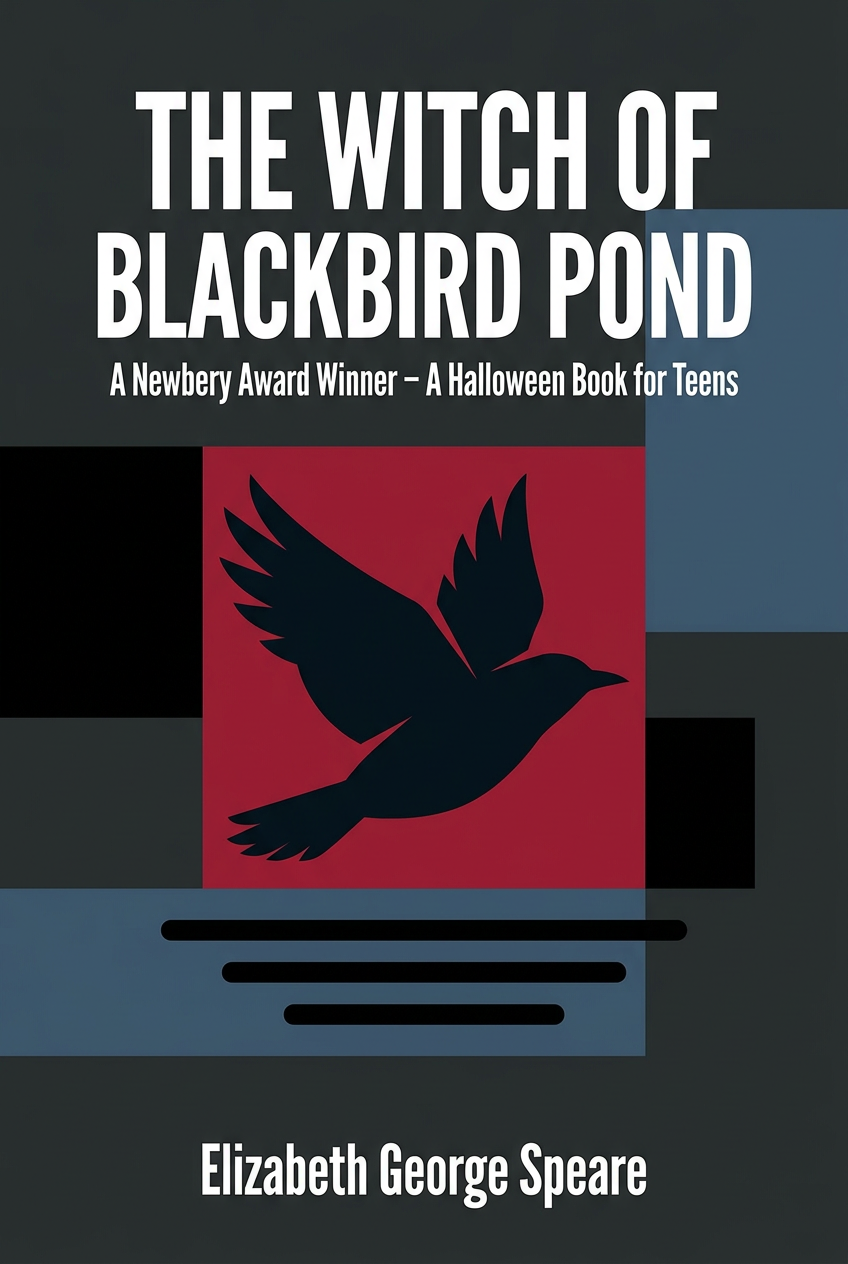
The Witch of Blackbird Pond book cover

The Script

Two identical pocket watches sit on a velvet cloth. Both were crafted by the same London master, their inner workings a miniature city of brass and steel, ticking in perfect unison. One watch is placed in a glass display case. It is wound daily, kept from dust and humidity, its purpose to remain a perfect, untouched example of the watchmaker’s art. The other is given to a ship’s captain setting sail for the New World. It is battered by salt spray, knocked against chart tables, and used to time watches in howling gales. Its face is scratched, its casing dented, and its rhythm is now shaped by the magnetic pull of strange coastlines and the frantic needs of a new, hard life. When held to the ear, the first watch tells the time. The second one tells a story. One is an artifact; the other is a life. But what happens when the artifact is suddenly forced to live?

This is the precise question that fascinated Elizabeth George Speare, a writer who spent her life exploring the friction between a person’s upbringing and the harsh realities of a new world. Speare was a meticulous historical researcher, but she wasn’t interested in simply displaying the facts of the past like artifacts in a museum. She wanted to know how an individual’s character, forged in one world, would bend or break when thrust into another. As a children's literature librarian and a mother, she saw how young people constantly navigate this same territory—the gap between the world they were given and the world they must make for themselves. For The Witch of Blackbird Pond, she imagined a girl raised in the vibrant, permissive society of Barbados and dropped into the rigid, fearful world of Puritan Connecticut, creating a character who was a living, breathing test of which parts of us are for display, and which parts are for survival.

Module 1: Navigating the Culture Clash

When you join a new organization, the first few weeks are critical. You’re decoding a new culture, and your first actions create lasting impressions. This is precisely the challenge Kit Tyler faces. She arrives in Puritan Connecticut from the vibrant, liberal world of Barbados. The clash is immediate and brutal. Right away, we see that first impressions in a new culture are often based on superficial differences, not character. Kit's impulsive decision to jump into the river to save a child’s doll is met with horror. In her world, swimming is normal. In Puritan Connecticut, it’s suspicious. Goodwife Cruff, a rigid local, immediately mutters about witchcraft. Kit’s skill is seen as a dangerous anomaly.

This brings us to a crucial point for anyone in a leadership role. To integrate successfully, you must first understand the unwritten rules and values of the new environment. Kit’s fine silk dresses and feathered bonnets, symbols of her status in Barbados, are viewed as "frippery" and vanity in Wethersfield. Her uncle, Matthew Wood, is a stern Puritan who values hard work and modesty above all else. He sees her seven trunks of clothing as an unwelcome burden. Kit quickly learns that her old identity doesn’t translate. She must adapt to survive. For a professional, this means observing before acting. What does the team value? Is it speed or precision? Open debate or quiet consensus? Understanding these underlying values prevents you from making a move like Kit’s, where a well-intentioned act is misinterpreted as a cultural violation.

From this foundation, we learn a powerful lesson about adaptation. True integration is about finding where your unique skills can add value within the new system. Initially, Kit is clumsy at the endless, grueling chores of a Puritan household. She can’t card wool or make soap. She feels useless. But then, she discovers an opportunity: the local dame school. The children are bored by rote memorization from hornbooks. Kit, drawing on her own rich education, introduces storytelling and even acting out Bible parables. The children are captivated. Though this creativity gets her into trouble with the rigid schoolmasters, it’s the first time her unique background becomes an asset. She finds a way to contribute on her own terms. It’s a reminder that even in the most restrictive environments, there is often a space for your unique talents if you can find the right application.

Module 2: The Danger of Groupthink and Scapegoating

We've explored the initial shock of a new culture. Now, let's turn to a more dangerous dynamic: how fear can fuel groupthink and lead to scapegoating. This is a pattern we see in corporate culture, market panics, and, in this book, a literal witch hunt. The community of Wethersfield is rigid and fearful of outsiders. Their suspicion falls on Hannah Tupper, a gentle Quaker widow who lives alone by Blackbird Pond. Because she doesn't attend their church and keeps to herself, she becomes an easy target. This reveals a critical insight: communities under stress often scapegoat those who are different to explain away their fears. When a mysterious illness sweeps through the town, the panicked citizens don't look for a medical cause. They look for a witch. Their fear needs a face, and Hannah’s is the most convenient one. A mob forms, armed with torches, ready to burn her house down.

This is where individual courage becomes essential. The story shows that standing against groupthink requires you to trust your own judgment over collective hysteria. Kit has secretly befriended Hannah. She knows Hannah is a kind, lonely woman. When the mob gathers, Kit doesn't hesitate. She runs through the dark to warn Hannah, helping her escape just in time. This is her defining moment of moral courage. She risks her own safety and reputation to do what she knows is right. In a professional setting, this is the equivalent of speaking up when a team is rushing to blame a single person for a project failure. It’s about pushing back against a flawed consensus and demanding a more rational analysis, even when it’s unpopular.

And here’s the thing: that courage has a ripple effect. Challenging prejudice requires you to present undeniable proof that counters emotional bias. Kit is arrested and put on trial for witchcraft, accused of consorting with Hannah. The accusations are absurd, based on superstition. But the crowd is convinced. The turning point comes when Nat Eaton, a sea captain's son who was banished for a prank, returns. He brings a surprise witness: a little girl named Prudence, whom Kit had been secretly teaching to read and write. The town believed Prudence was "stupid" and that Kit had cast a spell on her. But when Prudence reads from the Bible and writes her name for the court, the crowd is stunned. This concrete evidence shatters their superstitious narrative. It’s a powerful demonstration that facts and evidence are the most effective tools to dismantle fear-based thinking.

Read More