All Books
Self-Growth
Business & Career
Health & Wellness
Society & Culture
Money & Finance
Relationships
Science & Tech
Fiction
Topics
Blog
Download on the App Store

The Witch of Portobello

From the Bestselling Author of The Alchemist (P.S.)

14 minPaulo Coelho

What's it about

Have you ever felt like you're living a life that isn't truly yours? Discover the story of Athena, a woman who dared to defy convention and embrace her true self, and learn how to unlock the courage to follow your own unique spiritual path and live authentically. Explore the profound journey of a woman searching for her identity, from her mysterious birth in Transylvania to her rise as the enigmatic "Witch of Portobello." Through the voices of those who knew her, you'll uncover timeless lessons about love, sacrifice, and the power of embracing your inner divinity.

Meet the author

With over 320 million books sold worldwide, Paulo Coelho is one of the most influential authors of our time, celebrated for his universally resonant spiritual themes. His own extensive travels and lifelong spiritual quest, including walking the Camino de Santiago pilgrimage, profoundly shape his allegorical storytelling. This rich personal journey allows him to explore complex ideas of faith, destiny, and the feminine divine, as powerfully demonstrated in The Witch of Portobello.
Listen Now
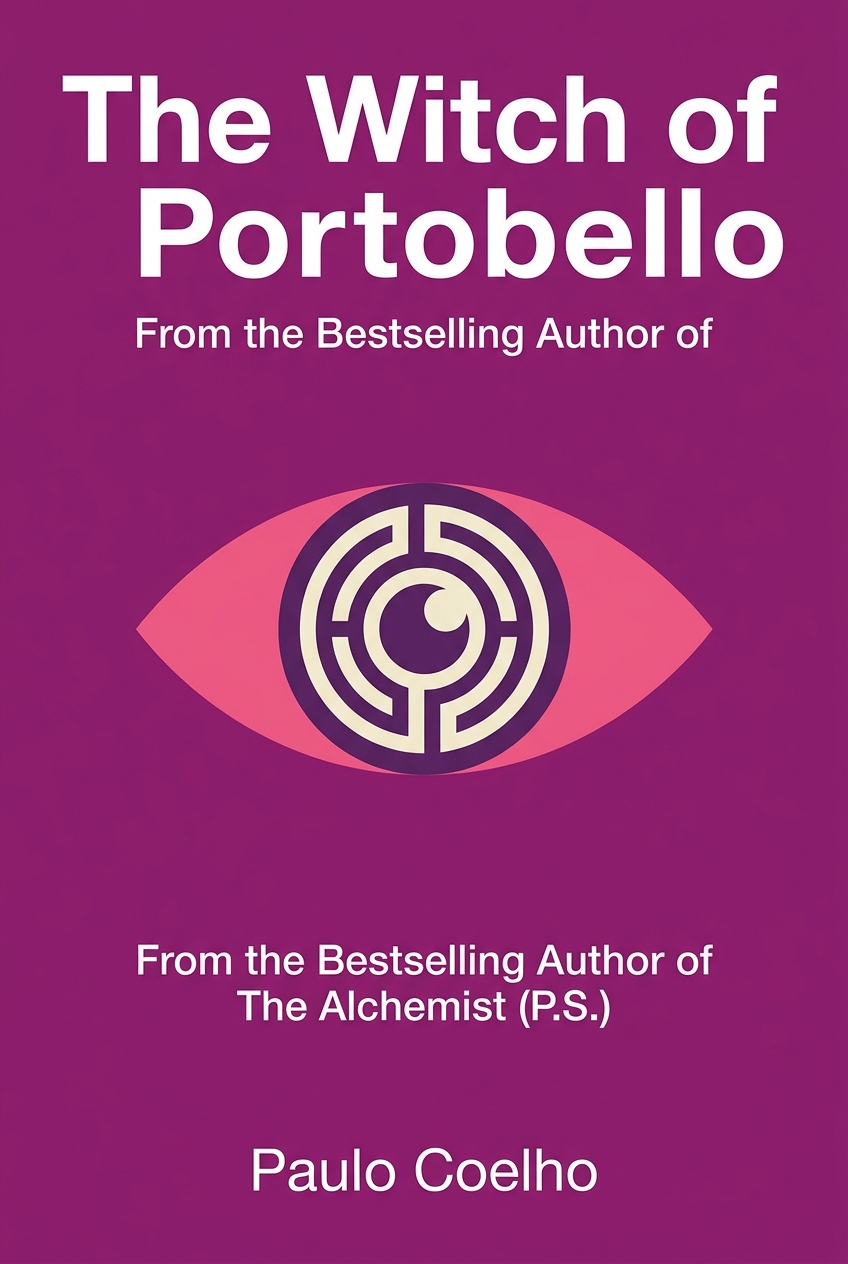
The Witch of Portobello book cover

The Script

In a forgotten corner of an old city, a master stained-glass artisan works on a commission for a grand cathedral. She has two identical panels of deep blue glass, both cut from the same sheet, intended for the same window. The first she handles with meticulous precision, following the design flawlessly. It becomes a perfect, predictable shape, technically sound but lacking life. The second piece, however, has a nearly invisible fracture running through it, a flaw from its creation. Instead of discarding it, she leans into the imperfection. She alters her design, allowing the fracture to become the central vein of a leaf, refracting the morning light in a way the perfect piece never could. When installed, visitors are drawn to the panel that seems to breathe, its supposed weakness transformed into its most captivating strength.

This question of identity—whether it is something to be perfected and preserved, or something discovered through its fractures and reinventions—haunted author Paulo Coelho. He saw people constructing rigid versions of themselves, like the flawless panel of glass, afraid of any crack that might reveal a different light. He wanted to explore a life lived like the second panel, a life defined by a constant, courageous process of becoming. Coelho, who had already journeyed through his own transformations from songwriter to pilgrim on the road to Santiago, decided to tell the story of a woman who refuses to be a single, static image. He gathered the testimonies of those who knew her, piecing together a mosaic of a person who was a mystery even to those who loved her most, creating a narrative as a collection of brilliant, conflicting refractions.

Module 1: The Search for Self and the Power of Origins

We begin with the story of Athena. She was born in Romania to a Roma mother and abandoned as an infant. A loving Lebanese couple living in London adopts her. She has a good life. A stable family. A promising career. Yet, she feels a profound emptiness. She describes it as "blank spaces" in her life. This feeling drives her on a quest back to Romania to find her birth mother.

This journey highlights a powerful insight. Your origin story, known or unknown, profoundly shapes your identity. Athena's adoptive father understands this. He only grasped the value of his life in London after visiting his war-torn homeland of Beirut. Seeing where he came from helped him understand who he had become. For Athena, the journey is about integrating all parts of herself. She needs to know what blood runs in her veins to feel whole.

So what happens on this journey? The quest is about confronting a legacy. Her birth mother, Liliana, was ostracized by her Roma community for having a child with an outsider. This reveals the deep-seated trauma of persecution. The Roma people have faced centuries of violence and marginalization. This history creates a powerful, defensive identity. When Athena tries to connect, she's met with suspicion. She has to prove she is "one of us." This quest forces her to confront the complex, often painful, nature of belonging.

From this foundation, we learn another key lesson. True mastery requires discipline, repetition, and finally, surrender. Before her journey, Athena seeks a teacher in the desert. He is a master calligrapher named Nabil Alaihi. He doesn't teach her philosophy. He makes her practice. Endlessly. She must repeat the same strokes again and again. The goal is to internalize the rules so deeply that she can forget them. Only then does the act become a creative expression. She becomes the letter, the ink, the paper. The path itself becomes the destination. This is a crucial framework for anyone in a creative or technical field. The long hours of practice are the gateway to creativity.

Read More