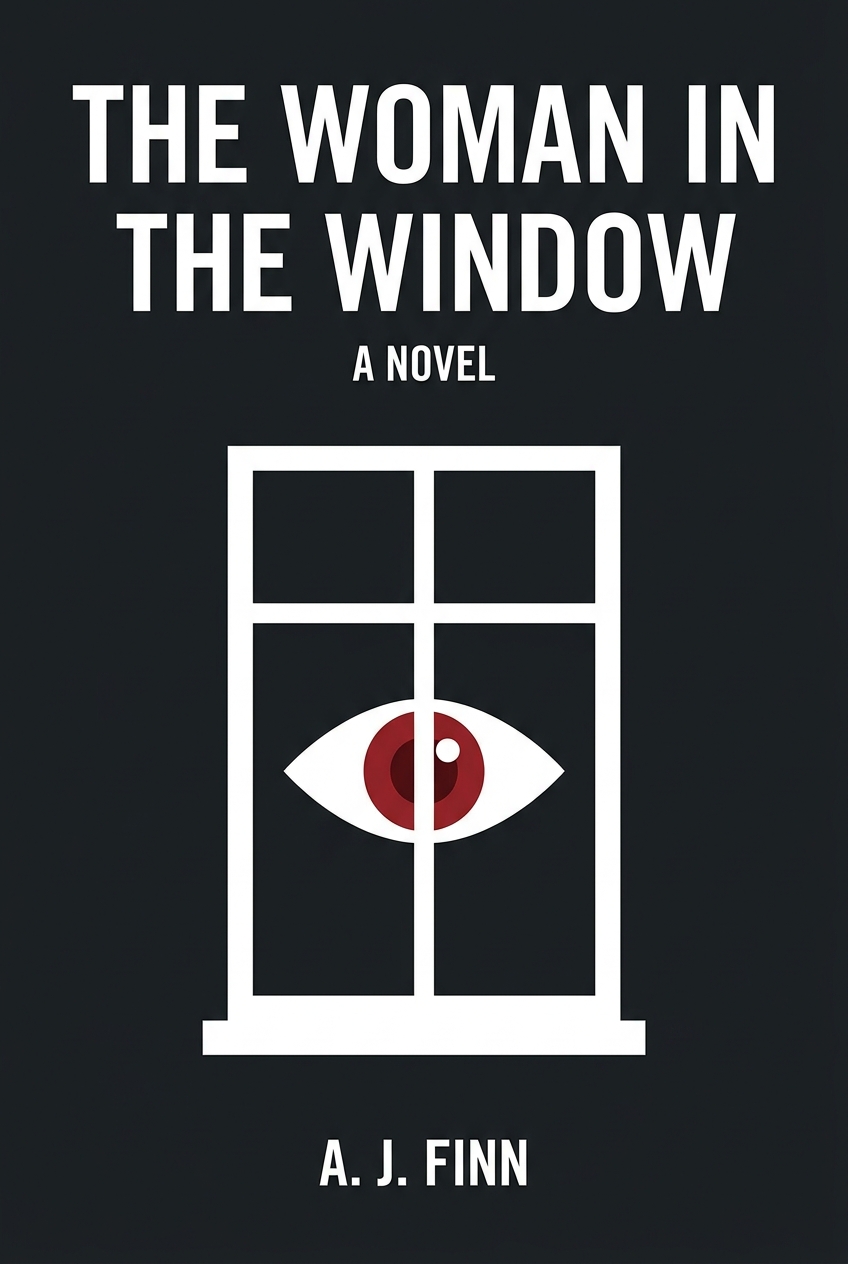
The Woman in the Window
A Novel
What's it about
What if the one thing you see is the one thing you can't prove? For agoraphobic Dr. Anna Fox, her window is her world. When she witnesses a brutal crime in her new neighbors' home, her life spirals into a terrifying game of cat and mouse. You'll uncover the chilling secrets of a woman trapped by her own mind and her own home. As Anna's reality blurs with her medication and paranoia, you must decide what's real and what's imagined. This psychological thriller will force you to question everything you think you know about truth, perception, and what lurks behind closed doors.
Meet the author
A. J. Finn is the pen name of Daniel Mallory, a former book editor at major publishing houses who spent a decade working with bestselling thriller authors. This insider’s perspective on the genre, combined with his own struggles with mental health, gave him the unique expertise to craft the intricate, suspenseful world of The Woman in the Window. His debut novel became an instant global phenomenon, demonstrating a masterful understanding of psychological tension and what keeps readers turning the page.
The Script
Think of a house you know intimately—perhaps the one you grew up in. Every creak of the floorboards is a familiar voice, every shadow in the hallway a known shape. Now, imagine a storm has passed, and you’re assessing the damage. You walk through the rooms, but something is wrong. A window that always stuck now glides open with a whisper. A door that never latched now clicks shut with unnerving finality. The changes are subtle, almost imperceptible, but they accumulate until the house no longer feels like your own. It’s as if an unseen hand has been tinkering with the very architecture of your reality, leaving you to question whether the house has changed, or if you’ve simply lost the ability to see it clearly.
This sensation of a familiar world turning alien and hostile is the unnerving core of The Woman in the Window. The man who crafted this disorienting experience, A. J. Finn, did so from a place of deep personal understanding. For fifteen years, Finn—the pen name for publishing executive Dan Mallory—grappled with a severe bipolar II disorder diagnosis. His own struggles with depression and agoraphobia, which at times confined him to his apartment, became the raw material for his protagonist's psychological prison. He channeled his own experiences of a mind that could warp perception, making the outside world feel both terrifyingly distant and menacingly close, into a thriller that blurs the line between what is seen and what is imagined.
Module 1: The Architecture of Isolation
The story introduces us to Anna Fox. She is a child psychologist. But she hasn't practiced in a long time. She lives alone in a sprawling Harlem brownstone. For nearly a year, she hasn’t stepped outside. Agoraphobia has become her entire world. This sets the stage for the book's central theme: the profound psychological impact of isolation. Anna’s house is a direct reflection of her mind. It’s a fortress and a prison, filled with memories she can’t escape and rooms she avoids for weeks.
Her only connection to the outside world is through a screen. Or through her camera lens. This leads to the first critical observation. Voyeurism becomes a substitute for genuine human connection. Anna spends her days watching her neighbors. She documents their lives with a Nikon camera. She invents stories about them. The new family across the street, the Russells, become her primary obsession. She sees them as an echo of her own lost family. This act of watching is a desperate coping mechanism. It allows her to feel engaged with life without facing the terror of the world outside her door.
To manage this isolated existence, Anna develops rigid routines. These rituals offer a fragile sense of control. This brings us to another key insight. Coping mechanisms can become self-destructive traps. Anna’s days are structured around watching classic black-and-white films, playing online chess, and drinking. A lot of drinking. Merlot is her constant companion. She mixes it with a cocktail of powerful psychiatric medications. She knows the danger. She's a psychologist, after all. But the immediate relief outweighs the long-term risk. Her routines, meant to soothe her anxiety, slowly erode her judgment and grip on reality.
And here’s the thing. This isolation hollows out her sense of self. Protracted loneliness corrodes self-perception and personal identity. Anna avoids mirrors. When she does catch her reflection, she sees a stranger. A woman with graying hair and a slack belly. She recalls her estranged husband, Ed, once complimenting her "down-home appeal." That person is gone. Now, she is defined by her condition. She even introduces herself on an online agoraphobia forum as "thedoctorisin," clinging to a professional identity that no longer fits her reality. Her world has shrunk to the size of her house. And within that space, her identity is fracturing.