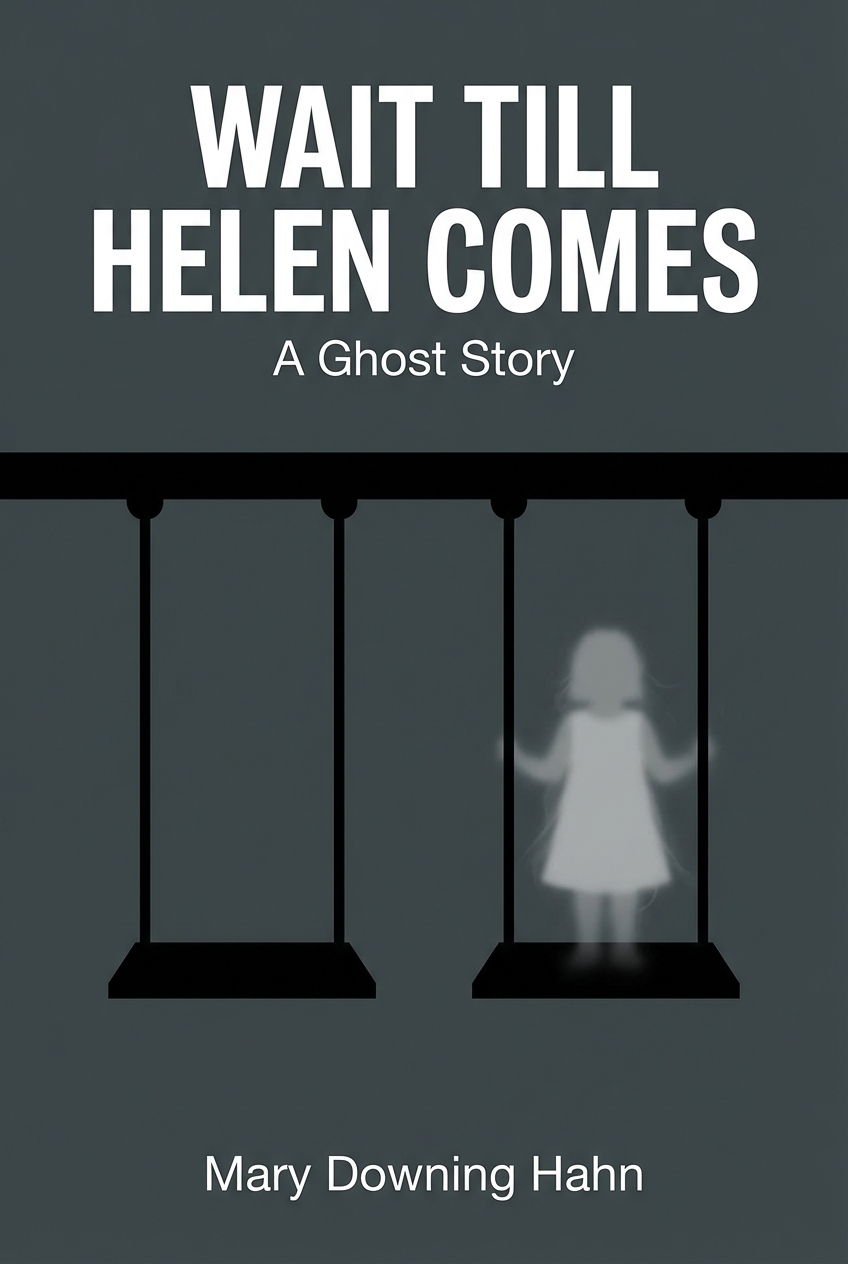
Wait Till Helen Comes
A Ghost Story
What's it about
Have you ever felt like an outsider in your own family? For twelve-year-old Molly, moving to a spooky old church in the country with her new stepsister, Heather, isn't just a new start—it's the beginning of a nightmare. Heather is difficult, but her behavior takes a sinister turn. You'll discover why Heather is drawn to the lonely graveyard behind their home and the single, ominous grave marked with only a single letter: H. As Molly uncovers the tragic story of a lonely ghost named Helen, she must race against time to save her stepsister from a terrifying friendship that wants to pull Heather into the grave forever.
Meet the author
With over forty beloved and spine-chilling novels to her name, Mary Downing Hahn is an undisputed master of supernatural fiction and historical mysteries for young readers. A former children's librarian, she discovered a passion for writing ghost stories after telling them to her students and seeing their captivated reactions. Hahn draws inspiration from her own childhood memories, local folklore, and the old, creaky houses she has lived in, skillfully weaving everyday fears into tales that have haunted and thrilled audiences for decades.
The Script
The old woman who lives alone at the end of the lane is a classic fixture of neighborhood lore. The children whisper stories about her—that she eats cats, that she has a glass eye, that her house is filled with the ghosts of people she’s poisoned. But what happens when one of those children starts to believe the stories a little too much? What happens when a child, desperate for attention and feeling displaced in a new family, decides to become the neighborhood monster herself? She starts by tormenting her siblings, her whispers as sharp and cutting as broken glass. She finds a willing accomplice in the shadows of local legend, a real ghost story she can wrap herself in like a shroud. Suddenly, the line blurs. Is she just pretending to be haunted, or has she actually invited something terrible into their lives? The other children see the shift, the coldness in her eyes, the genuine malice that has replaced simple mischief. They try to warn their parents, but their pleas sound like the very sibling squabbles the girl’s behavior was designed to provoke. They are utterly alone with a problem no adult can see, trapped in a house with someone who is either a brilliant, cruel manipulator or a vessel for something much, much worse.
This chilling dilemma—the isolation of a child who sees a real threat that adults dismiss as fantasy—is the unnerving heart of Mary Downing Hahn’s work. As a former children's librarian and art teacher, Hahn spent years observing the complex social dynamics of young people. She noticed the fierce, often invisible wars waged in school hallways and backyards, and she understood that for a child, the fear of not being believed can be as terrifying as any ghost. Hahn began writing to give voice to those fears, crafting stories that took children's anxieties seriously. She drew inspiration from the gothic tales she loved and the very real landscape of her own Maryland home, blending local history with the timeless terror of a family slowly being torn apart from the inside by a secret only the children can see.
Module 1: The Haunting of the Blended Family
The story introduces us to Molly and her brother, Michael. Their mother has recently married a man named Dave. Dave has a seven-year-old daughter, Heather. The new family moves into a converted church in rural Maryland. Right away, the dynamic is strained. Heather is resentful and manipulative. Molly and Michael feel isolated. The parents, absorbed in their own work and romantic bliss, are blind to the growing discord.
The central conflict ignites when Heather discovers a small, dilapidated graveyard on the property. She becomes obsessed with a single grave. It belongs to a child named Helen Elizabeth Harper, who died in a fire a century ago. This is where Hahn’s core insight comes to life. Unresolved trauma makes a person vulnerable to destructive influences. Heather, who is still grieving her own mother's death in a fire, sees a kindred spirit in Helen. She feels misunderstood by her new family. Helen becomes her secret friend, her confidante. Heather begins spending all her time at the grave, whispering to someone only she can see.
So what happens next? Molly, the responsible older stepsister, grows increasingly worried. She sees Heather's behavior as something sinister. She follows Heather to the ruins of Helen's old house. It’s a burnt-out shell by a dark, murky pond. Here, Heather’s connection to Helen intensifies. She claims Helen gives her gifts, like a small locket. She insists Helen is her true friend. This leads to the second key idea. Parental denial can escalate a dangerous situation. When Molly tries to warn her parents, they dismiss her fears. They see Heather’s behavior as an imaginative way of processing grief. They accuse Molly of being jealous and not trying hard enough to bond with her stepsister. This dismissal isolates Molly completely. She is the only one who sees the looming threat.
And here's the thing: Hahn shows that this isn't just about a ghost. Supernatural elements often amplify pre-existing family dysfunction. The ghost of Helen doesn't create the family's problems. She exploits them. She feeds on Heather's loneliness and resentment. She uses the parents' willful blindness to her advantage. Helen's malevolent influence grows in the spaces left by poor communication and emotional neglect. For any team or family, this is a powerful lesson. Unaddressed cracks in the foundation don't just go away. They invite trouble in.