What It Takes
Lessons in the Pursuit of Excellence
What's it about
Ever wonder what separates the good from the truly exceptional? Discover the blueprint for building an empire and achieving peak performance, whether you're launching a startup, leading a team, or simply striving for personal excellence. This is your guide to thinking bigger and outmaneuvering the competition. You'll learn the core principles that helped Stephen Schwarzman build Blackstone, one of the world's leading investment firms. Uncover his practical frameworks for spotting opportunities, negotiating high-stakes deals, recruiting world-class talent, and turning every setback into a strategic advantage on your own path to success.
Meet the author
Stephen A. Schwarzman is the Chairman, CEO, and Co-Founder of Blackstone, one of the world's leading investment firms with over a trillion dollars in assets under management. From his start with a two-person team, he built a global institution by relentlessly pursuing excellence and empowering talented people. In his book, Schwarzman distills the hard-won principles and frameworks he developed over a legendary career in finance and philanthropy, offering a blueprint for anyone aspiring to build, lead, and achieve more in their own lives.
What's it about
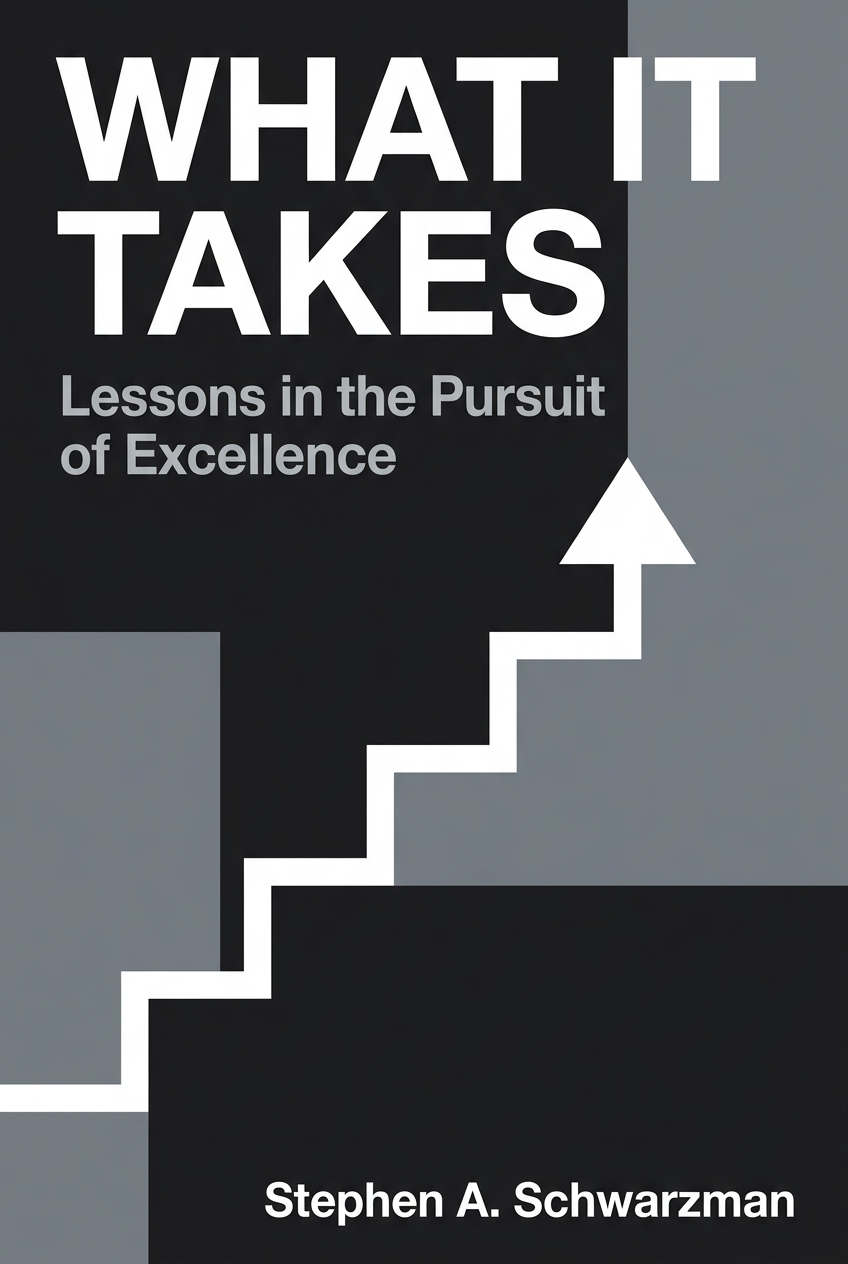
Ever wonder what separates the good from the truly exceptional? Discover the blueprint for building an empire and achieving peak performance, whether you're launching a startup, leading a team, or simply striving for personal excellence. This is your guide to thinking bigger and outmaneuvering the competition. You'll learn the core principles that helped Stephen Schwarzman build Blackstone, one of the world's leading investment firms. Uncover his practical frameworks for spotting opportunities, negotiating high-stakes deals, recruiting world-class talent, and turning every setback into a strategic advantage on your own path to success.
Meet the author
Stephen A. Schwarzman is the Chairman, CEO, and Co-Founder of Blackstone, one of the world's leading investment firms with over a trillion dollars in assets under management. From his start with a two-person team, he built a global institution by relentlessly pursuing excellence and empowering talented people. In his book, Schwarzman distills the hard-won principles and frameworks he developed over a legendary career in finance and philanthropy, offering a blueprint for anyone aspiring to build, lead, and achieve more in their own lives.
The Script
You've reached the end of the free preview.