All Books
Self-Growth
Business & Career
Health & Wellness
Society & Culture
Money & Finance
Relationships
Science & Tech
Fiction
Topics
Blog
Download on the App Store

Wild at Heart Expanded Edition

Discovering the Secret of a Man's Soul

14 minJohn Eldredge

What's it about

Are you tired of feeling bored, restless, and tamed? Discover the secret to unlocking the adventurous, powerful, and truly wild man God created you to be. It's time to reclaim the passion and purpose that lie deep within your soul. This summary of John Eldredge's classic reveals why you crave a battle to fight, an adventure to live, and a beauty to rescue. You'll learn how to heal the wounds that hold you back and step into a life of authentic, God-given masculinity. Find your untamed heart again.

Meet the author

John Eldredge is a bestselling author, counselor, and teacher whose work has transformed the lives of millions of men around the world. As the founder and president of Ransomed Heart, a ministry devoted to helping people discover the heart of God, he draws from decades of counseling experience. This unique background provides him with profound insight into the masculine soul, revealing the universal desires for battle, adventure, and beauty that God placed within every man.
Listen Now

Opens the App Store to download Voxbrief

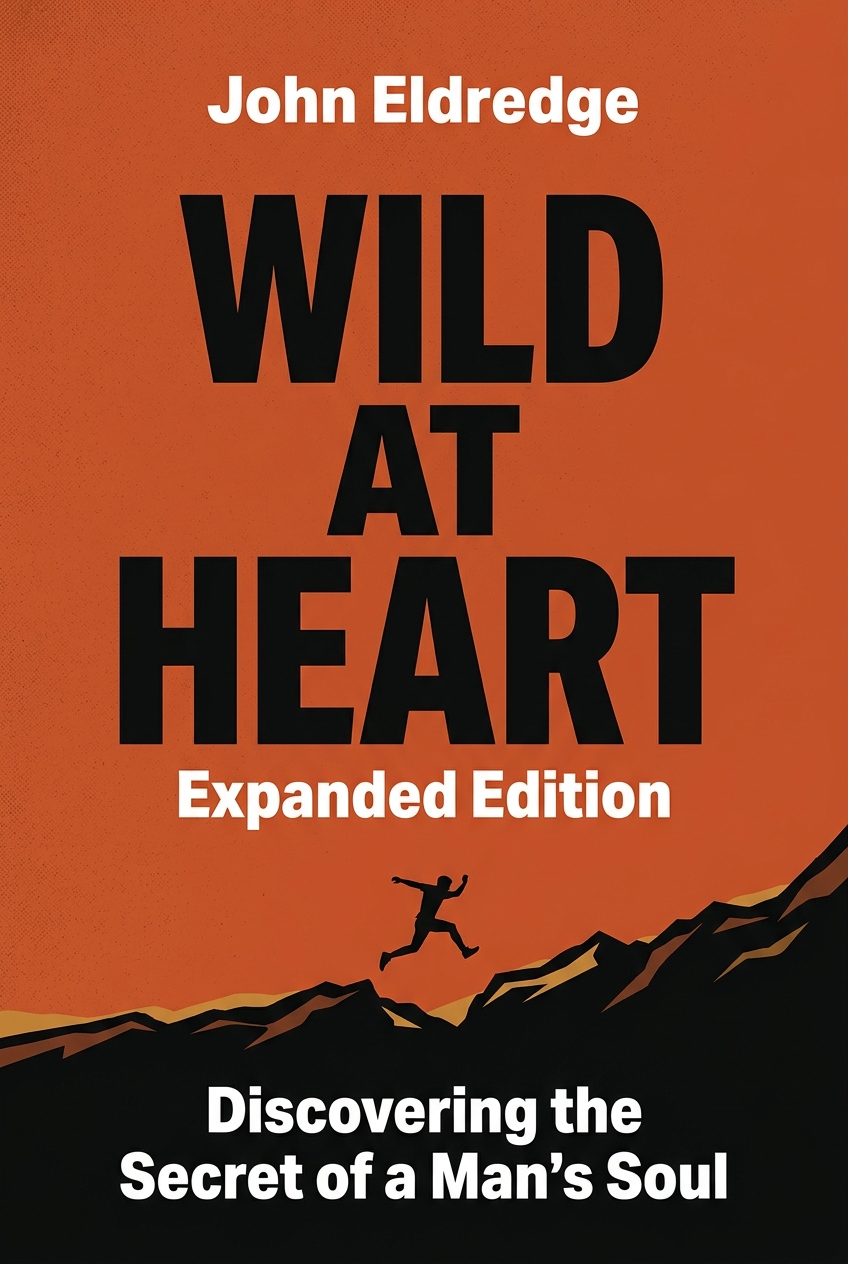
Wild at Heart Expanded Edition book cover

The Script

Every boy knows the feeling. It’s the moment he picks up a fallen branch and it becomes a sword, a rifle, an extension of his will against some unseen foe. He’s a hero on a quest, a soldier in a forgotten war, a lone survivor charting a dangerous wilderness. He is tapping into something ancient and true, a fierce, adventurous spirit that feels more real than his multiplication tables or the neatly folded clothes in his drawer. But then, somewhere between the backyard battlefield and the boardroom, that feeling fades. The world of responsibility, caution, and quiet conformity settles in. The untamed heart is told to be nice, to be safe, to be manageable. The wildness is domesticated, the strength is quieted, and the adventure is exchanged for a schedule.

This gap—between the boy with the stick-sword and the man in the cubicle—haunted counselor and author John Eldredge for years. In his work with men, he saw a pervasive sense of boredom, passivity, and a quiet desperation. They were good men, husbands, and fathers, but they felt like they were playing a role they hadn't chosen, living out a script that someone else had written for them. They had lost their wild heart. He wrote "Wild at Heart" as an act of recovery—an attempt to give men permission to reclaim the adventurous, passionate, and dangerous soul God designed them to have. Eldredge, drawing from his decades of counseling and his own journey, set out to answer the question that so many men are afraid to even ask: what happened to that boy, and how do I get him back?

Module 1: The Three Core Desires of the Masculine Heart

Modern life often feels like a cage. We're harnessed to a desk, trapped in meetings, and told to be safe and manageable. The church, Eldredge suggests, has often reinforced this by promoting a "Really Nice Guy" model of masculinity. The result? Men who are bored, disconnected from their passions, and living lives of quiet desperation. But this is our true nature. Eldredge argues that God designed the masculine heart with three universal, core desires. These are essential to a man's soul.

The first desire is a battle to fight. Look at any little boy. He'll turn a graham cracker into a gun. He'll wear a cowboy outfit and feel like he’s armed and dangerous. This is a reflection of his design. Men are hardwired for healthy aggression and the role of a warrior. This is because we are made in the image of a warrior God, a God who fights against oppression and evil. This desire needs to be healed and aimed at something good, not suppressed. It's the reason we're captivated by films like Braveheart or Saving Private Ryan. We see a hero facing impossible odds for a cause greater than himself, and something in our soul says, Yes, that's it.

Building on that idea, the second desire is an adventure to live. A man's heart craves risk, exploration, and the test of the unknown. Eldredge contrasts the experience of watching a James Bond film with attending a Bible study. One taps into our innate desire for wildness; the other often feels tame and sterile. This longing for adventure explains why a sixty-year-old judge might call sailing through a life-threatening storm "the best time of my life." It's about feeling alive. It's about answering the call to go beyond the safe and predictable. This desire is written into our origin story. Adam was formed from the untamed earth, and that wild geography still lives within every man.

And here's the thing that gives the battle and adventure their meaning. The third desire is a beauty to rescue. A man is powerfully motivated by the desire to fight for and protect someone. Think of a young soldier carrying a photo of his sweetheart into battle. Or Robin Hood fighting for Maid Marian. This is about having a profound reason for heroism. Eldredge shares a story of his son, a cautious baseball player. When the boy noticed a girl he liked was watching, he hit a powerful line drive. Her presence awakened his strength. The arrival of a "beauty" completes a man's world. It gives his strength a noble purpose. Ignoring these three desires—the battle, the adventure, and the beauty—is to lose your heart.

Module 2: The Wound and the Question

So if every man has these desires, why do so many of us feel like impostors? Why do we feel unprepared for the very things we long for? The reason is that every man carries a wound. Eldredge is blunt about this. He argues that every boy, on his journey to become a man, takes an arrow to the heart. This wound is a deep blow to his sense of strength and identity. And its impact is devastating because it comes with a message that feels final and true.

This wound is almost always given by his father. It can be an assaultive wound, delivered through abuse or harsh criticism. A father calling his son a "mama's boy" or a "faggot" for showing sensitivity. Or it can be a passive wound, delivered through absence, silence, or emotional neglect. A father who is physically present but emotionally checked out, lost in his work or his own pain. Whether through direct attack or abandonment, the father fails to answer a boy's most fundamental question. And that question haunts every man for the rest of his life.

Here's where it gets interesting. That core question is: "Do I have what it takes? Am I powerful?" It's a deep, existential need for validation. A boy needs to know from a man—specifically his father—that he has strength, that he is capable, that he is, in fact, a man. Eldredge tells a story of his young son asking after a difficult rock climb, "Dad... did you really think I was a wild man up there?" He needed his father's affirmation. When that question goes unanswered, or is answered with a "no," a man spends his life trying to prove himself or hiding from any challenge that might expose him as a fraud.

So what happens next? In response to the wound and the unanswered question, a man creates a false self to survive. This is the poser, the impostor. It's a mask we wear to protect our wounded heart from further injury. This false self usually takes one of two forms. The first is the driven man, the overachiever. He becomes a perfectionist, a workaholic, a type-A personality who uses success to prove his worth. The second is the passive man. He retreats into niceness, avoids conflict, and hides behind a newspaper or a screen to avoid the risk of engaging. Both are fear-based responses. Both are tragic attempts to live without a heart. And both are unsustainable.

Read More