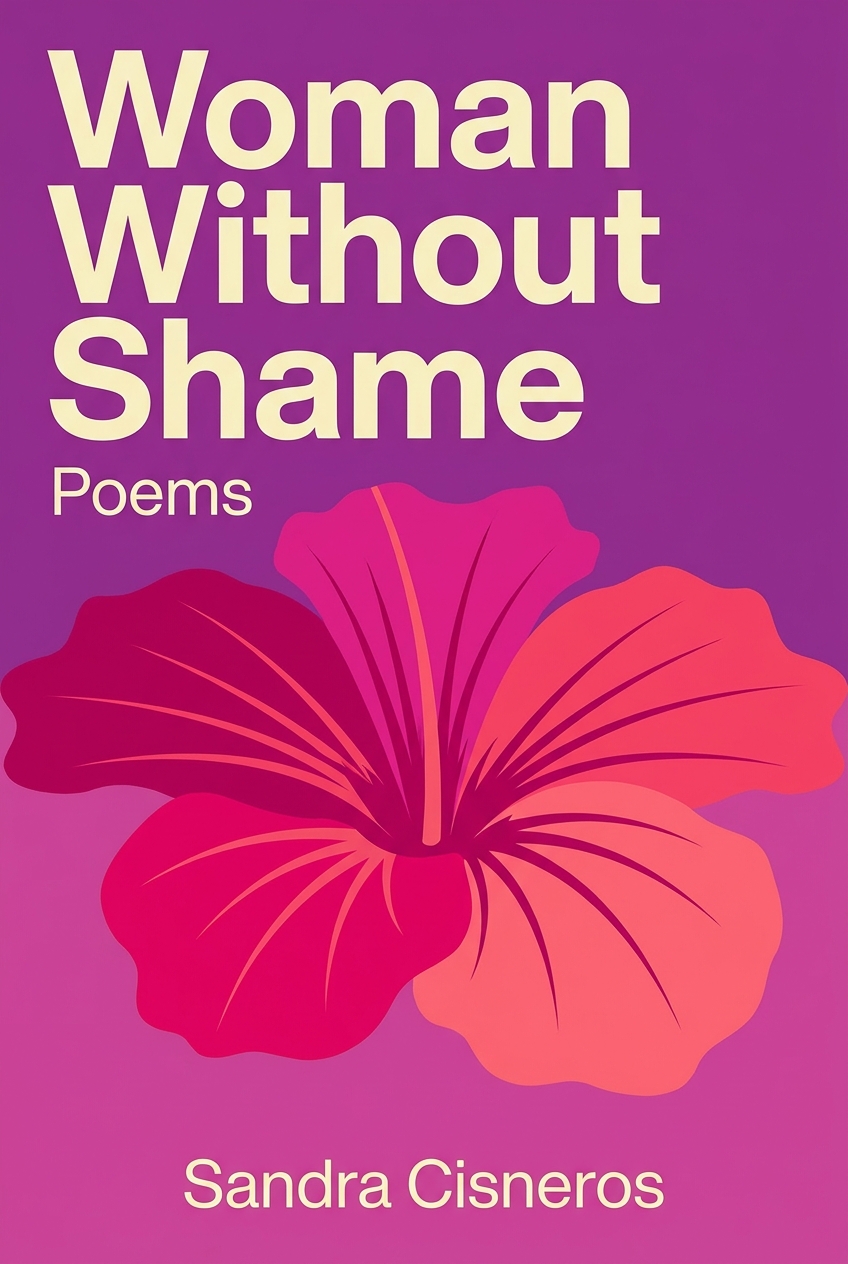
Woman Without Shame
Poems
What's it about
Have you ever felt the pressure to be smaller, quieter, or less of who you truly are? Discover how to cast off the weight of others' expectations and embrace every part of yourself—your desires, your heritage, and your power—unapologetically and without shame. In these summaries of Sandra Cisneros's poems, you'll explore a journey of self-reclamation. You'll learn how to celebrate your sensuality, find strength in your cultural roots, and navigate the complexities of love, aging, and womanhood with fierce honesty. It’s a powerful guide to living a bolder, more authentic life.
Meet the author
A pioneering figure in Chicano literature, Sandra Cisneros is the recipient of a National Medal of Arts, a MacArthur Fellowship, and author of the classic The House on Mango Street. Her bicultural, bilingual experience growing up between Chicago and Mexico City profoundly shapes her work, giving voice to working-class Latino communities. In Woman Without Shame, her first poetry collection in nearly three decades, Cisneros continues her fearless exploration of female desire, spirituality, and the complexities of identity.
Opens the App Store to download Voxbrief

The Script
A woman walks into a room—a party, a meeting, a family dinner. She carries a small, polished wooden box. It’s her own life, curated and contained, with the difficult, messy parts sanded smooth and tucked away. She presents this version of herself, the one that’s easy to hold, that won’t snag on anyone’s expectations. She smiles, she listens, she agrees. But beneath the lid, there’s a tangled knot of stories, desires, and angers that don’t fit the neat container. For years, she might not even look inside it herself, preferring the simplicity of the polished surface. The box becomes a habit, then a cage. What happens when she finally decides to leave the box at home? What happens when she walks into the room empty-handed, carrying only herself, with all the raw, unvarnished pieces on full display?
This very act of setting down the box and embracing a life without apology is the driving force behind Sandra Cisneros’s work. After the monumental success of The House on Mango Street, a book that defined her for decades, she felt the weight of expectation—a polished box presented to her by the world. She moved from the Texas she knew to a small town in Mexico, seeking a place where she could be not just a famous author, but a woman living fully, messily, and freely. It was there, away from the literary spotlight and immersed in the daily rhythms of a new culture, that she began to write the poems that would become Woman Without Shame as a declaration of her own reclaimed self.
Module 1: The Art of Shameless Self-Acceptance
This collection opens with a powerful declaration. It's about shedding the layers of guilt and expectation that society, culture, and even we ourselves impose. Cisneros argues that true freedom comes from a radical act of self-acceptance.
This begins with a core insight: You must reject shame to claim your power. Cisneros isn't talking about being "shameless" in a negative sense. Instead, she reframes it as being "without shame," a state of glorious self-possession. In one poem, she describes dancing freely at a gay beach. She intentionally removes her top as a personal practice to become a "woman without shame," glorious in her skin. This act is about liberating herself from patriarchal figures like a "guilt-driven Eve." It's about embracing a powerful, mythical femininity on her own terms.
This leads us to the next step in this journey. Celebrate your aging body as a source of splendor and history. Society often frames aging as a decline. Cisneros flips that script. She describes her body at fifty as being in its "splendor." She calls herself "wide as a fertility goddess" and "divine as a maja." The signs of aging are marks of character. Teeth worn down. Silvering hair. She declares herself "vintage," not old. This is a daily practice. When you look in the mirror, what story do you tell yourself? The book suggests you can choose to see a masterpiece in progress, not a decaying artifact.
But what happens when the world demands conformity? And here's the thing. You must define your own legacy, even in death. Cisneros offers explicit "Instructions for My Funeral." She rejects traditional Christian rituals. She demands copal smoke, a woven mat instead of a coffin, and celebratory, Fellini-esque music. She insists her ashes remain under a Mexican maguey plant. This is the ultimate act of autonomy. It's about ensuring your story is told your way, from beginning to end. It forces you to ask a critical question. If you don't define how you want to be remembered, who will?