You Don't Want To Know
What's it about
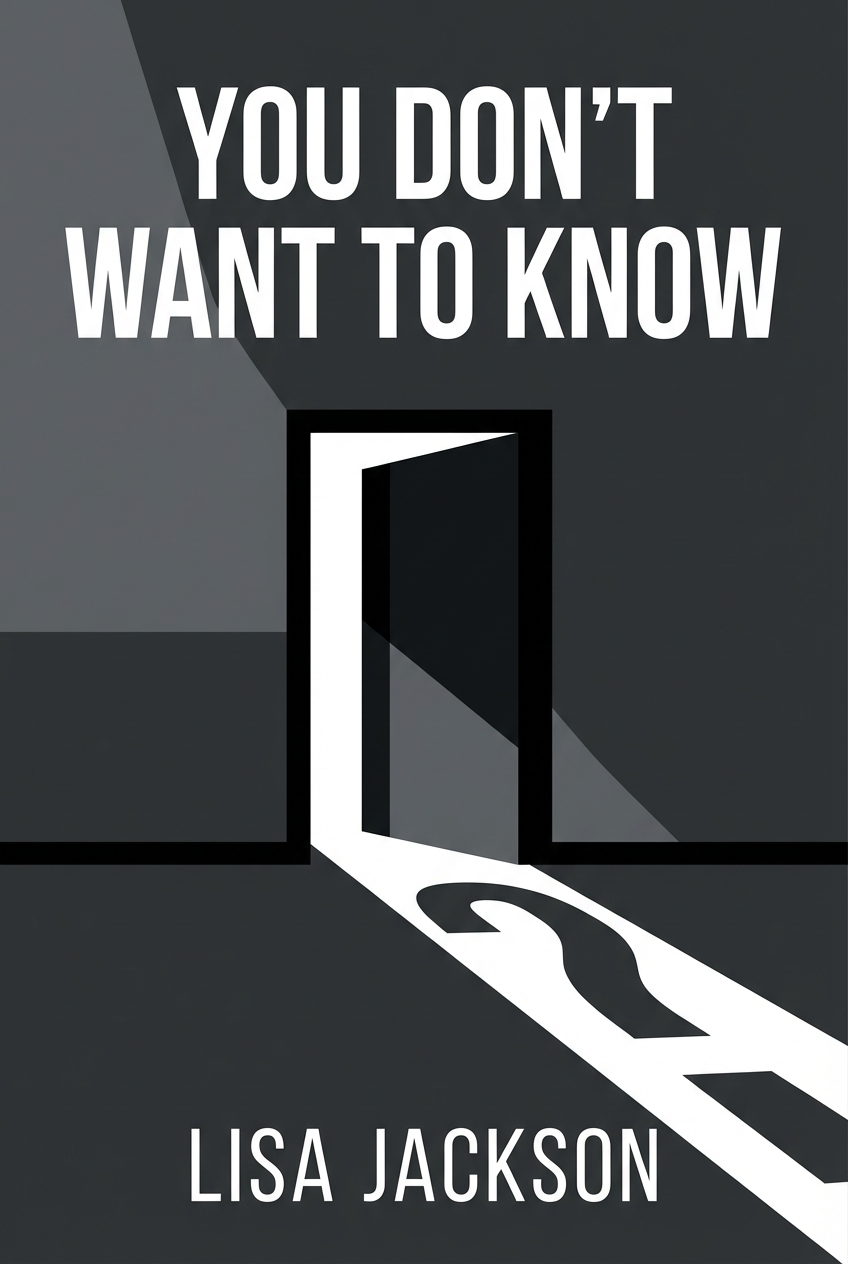
Have you ever felt like you're losing your mind, with strange memories and unsettling secrets bubbling just beneath the surface? Discover a story where one woman must question her own sanity to uncover the terrifying truth about her past and the disappearance of her child. This thriller plunges you into the life of Ava, who awakens in a hospital with no memory of the last two weeks. You'll follow her desperate search for answers as she navigates a web of deceit spun by those closest to her, forcing her to confront a dark family history she never knew existed.
Meet the author
With over 100 consecutive New York Times bestsellers to her name, Lisa Jackson is a master of suspense and a dominant force in the thriller genre. Her journey began with a challenge to write a romance novel, but she soon discovered her true passion lay in crafting intricate plots and heart-pounding suspense that keep readers on the edge of their seats. This lifelong dedication to exploring the darker side of human nature is what fuels the gripping, unforgettable stories for which she is celebrated worldwide.
Opens the App Store to download Voxbrief

The Script
The mind is a meticulous archivist, filing away every sight, sound, and sensation. But what happens when the archive is vandalized? Imagine your most precious memories—the birth of a child, a wedding day, a final conversation—are not simply lost, but replaced with forgeries. Smooth, plausible fakes that feel almost right, yet leave a cold, hollow space where the truth should be. You reach for the memory of your baby's first cry, and instead find only a chilling, unnatural silence. You try to recall your husband's face, but it's like looking at a photograph that has been subtly, horribly retouched. This is a hostile takeover of your past, leaving you a stranger in your own life, haunted by the ghost of a story you can no longer read.
This terrifying question of a mind turned against itself is the dark engine that drives Lisa Jackson's work. A prolific and celebrated author in the suspense genre, Jackson has spent decades exploring the fragile line between memory and madness, and the terrifying secrets that can fester within families. With "You Don't Want to Know," she pushed this exploration to its extreme, sparked by the chilling thought of a mother's deepest trauma being a weapon used against her. Jackson built a career by meticulously constructing worlds of psychological dread, and this novel is the culmination of her fascination with the idea that sometimes, the most dangerous lies are the ones we are forced to tell ourselves.
Module 1: The Architecture of Psychological Warfare
The story opens with Ava Garrison trapped in a living nightmare. Two years after her son, Noah, vanished, she is haunted by visions, memory gaps, and a debilitating sense of paranoia. She lives on a remote island estate, Neptune's Gate, surrounded by family and staff who treat her with a mixture of pity and suspicion. Her world is a fog of grief and medication, and she can no longer trust her own mind. This sets the stage for the book's first major theme: the systematic dismantling of a person's reality.
The core of this is gaslighting. A perpetrator can weaponize a victim's trauma to make them doubt their own sanity. Jewel-Anne, Ava’s cousin, is the primary architect of this torment. She knows Ava is grieving and medicated, making her vulnerable. Jewel-Anne secretly installs audio equipment to pipe the recorded sounds of a crying baby into Ava's room. This is a targeted, cruel act. It's designed to make Ava believe she is hearing her missing son, pushing her deeper into a state of psychological distress and making her appear unstable to everyone else. The goal is to discredit her completely.
But the manipulation doesn't stop there. Physical objects are used as anchors to blur the line between memory and hallucination. One day, Ava discovers her son’s red sneakers, soaking wet with saltwater, placed neatly in his otherwise untouched nursery. Later, she finds a key in her pocket. This key leads her to a buried box under Noah’s memorial stone. Inside is a grotesque rag doll dressed in Noah's clothes. These are carefully staged events, pieces of a sick game designed to make Ava question everything. Was she sleepwalking? Did she plant these items herself? The evidence is tangible, but the logic is insane, forcing her into a spiral of self-doubt.
Here's the thing. This psychological warfare is devastatingly effective because it exploits pre-existing vulnerabilities. A history of mental health struggles becomes a tool for invalidating a person's present reality. Ava has a history of depression and a past suicide attempt, which Wyatt, her husband, and others use against her. When she reports the strange happenings, they dismiss her concerns. They suggest she is hallucinating or that she did these things herself during a blackout. Her genuine fear is re-framed as a symptom of her "illness." This collective disbelief isolates her, making her feel like she's fighting a war on two fronts: one against her tormentor, and one against the people who refuse to believe her.
Module 2: The Erosion of Trust in a Closed System
As Ava fights to understand what's happening, she realizes the architecture of her life is built on a foundation of lies. The isolation of Neptune's Gate becomes a critical factor. It's a closed system where secrets fester and paranoia thrives. This brings us to the next stage of her breakdown: the complete erosion of trust in every single relationship.
First, in a closed environment, every family member and associate becomes a potential suspect. Ava’s mind becomes a Rolodex of motives. She suspects her cousin Jewel-Anne, who is bitter over an accident that left her in a wheelchair and resentful of Ava's wealth. She suspects her husband, Wyatt, whose behavior is distant and controlling. She even suspects the household staff, who whisper about her behind her back. This pervasive suspicion turns her home into a prison. She can't confide in anyone because anyone could be the enemy. The psychological effect is profound. She is utterly alone, trapped on an island with people who may be actively working to destroy her.
Building on that idea, the narrative shows how betrayal often comes from the most intimate circles. Ava eventually installs her own hidden cameras. The footage delivers a devastating blow. She discovers her husband, Wyatt, is having an affair with Khloe, her childhood best friend and current caretaker. This is a profound betrayal by the two people she should have been able to trust the most. The discovery confirms her paranoia was justified. The people closest to her were deceiving her.
So here's what that means. When trust is gone, every interaction becomes a strategic calculation. The survivor must adopt a mask of compliance while secretly gathering evidence. After discovering the affair and the extent of the gaslighting, Ava's behavior shifts. She learns to "play nice." She pretends to be compliant with Wyatt and Khloe. She gives vague, non-committal answers to their questions, all while her mind is racing, planning her next move. She knows that revealing her knowledge would be dangerous. She has to act the part of the fragile, confused victim to buy herself time to uncover the full truth. This creates a terrifying dynamic where she is performing a role for her own survival, fully aware that the people she's performing for may want her dead or institutionalized.