Best Time Management Books
Understanding why time management is important is the first step toward reclaiming your day from distractions. It’s about developing time management habits that stick, not just working harder. This list of the best books on time management offers actionable strategies for focus, prioritization, and work-life balance. These must read time management books will guide you from feeling overwhelmed to being in control of your schedule and goals. Curated by the VoxBrief team.

The 4-Hour Workweek
Escape the 9-to-5, automate your income, and design a life of freedom.
- Use the DEAL framework to Define, Eliminate, Automate, and Liberate.
- Apply the 80/20 principle to focus on high-impact tasks.
- Create an automated online business ('muse') for passive income.
Aspiring digital nomads and entrepreneurs wanting to escape the rat race.
Escape the 9-to-5, automate your income, and design a life of freedom.

The Coaching Habit
Lead better by talking less and asking more powerful questions.
- Master seven essential coaching questions to empower your team.
- Shift from being an advice-giver to a facilitator of growth.
- Make coaching a quick, informal, and daily habit.
Managers and leaders who want to stop being a bottleneck for their team.
Lead better by talking less and asking more powerful questions.
The 7 Habits of Highly Effective People
A principle-centered guide to achieving personal and professional greatness.
- Move from dependence to independence, then to interdependence.
- Prioritize tasks using the 'Urgent/Important' matrix.
- Focus on your Circle of Influence, not your Circle of Concern.
Anyone seeking a foundational, character-based approach to effectiveness.
A principle-centered guide to achieving personal and professional greatness.

Eat That Frog!, Fourth Edition
Conquer procrastination by tackling your most important task first every day.
- Identify your most crucial task (the 'frog') for the day.
- Develop the discipline to 'eat that frog' immediately.
- Use 21 methods to stop procrastinating and boost daily productivity.
Procrastinators who need a simple, action-oriented system to get started.
Conquer procrastination by tackling your most important task first every day.

Buy Back Your Time
A step-by-step system for entrepreneurs to reclaim their freedom.
- Use the 'Buyback Principle' to replace yourself in the business.
- Identify and delegate low-value tasks to free up your time.
- Build a self-managing team by hiring effectively.
Successful but overwhelmed entrepreneurs trapped by their own business.
A step-by-step system for entrepreneurs to reclaim their freedom.

The Science of Scaling
Achieve exponential business growth by overcoming key constraints.
- Identify the four constraints that limit business growth.
- Shift from working *in* your business to working *on* it.
- Build a self-managing team to enable massive scaling.
Ambitious founders looking to scale their business exponentially.
Achieve exponential business growth by overcoming key constraints.
Time Management from the Inside Out, Second Edition
Build a time management system that works with your personality.
- Diagnose your unique time-management style and challenges.
- Organize based on your natural tendencies, not a rigid system.
- Tackle the psychological root causes of procrastination.
People who have failed with systems that felt unnatural or too rigid.
Build a time management system that works with your personality.

Productivity for How You're Wired
A productivity system tailored to your unique brain type.
- Identify your 'Brain Type' to understand your natural strengths.
- Apply tailored strategies for organization and focus.
- Stop fighting your nature and work with your brain's wiring.
Individuals who feel one-size-fits-all productivity advice doesn't work.
A productivity system tailored to your unique brain type.

Four Thousand Weeks
Embrace your finite time and focus on what truly matters.
- Accept that you have a limited number of weeks (about 4000).
- Recognize that efficiency hacks can often increase anxiety.
- Practice 'strategic underachievement' by choosing what not to do.
Overwhelmed high-achievers trapped by modern productivity culture.
Embrace your finite time and focus on what truly matters.

Make Time
Design your day with intention to focus on your top priority.
- Use a four-step framework: Highlight, Laser, Energize, Reflect.
- Choose one 'Highlight' or priority for each day.
- Use specific tactics to beat distraction and stay focused.
Anyone feeling constantly busy but not productive in the digital age.
Design your day with intention to focus on your top priority.
First Things First
Move beyond to-do lists to live a life of purpose and focus.
- Prioritize tasks using the four-quadrant time management matrix.
- Focus energy on important, non-urgent Quadrant II activities.
- Shift from clock-based management to compass-based direction.
People who want to align their daily actions with their deepest values.
Move beyond to-do lists to live a life of purpose and focus.
The 12 Week Year
Achieve more in 12 weeks than others do in an entire year.
- Treat every 12 weeks as a full year to drive urgency.
- Create a compelling vision and a focused tactical plan.
- Use weekly scoring and accountability to ensure execution.
Goal-setters who struggle with long-term execution and lose momentum.
Achieve more in 12 weeks than others do in an entire year.

168 Hours
Find an extra day each week by mastering your 168 hours.
- Track your time to see where your hours actually go.
- Build a weekly schedule that reflects your true priorities.
- Outsource, minimize, or ignore tasks that don't add value.
Busy professionals trying to find a better work-life balance.
Find an extra day each week by mastering your 168 hours.
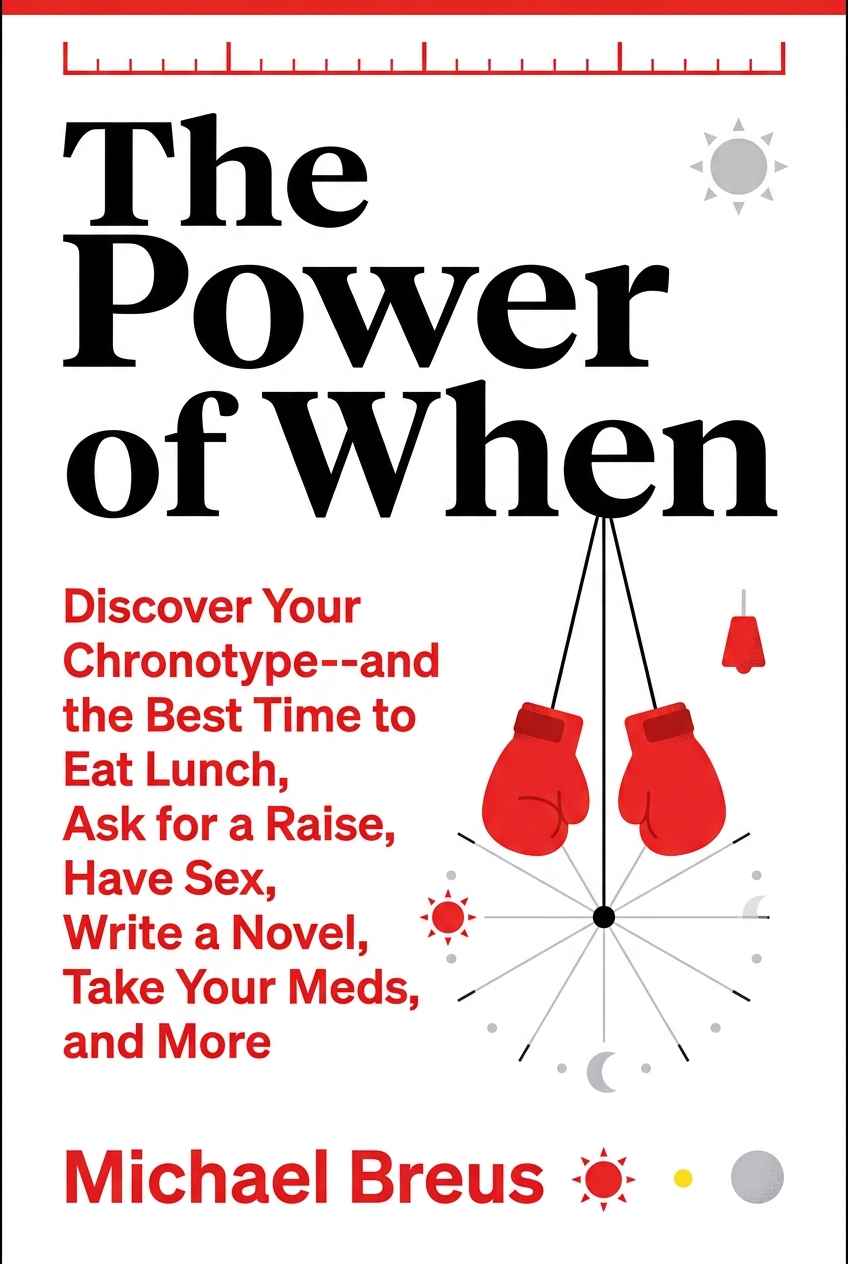
The Power of When
Do everything at the perfect time based on your body's clock.
- Discover your personal chronotype (Dolphin, Lion, Bear, or Wolf).
- Sync your activities with your unique biological rhythm.
- Learn the ideal time for tasks like working, eating, and sleeping.
Anyone who feels they are constantly fighting their natural energy levels.
Do everything at the perfect time based on your body's clock.

Eat That Frog!
Conquer procrastination by tackling your most difficult task first each day.
- Identify your most important task (your 'frog') and complete it first.
- Plan every day in advance to create a clear roadmap for success.
- Apply the Law of Forced Efficiency: there's never time to do everything, but always time for the most important thing.
Professionals and students looking for a simple, direct anti-procrastination method.
Conquer procrastination by tackling your most difficult task first each day.
Deep Work
Develop the superpower of intense, distraction-free focus to produce elite work.
- Deep work is a rare and valuable skill in a distracted knowledge economy.
- Train your brain for intense concentration by scheduling focused sessions.
- Strategically quit or reduce low-value tools like social media to reclaim focus.
Knowledge workers aiming to improve the quality and quantity of their output.
Develop the superpower of intense, distraction-free focus to produce elite work.
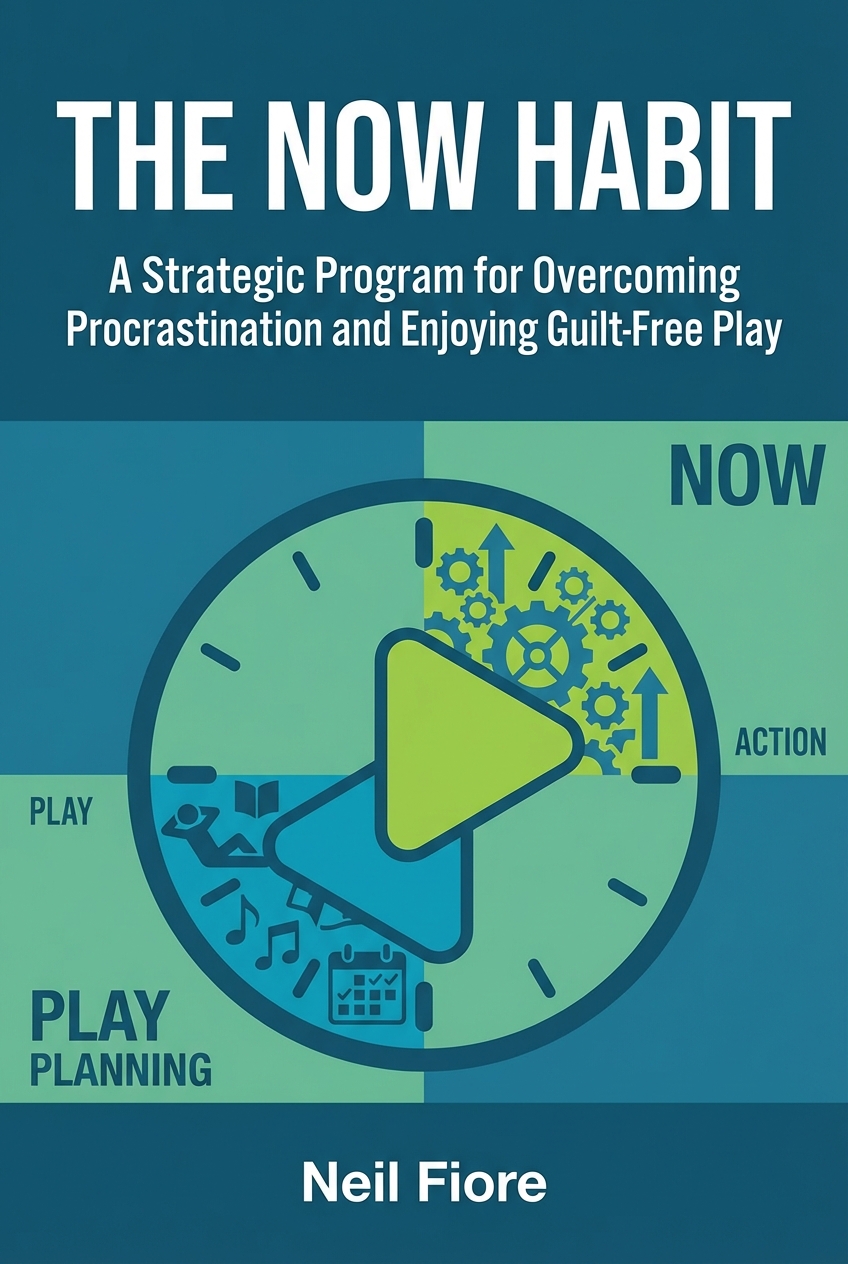
The Now Habit
Overcome procrastination by understanding its root causes and using guilt-free play.
- Realize procrastination is a coping mechanism for anxiety, not a sign of laziness.
- Use an 'Unschedule' to plan for rewards and guilt-free fun first.
- Focus on starting tasks consistently, not finishing them perfectly.
Chronic procrastinators who struggle with perfectionism and anxiety.
Overcome procrastination by understanding its root causes and using guilt-free play.
Frequently Asked Questions
For a simple, action-oriented start, 'Eat That Frog!' is excellent. For a comprehensive approach, many consider 'The 7 Habits of Highly Effective People' one of the best books on time management as it builds a foundation for long-term effectiveness.
Time management books offer structured methods to overcome procrastination. They provide frameworks like identifying your 'frog' (Eat That Frog!), using a four-quadrant matrix (First Things First), or creating short-term urgency (The 12 Week Year) to help you take action.
Absolutely. 'Time Management from the Inside Out' and 'Productivity for How You're Wired' are perfect. They focus on understanding your unique personality and brain type to build a custom system that feels natural and sustainable.
'Buy Back Your Time' by Dan Martell is designed specifically for entrepreneurs who are trapped by their business. It provides a clear system for delegating and hiring to reclaim your freedom. 'The 4-Hour Workweek' is another classic for building systems and automating income.
Time management is hard because it fights our natural tendencies for immediate gratification and distraction. Modern environments, with constant notifications and interruptions, make it even harder. It also requires confronting our limitations and making difficult choices about what not to do, which can be psychologically challenging.
Consistency comes from building habits, not just relying on willpower. Start with small, manageable changes, use tools like time blocking, and regularly review what’s working. Most importantly, connect your daily actions to a larger, meaningful goal to stay motivated long-term.
While talent provides a baseline ability, consistent time management unlocks potential and leads to significant achievement. A talented person who can't prioritize will often be out-performed by someone with disciplined habits. Many recommended time management books argue that management is the skill that translates talent into tangible results.