Quantum Physics Books
Curious about the strange rules that govern reality? This list of the best quantum mechanics books provides a clear introduction to quantum mechanics, making the bizarre subatomic world accessible. We've gathered top quantum mechanics book recommendations that explain complex ideas like wave-particle duality and entanglement simply. Whether you're a beginner or a physicist, these quantum physics books demystify reality's deepest secrets. Curated by the VoxBrief team.
Seven Brief Lessons on Physics
Untangles modern physics, from relativity to quantum mechanics, in brief, elegant lessons.
- Einstein's relativity describes a curved, dynamic spacetime.
- Quantum mechanics governs the probabilistic world of tiny particles.
- The universe's heat, or entropy, defines the forward arrow of time.
Curious minds who want a poetic overview of modern physics.
Untangles modern physics, from relativity to quantum mechanics, in brief, elegant lessons.
Relativity
Einstein’s own explanation of his revolutionary theory of space, time, and gravity.
- The speed of light is constant for all observers.
- Time and space are relative, forming a single fabric called spacetime.
- Gravity is the curvature of spacetime caused by mass and energy.
Readers who want to understand relativity directly from its source.
Einstein’s own explanation of his revolutionary theory of space, time, and gravity.
Reality Is Not What It Seems
Explore the secrets of quantum gravity and looped space that form reality's fabric.
- Reality's foundation may be tiny, interconnected loops of space.
- Loop quantum gravity aims to unite relativity and quantum theory.
- Information is a fundamental component of physical reality.
Thinkers curious about the cutting edge of theoretical physics.
Explore the secrets of quantum gravity and looped space that form reality's fabric.

Six Easy Pieces
A legendary physicist breaks down the universe's core principles into simple concepts.
- All things are made of perpetually moving atoms.
- Energy is conserved; it only changes form.
- Quantum behavior at the micro level dictates macro reality.
Beginners seeking a foundational physics lesson from a master teacher.
A legendary physicist breaks down the universe's core principles into simple concepts.
The God Equation
The quest for a single equation to unite all forces of nature and explain everything.
- Physics has evolved through successive unifications of forces.
- String theory is the leading candidate for a 'theory of everything.'
- This final theory could explain the origin and fate of the universe.
Anyone fascinated by the search for a final theory of reality.
The quest for a single equation to unite all forces of nature and explain everything.
Quantum Physics for Beginners
Unlocks the secret rules of the universe with surprisingly simple explanations.
- Particles can exist as both waves and particles simultaneously.
- The uncertainty principle limits how precisely we can know properties.
- Quantum concepts power technologies like lasers and computers.
Newcomers intimidated by physics who want a clear, basic guide.
Unlocks the secret rules of the universe with surprisingly simple explanations.
Helgoland
Discover the radical idea that reality isn't solid, but a web of interactions.
- Objects and their properties only exist through interaction.
- Reality is fundamentally relational, not made of absolute things.
- This view dissolves many of quantum mechanics' famous paradoxes.
Philosophically-minded readers intrigued by quantum reality.
Discover the radical idea that reality isn't solid, but a web of interactions.
Introduction to Quantum Mechanics
A classic textbook summary breaking down wave functions and the Schrödinger equation.
- The wave function describes a particle's probabilistic state.
- The Schrödinger equation governs how the wave function evolves in time.
- Learn to solve quantum problems using a step-by-step method.
Physics students needing to master problem-solving techniques.
A classic textbook summary breaking down wave functions and the Schrödinger equation.
The Universe in a Nutshell
Stephen Hawking breaks down mind-bending concepts like string theory and time travel.
- M-theory attempts to unify all versions of string theory.
- The universe's history can be visualized as a shape in spacetime.
- Black holes may be gateways to other universes.
Anyone curious about cosmology's biggest mysteries and theories.
Stephen Hawking breaks down mind-bending concepts like string theory and time travel.

Black Holes
Demystifies the universe's most mysterious objects, from their birth to their effects.
- Black holes are formed from the collapse of massive stars.
- They warp spacetime so intensely that not even light can escape.
- Black holes are fundamental to the structure of galaxies.
Space enthusiasts who want to understand black holes beyond the hype.
Demystifies the universe's most mysterious objects, from their birth to their effects.

Quantum Theory
Explore the revolutionary idea that shattered classical physics: the quantum.
- Energy is emitted and absorbed in discrete packets called 'quanta'.
- This idea explained the puzzle of black-body radiation.
- Quantum theory marked the birth of modern physics.
History of science buffs wanting to read a foundational text.
Explore the revolutionary idea that shattered classical physics: the quantum.
In Search of Schrödinger's Cat
A demystifying tour of quantum physics, from its key experiments to its paradoxes.
- Double-slit experiments prove the wave-particle duality of matter.
- Schrödinger's cat highlights the measurement problem in quantum theory.
- Reality at the quantum level is governed by probability, not certainty.
Readers who want a comprehensive historical tour of quantum ideas.
A demystifying tour of quantum physics, from its key experiments to its paradoxes.
Quantum Physics Made Easy
A jargon-free guide to quantum phenomena using simple analogies and plain English.
- A particle can be in a superposition of multiple states at once.
- Quantum entanglement links particles instantly across any distance.
- The observer effect shows that measurement influences reality.
Absolute beginners looking for the simplest possible explanations.
A jargon-free guide to quantum phenomena using simple analogies and plain English.
Quanta and Fields
Discover the universe's fundamental reality: everything is a ripple in a field.
- The universe's basic ingredients are fields, not particles.
- Particles are just excitations or vibrations in these fields.
- Quantum field theory unifies quantum mechanics, matter, and relativity.
Advanced readers wanting to understand quantum field theory concepts.
Discover the universe's fundamental reality: everything is a ripple in a field.
Modern Quantum Mechanics
A direct path to understanding the elegant logic of quantum behavior and its notation.
- Bra-ket notation is a powerful language for describing quantum states.
- Symmetry principles are fundamental to understanding quantum laws.
- Explore the dynamics of quantum systems like spin and angular momentum.
Graduate-level physics students seeking a rigorous theoretical guide.
A direct path to understanding the elegant logic of quantum behavior and its notation.
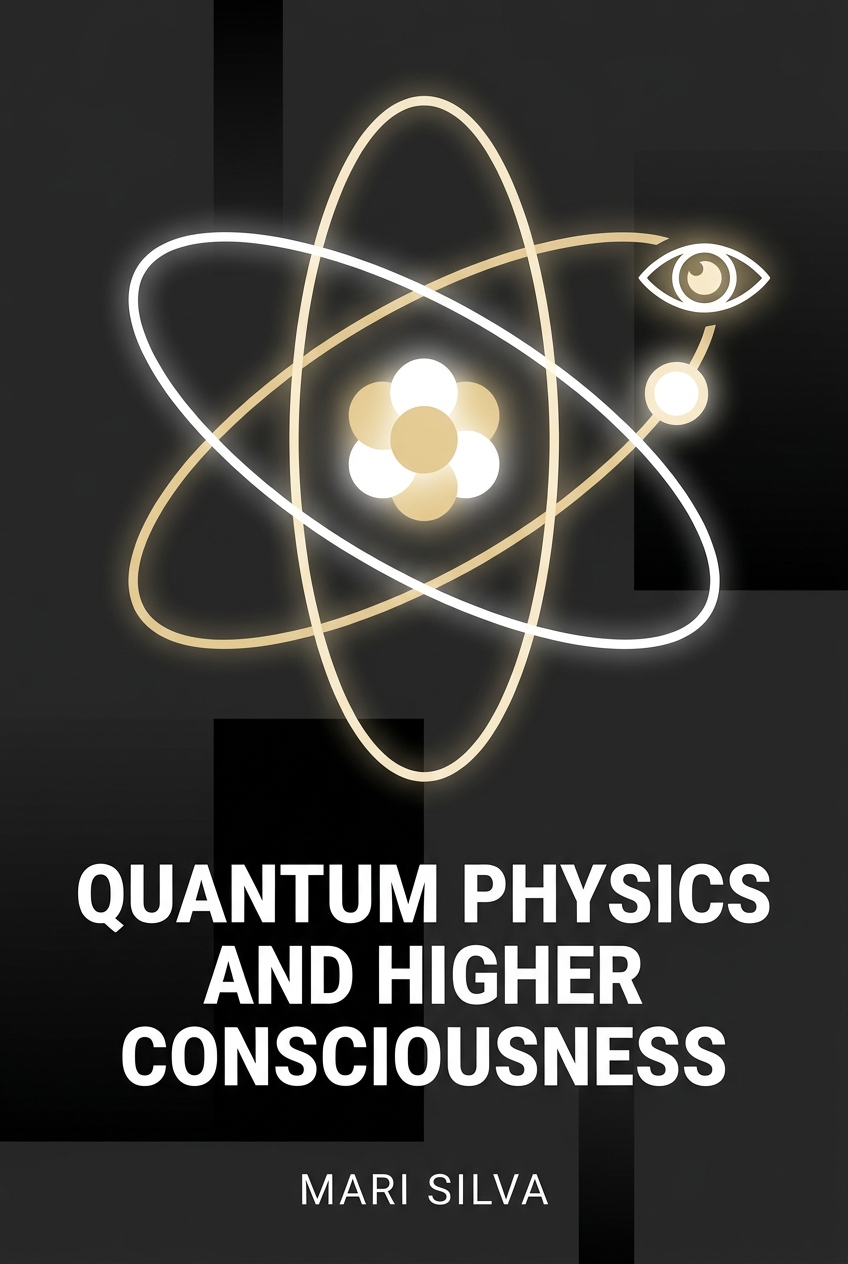
Quantum Physics and Higher Consciousness
Bridges the gap between modern science and spiritual intuition using quantum concepts.
- The observer effect suggests consciousness plays a role in reality.
- Entanglement can be seen as a metaphor for universal interconnectedness.
- Use quantum principles as tools for personal manifestation.
Spiritually-inclined readers looking for scientific validation.
Bridges the gap between modern science and spiritual intuition using quantum concepts.
Frequently Asked Questions
It's the fundamental theory describing nature at the smallest scales. Without it, we couldn't have developed essential technologies like lasers, transistors (powering all computers and smartphones), or MRI machines used in medicine. It's the bedrock of modern chemistry and materials science.
Recent breakthroughs focus on quantum computing, where scientists are building processors to solve problems impossible for classical computers. There's also intense research into quantum materials with exotic properties and using quantum sensors for ultra-precise measurements. The 2022 Nobel Prize was awarded for landmark experiments with entangled photons.
It's happening all around you, even if it's invisible. Your smartphone, laptop, and television all rely on transistors, which are quantum mechanical devices. Lasers in Blu-ray players, fiber-optic communication, and LEDs in modern lightbulbs are all practical applications of quantum theory.