In a world that constantly demands more of our time, attention, and energy, stress can feel like an unavoidable part of modern life. It’s the tension in your shoulders during a long workday, the racing thoughts that keep you up at night, and the overwhelming feeling that you’re always one step behind. While there’s no magic wand to eliminate stress entirely, understanding its roots is the first step toward managing it. This is where the best books about stress become invaluable tools, offering not just coping mechanisms but a profound new understanding of how our minds and bodies work.
This guide serves as an introduction to best books on stress management, moving beyond generic advice to explore the core concepts from leading authors in the field. We'll unpack how stress isn't just in your head, how your thought patterns might be trapping you in a cycle of anxiety, and how you can begin to rewire your brain for a calmer, more resilient state of being. Whether you're a complete beginner on this topic or looking for a deeper perspective, the insights within these pages can illuminate a path forward.
The Hidden Link: How Stress Lives in the Body
One of the most significant shifts in our modern understanding of stress is the undeniable connection between our emotional state and our physical health. For decades, medicine often treated the mind and body as separate entities. If you had chronic pain or an autoimmune condition, the focus was purely physiological. If you had anxiety, the focus was on your thoughts. But what if they are two sides of the same coin? This is a fundamental question that some of the most important stress-related books tackle, explaining why is best books on stress management important for our total well-being.
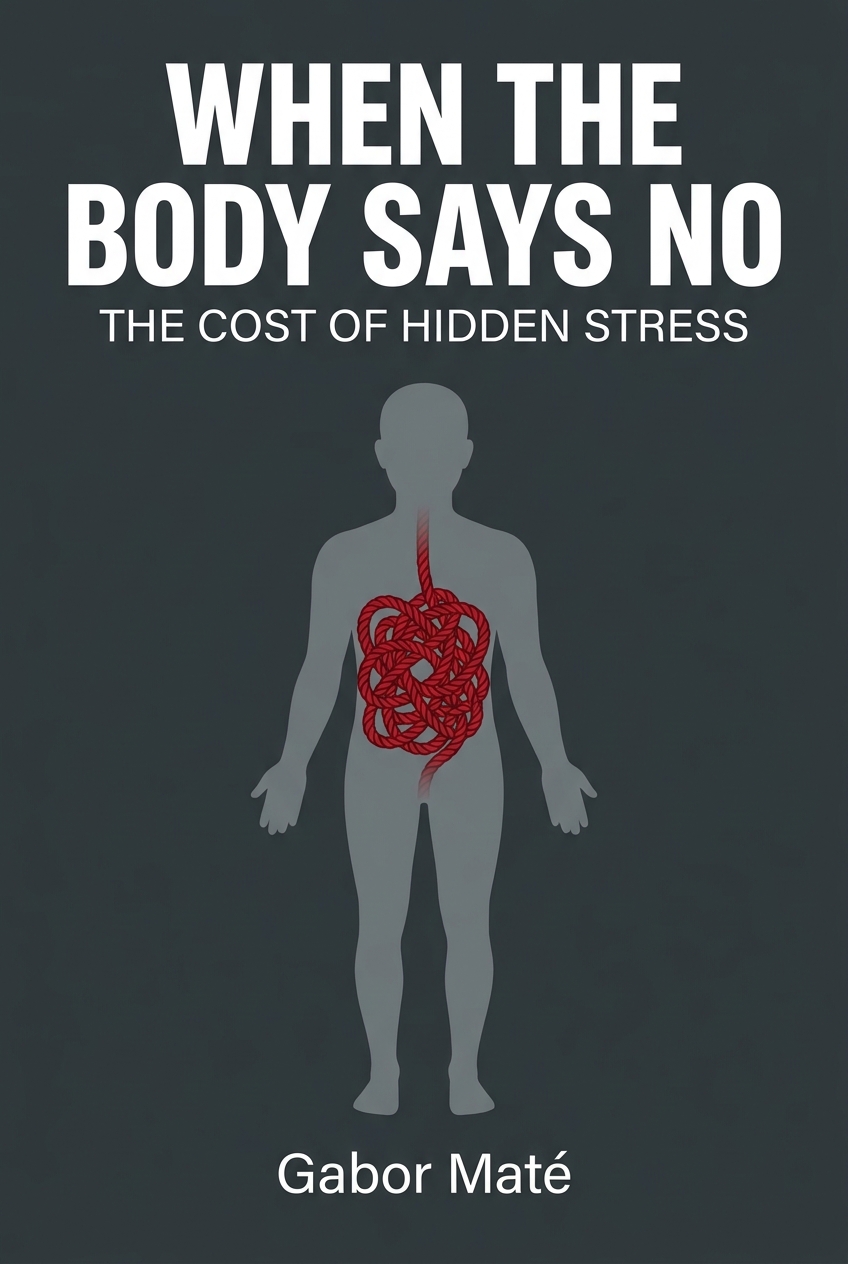
Dr. Gabor Maté, in his seminal work When the Body Says No, makes a powerful case for this interconnectedness. He argues that chronic stress, particularly the kind that stems from repressing our emotions and consistently putting others' needs before our own, creates a physiological environment ripe for illness. Maté explains that stress is not just a subjective feeling but a measurable cascade of hormones like cortisol that, when chronically elevated, can suppress the immune system and promote inflammation. His work shows how unexpressed anger, grief, and trauma can manifest in conditions ranging from arthritis to cancer, making a compelling argument that healing requires acknowledging our emotional truths.
Building on this foundation, Dr. Bessel van der Kolk’s The Body Keeps the Score provides a groundbreaking look at how trauma, an extreme form of stress, becomes embedded in our very physiology. He reveals that traumatic memories are not stored as coherent narratives but as fragmented sensory imprints—a flash of light, a specific smell, a feeling of paralysis. These fragments can be triggered by everyday events, sending our nervous system into high alert as if the trauma is happening all over again. The book's central thesis is that the body is the 'scorekeeper' of our life experiences. This is why talk therapy alone sometimes fails; we can’t simply talk our way out of a physiological state. True healing requires engaging the body through methods like yoga, breathwork, or other somatic therapies that help release the trapped stress.
What You'll Learn from the Best Books About Stress
While understanding the mind-body connection is crucial, the next step is learning actionable strategies to intervene in our stress response. The best books about stress provide frameworks that demystify our internal experience, transforming abstract feelings of anxiety and overwhelm into understandable, manageable processes. This knowledge empowers us to move from being a victim of our stress to becoming an active participant in our own well-being. What is best books on stress management explained, then, is a roadmap for regaining control.
Deconstructing Your Anxious Habits
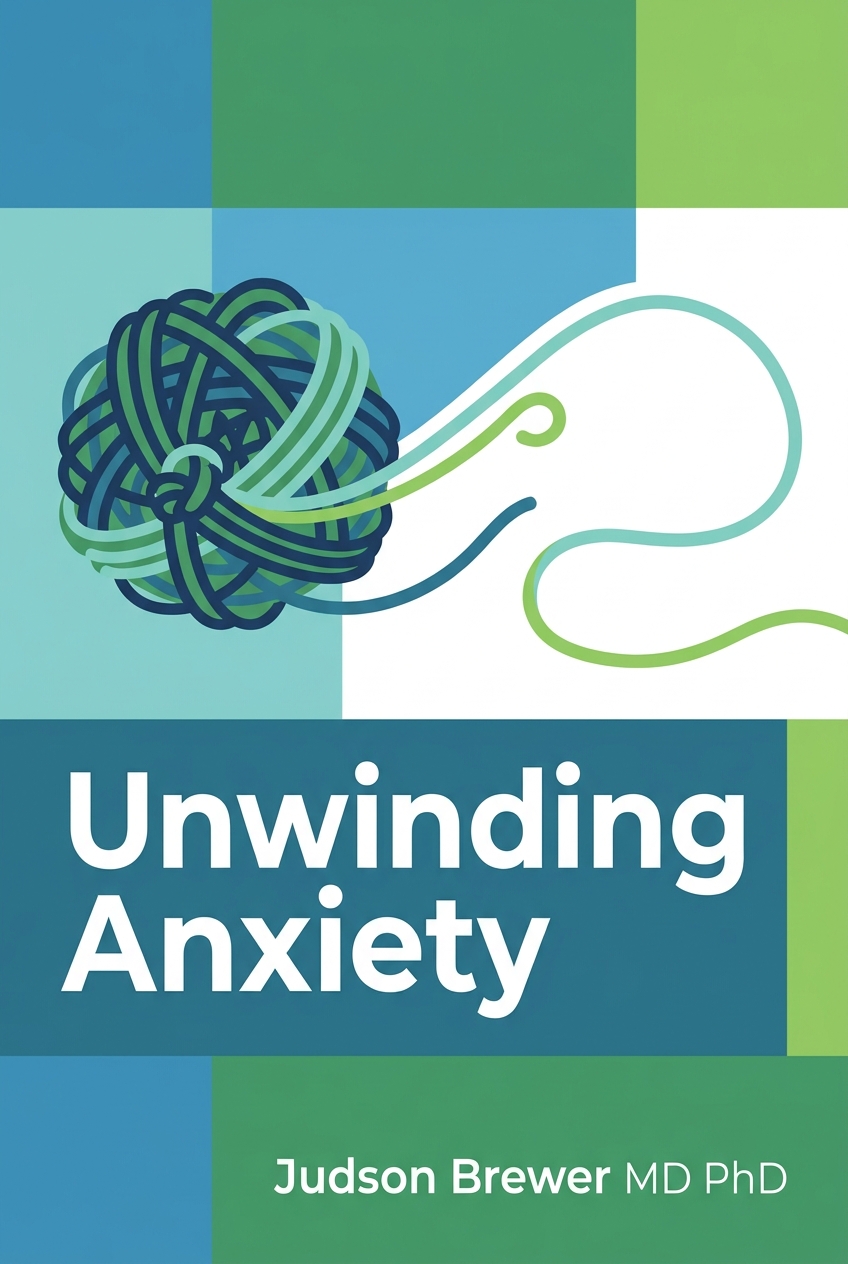
If you've ever felt trapped in a loop of anxious thoughts, you know how hard it is to simply “think your way out.” Psychiatrist and neuroscientist Dr. Judson Brewer offers a different approach in his book Unwinding Anxiety. He explains that anxiety often functions as a habit loop, a concept that will feel familiar to anyone who has tried to break a bad habit. This loop consists of three parts: a trigger (e.g., seeing an email from your boss), a behavior (e.g., worrying about what it could be), and a reward (e.g., the temporary relief of avoiding the email, or the sense of 'doing something' by worrying).
Brewer's core insight is that you can’t fight this loop with willpower. Instead, you can dismantle it with curiosity. By mindfully paying attention to the physical sensations of anxiety when they arise—the tightness in your chest, the knot in your stomach—without judgment, you begin to see the “reward” for what it is: unpleasant and unhelpful. This process, which he calls “disenchantment,” updates your brain’s reward system. Over time, your brain learns that worrying isn’t actually rewarding, and the habit loop begins to weaken on its own. It's a powerful shift from fighting anxiety to becoming curious about it.
Reclaiming Authority Over Your Thoughts
For many, stress manifests as relentless overthinking. We replay conversations, catastrophize future events, and get lost in a mental storm. This is where a clear distinction between 'thoughts' and 'thinking' becomes a lifeline. In Don't Believe Everything You Think, author Joseph Nguyen presents a simple yet profound idea: the source of our suffering isn’t our external circumstances, but our own thinking about them.
Nguyen explains that thoughts themselves are neutral, like clouds passing in the sky. It is only when we engage with them—the act of 'thinking'—that we create feelings of stress, anxiety, or sadness. The solution isn't to control or change your thoughts, but to realize that you don’t have to believe them or give them your attention. By learning to step back and observe your thoughts without getting entangled, you can access a natural state of calm that exists beneath the mental noise. This is one of the most liberating best books on stress management tips, as it removes the pressure to constantly “fix” your mind.
Similarly, Daniel Chidiac’s Stop Letting Everything Affect You addresses the cumulative nature of stress. He argues that overwhelm rarely comes from a single major event but from the “slow, steady drip of small stressors” that we fail to process. Chidiac provides tools for gaining perspective, urging readers to ask whether a current worry will matter in five years, or even five months. By consciously detaching from minor irritations and external validation, you build an internal foundation of peace, preventing small things from hijacking your emotional state.
Applying These Lessons: The Path to Lasting Calm
Understanding these concepts is the first step, but how do you integrate them into your daily life? The journey to managing stress is not a one-time fix but an ongoing practice of self-awareness and intentional action. This is how to learn best books on stress management—by putting the knowledge into practice.
The foundation for this change lies in the principle of neuroplasticity, a key theme in The Body Keeps the Score. Your brain is not fixed; it is capable of changing and forming new neural pathways throughout your life. Every time you choose curiosity over anxiety, or observation over obsessive thinking, you are actively rewiring your brain. Recovery and stress reduction are about creating new experiences in the present that contradict the old patterns of helplessness and fear.
This proactive approach is also at the heart of Judson Brewer's work in Unwinding Anxiety. After disenchanting the old, anxious habit loop, the final step is to find a “Bigger, Better Offer” (BBO). The BBO is a new behavior that is genuinely more rewarding than worrying. This could be taking a few deep breaths, going for a short walk, connecting with a loved one, or engaging in a moment of mindfulness. By consciously turning to these BBOs, you give your brain a clearly superior, healthier path to follow, making the old anxious habit obsolete.
Ultimately, the goal proposed by authors like Joseph Nguyen is to learn to operate from a state of peace. Decisions made from a place of calm clarity are almost always better than those made from a state of frantic, stressed-out thinking. By practicing detachment from your thoughts and connecting with the quiet space within, you make this state of being your new default. The journey is one of unlearning harmful habits and rediscovering the innate resilience that was there all along.
In conclusion, the wisdom from the best books about stress offers a message of profound empowerment. Stress, anxiety, and the weight of the past are not life sentences. They are learned patterns in the mind and body, and what has been learned can be unlearned. By understanding the mind-body connection, deconstructing our anxious habits, and reclaiming authority over our thoughts, we can move from a life dictated by stress to one defined by conscious choice and lasting calm.
Master key ideas in 15 minutes
Listen to audio summaries of these books on VoxBrief
'Best books on stress management' refers to a category of literature focused on explaining the psychological and physiological roots of stress. These books offer evidence-based strategies, frameworks, and mindset shifts to help readers understand, cope with, and reduce the impact of stress on their lives.
Learning from these books is important because they provide a deeper understanding of *why* we feel stressed, moving beyond simple tips. They explain how our brain, body, and past experiences contribute to our stress responses, empowering us to address the root causes rather than just masking the symptoms.
A key tip, explained in books like *Unwinding Anxiety*, is to view anxiety as a habit loop you can map and understand. Another powerful concept from books like *Don't Believe Everything You Think* is to differentiate between fleeting thoughts and the act of 'thinking,' which helps detach from obsessive thought cycles.
Yes, reading the best books for stress management can be incredibly helpful by providing new perspectives and practical tools. They explain complex topics like the mind-body connection and neuroplasticity, giving you a roadmap for change and showing you how you can alter your response to stress.