Have you ever made a snap judgment you later regretted? Or felt a surge of emotion that seemed to come from nowhere? These experiences aren't random glitches; they are the products of cognition, the intricate web of mental processes that includes thinking, knowing, remembering, judging, and problem-solving. It’s the invisible architecture of your inner world. For anyone looking to understand the 'why' behind their thoughts and actions, diving into the world of books about cognition is one of the most powerful steps you can take.
This guide will walk you through the core ideas of this fascinating field, offering a map to the machinery of your own mind. We'll explore foundational concepts, pull back the curtain on your brain's hidden operations, and provide practical strategies to help you think more clearly and live more intentionally. This is cognitive psychology for beginners, students, and professionals alike—a journey into the story of you.
What is Cognitive Psychology and Why Is It Important?
Before we dive into the specific mechanisms of the mind, it's crucial to understand the field that studies them. So, what is cognitive psychology? In simple terms, it's the scientific study of the mind as an information processor. It explores how we take in information from the outside world, how we make sense of that information, and how we use it to interact with our environment.
Think about everything you're doing right now: perceiving these words, understanding their meaning, linking them to your own experiences, and storing some of it in your memory. All of this is cognition in action. Cognitive psychologists investigate these processes, from attention and perception to language and decision-making.
The next logical question is, why is cognitive psychology important? Its significance extends far beyond academic curiosity. Understanding cognitive principles gives you a user's manual for your own brain. For students, it can unlock more effective learning and study strategies. For professionals, especially those in leadership, marketing, or design, these insights are invaluable for understanding human behavior, making better decisions, and communicating more effectively. Cognitive psychology at work isn't just a theory; it's a practical tool for improving performance and collaboration.
At its core, learning about cognition is an act of self-discovery. It helps explain the cognitive psychology causes and effects that shape our daily lives, from why we fall for certain marketing tricks to how we form and maintain relationships. It empowers us to move from being passive passengers in our own minds to becoming more active and aware pilots.
Exploring Key Concepts Through Books About Cognition
Some of the most profound insights into how our minds work have been popularized by groundbreaking authors who have translated dense scientific research into accessible, transformative ideas. By examining their work, we can grasp the core tenets of modern cognitive science.
The Two Systems: Your Mind's Fast and Slow Modes
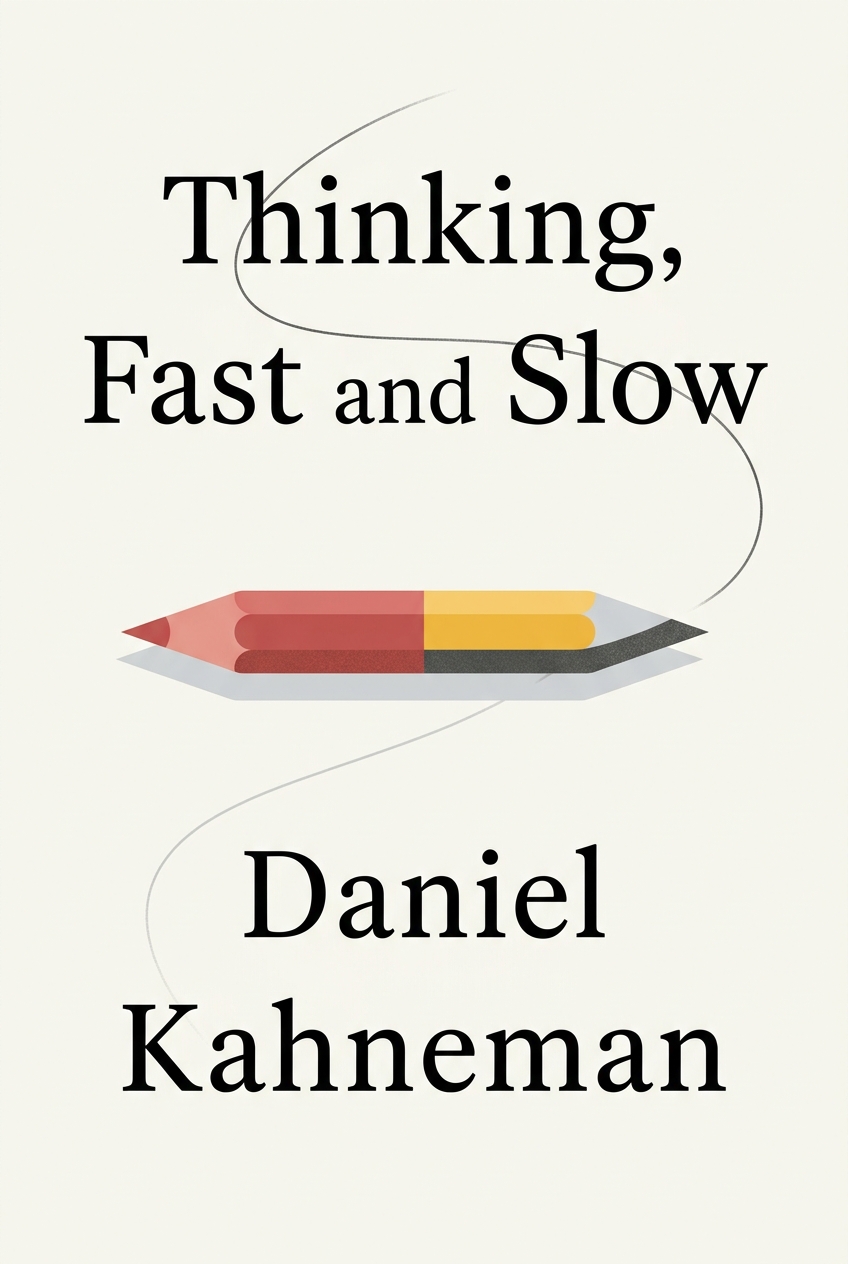
One of the most influential frameworks in modern psychology comes from Nobel laureate Daniel Kahneman in his seminal work, Thinking, Fast and Slow. Kahneman proposes that our thinking is governed by two distinct systems. Understanding them is the first step toward decoding your own decision-making process.
System 1 is the star of the show. It’s fast, intuitive, automatic, and emotional. It’s the part of your brain that effortlessly recognizes a friend's face, gets a bad feeling about a situation, or answers "2+2=?". It operates on heuristics, or mental shortcuts, which allow it to make rapid judgments. While incredibly efficient, System 1 is also the source of many of our biases and systematic errors in judgment.
System 2 is the deliberate, analytical, and conscious part of your mind. It’s the one you engage when solving a complex math problem, weighing the pros and cons of a major life decision, or learning a new skill. System 2 is logical and careful, but it's also lazy. It requires significant mental effort, so we often default to the easier path offered by System 1. This dynamic explains why we so often make irrational choices even when we logically know better.
The Hidden World: Your Brain's Unconscious Operations
If Kahneman showed us we're not as rational as we think, neuroscientist David Eagleman takes it a step further. In his book Incognito: The Secret Lives of the Brain, he reveals that our conscious mind is just the tip of the iceberg. The vast majority of our mental processing happens "incognito," beneath the surface of our awareness.
Eagleman uses the powerful metaphor of the brain as a "team of rivals." Your mind isn't a single, unified entity but a collection of competing neural networks, each with its own goals and desires. What you experience as a singular "you" is often just the winner of this internal competition. This explains the internal conflict we feel when one part of us wants to eat the cake while another wants to stick to a diet. There isn't a single CEO in your head; it's more like a noisy parliamentary debate.
This insight is both humbling and liberating. It helps to explain impulses and behaviors that feel alien to our conscious sense of self. It suggests that much of who we are and what we do is driven by ancient, automated machinery we have no direct access to.
The Brain as Architect: How We Construct Our Reality
Another profound shift in understanding cognition comes from the idea that the brain doesn't passively receive reality; it actively constructs it. In The Brain: The Story of You, David Eagleman explains that the vibrant, detailed world we perceive is a masterful simulation generated by our neural circuitry. The outside world is just a wash of colorless, odorless energy and chemicals.
Our brain takes this raw data and weaves it into a rich, meaningful story—our reality. This construction process is shaped by our past experiences, our expectations, and our biological hardware. It means that each of us lives in a slightly different, personalized universe. This concept is revolutionary because it shows that our perception isn't a perfect window onto the world but a constantly updated best guess, a story the brain tells itself to help us navigate effectively.
Practical Applications: From Coping Strategies to Self-Improvement
Understanding these complex ideas is fascinating, but their true power lies in their application. How can we use this knowledge to live better, more examined lives? This is where we move from theory to actionable strategies.
Recognizing and Dealing with Cognitive Biases
One of the most immediate benefits of learning about cognition is the ability to spot the mental traps—or cognitive biases—that affect us all. The signs of cognitive psychology at play are everywhere, from the overconfidence bias (thinking we know more than we do) to confirmation bias (seeking out information that supports our existing beliefs).
So, how to deal with cognitive psychology biases? The most effective strategy, inspired by Kahneman's work, is to slow down. When faced with an important decision, consciously engage System 2. Here are some cognitive psychology coping strategies:
- Question Your Intuition: When you have a strong gut feeling, especially about something important, pause. Ask yourself: What assumptions am I making? What information might I be ignoring?
- Play Devil's Advocate: Actively seek out perspectives and evidence that contradict your initial position. This directly counters confirmation bias.
- Create a Checklist: For recurring complex decisions, a checklist can force you to consider all relevant factors, preventing your automatic System 1 from skipping crucial steps.
Cognitive Psychology Exercises for a Sharper Mind
Beyond just avoiding errors, you can actively train your cognitive abilities. These aren't abstract drills but practical habits that sharpen your thinking.
Here are a few cognitive psychology exercises you can integrate into your life:
- Conduct a Pre-Mortem: Before starting a new project, imagine it has failed spectacularly one year from now. Write down all the reasons why it might have failed. This exercise, championed by researchers, forces you to anticipate risks and bypass the natural optimism bias.
- Keep a Decision Journal: When you make a significant decision, write down what you decided, why you decided it, and what you expect to happen. Later, you can review your journal to see how your thinking process held up, providing invaluable feedback for the future.
- Explain It to a Child: Take a complex idea you think you understand and try to explain it in the simplest terms possible. This technique, often attributed to physicist Richard Feynman, mercilessly exposes gaps in your own understanding and forces you to build a more robust mental model.
Long-Term Growth: Can Cognitive Functions Be Improved?
This leads to a larger question: can cognitive psychology be improved over the long haul? The answer from neuroscience and psychology is a resounding yes. Our brains are not fixed; they are plastic, capable of changing and adapting based on our experiences and habits.
Learning how to overcome cognitive psychology long term isn't about a one-time fix. It's about developing the habit of metacognition—the practice of thinking about your own thinking. It's a commitment to intellectual humility, recognizing that our minds are flawed but improvable. By consistently applying strategies to slow down, question our assumptions, and seek out diverse perspectives, we can gradually rewire our default mental pathways. This creates a lasting foundation for wiser decisions, deeper self-awareness, and more effective action in the world.
Master key ideas in 15 minutes
Listen to audio summaries of these books on VoxBrief
Download Free